
24/7 Customer Support

Free returns

Same-day & Next-day Delivery

Quality Guaranteed

Unlock Your Welcome Offers: FREE Delivery | Up to 80% OFF | Free 30-day JoyPlus trial
Download the APP
A home gym stepper can make regular exercise easier when you have limited floor space, unpredictable weather or little time to travel to a gym. However, product listings often use broad phrases such as “full-body workout”, “commercial quality” and “joint-friendly” without explaining the specifications behind them.
As the Joybuy Product Recommendation Officer, I focus on practical details that help UK shoppers compare equipment without relying on exaggerated marketing language. Before choosing a vertical stair stepper or aerobic step platform, check how it is built, how much space it needs and whether its adjustment system suits your routine.
An aerobic step platform is a low, stable surface for step-ups, lunges, incline push-ups and plyometric exercises. It does not reproduce continuous stair-climbing resistance by itself. A vertical stair stepper, by contrast, normally includes pedals, resistance components and often handlebars.
Both can support home cardio equipment routines, but they suit different preferences. A platform offers more exercise variety, while a stair climber provides a more guided stepping motion.
“Three resistance levels” does not automatically mean the machine offers a wider or more challenging workout range than another model. The useful questions are whether the levels can be changed conveniently, whether pedal movement feels suitable for your height and whether the machine remains stable during use.
For beginners, adjustable resistance can help create a gradual routine. More experienced users may prefer a longer step range, stronger frame and a design that remains comfortable during repeated sessions.
A compact exercise machine still needs enough clearance for safe movement. Measure the available area, including handlebar height and the space required to fold or move the equipment. A machine that cannot be stored conveniently may end up unused.
For any stepper, place it on a flat, stable surface. A non-slip base or pedal helps, but it cannot compensate for a slippery floor, loose mat or incorrectly fitted component.
For a step platform, height directly affects workout intensity. The GoZone platform offers 10 cm and 15 cm height options, equivalent to approximately 4 and 6 inches. The 68 × 28 cm surface provides a defined area for step aerobics and strength movements.
A lower setting may be more approachable for new users, while the raised setting can increase the range of movement. Check that the platform is wide enough for your intended exercises and that the risers lock securely before use.
On a vertical stair stepper, look for a stated maximum user weight, secure handlebars and pedals with a textured or non-slip surface. The two MERACH models listed here state a maximum weight capacity of 150 kg and use alloy steel frames.
Capacity figures should not be treated as a promise of performance under every condition. Follow the supplied instructions, avoid exceeding the stated limit and inspect joints, pedals and resistance components regularly.
An adjustable resistance stepper is more adaptable than a fixed model, especially if more than one person will use it. The MERACH machines include three resistance levels, adjustable pedals and handles, allowing users to tailor the setup to their height and preferred intensity.
An LCD workout monitor can display time, steps and calories according to the product descriptions. Treat calorie figures as estimates rather than precise measurements. A monitor is most useful for tracking consistency and session duration.
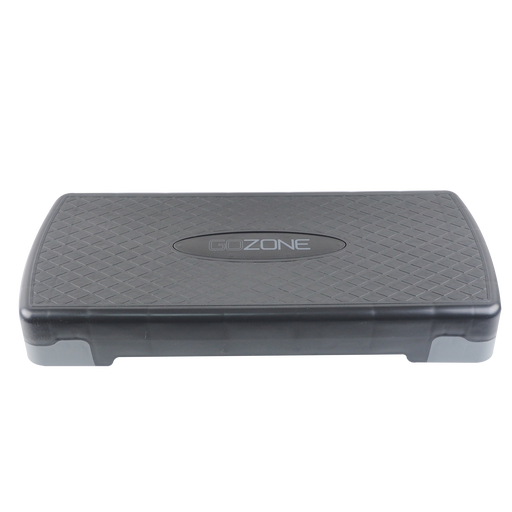
Why This Fits Their Persona: A straightforward choice for UK beginners who want one compact item for step-ups, incline push-ups, lunges and basic cardio without a tall machine or assembly process.
The two stated height settings are clearer than an unspecified “adjustable” claim, while the textured surface and non-stick underside address grip and movement concerns when used on a suitable floor.
68 × 28 cm platform; 10 cm or 15 cm height; no assembly required; supplied with two locking risers.
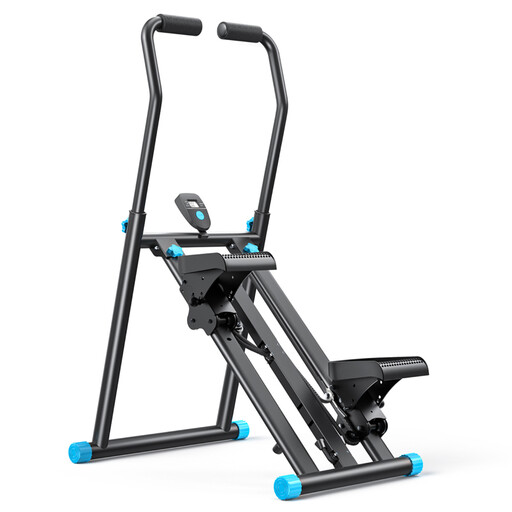
Why This Fits Their Persona: Suitable for shoppers wanting a more structured home cardio routine with handles, pedal adjustment and an on-board display, while retaining a relatively compact footprint.
It provides specific adjustment information rather than relying only on general intensity language: three resistance levels, adjustable pedals and handles, plus non-slip pedals.
Alloy steel frame; 150 kg stated capacity; LCD tracking for time, steps and calories; dimensions of 97 × 56 × 131 cm.
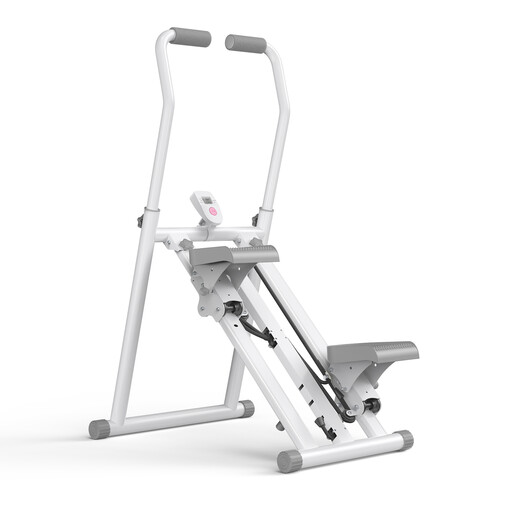
Why This Fits Their Persona: A practical match for users who want a vertical stair stepper for regular sessions but need to fold and store it in a smaller UK flat, spare room or home office.
The foldable design addresses storage concerns, while the stated frame capacity and non-slip pedals offer concrete details to check instead of depending on vague durability wording.
Foldable storage format; three resistance levels; adjustable handles and pedals; 150 kg stated maximum user weight.
It can be, provided the user starts slowly, selects an appropriate resistance or platform height and follows the instructions. A lower step platform setting or the lowest resistance level may make it easier to learn the movement. Stop if the equipment feels unstable or causes discomfort, and seek suitable professional advice before beginning a new exercise routine if necessary.
Lifespan depends on frequency of use, user weight, storage conditions and maintenance. There is no universal period that applies to every model. Regularly inspect bolts, pedals, handles and resistance parts, and follow the manufacturer’s maintenance guidance. A product with a stated capacity and accessible replacement or support information may be easier to manage over time.
A mechanical step platform uses no electricity. A stair stepper with an LCD monitor may use a small battery for the display, depending on the model. It does not require the continuous mains power associated with larger cardio machines. Check whether batteries are included and how they should be replaced before purchase.