
24/7 Customer Support

Free returns

Same-day & Next-day Delivery

Quality Guaranteed

Unlock Your Welcome Offers: FREE Delivery | Up to 80% OFF | Free 30-day JoyPlus trial
Download the APP
Building a home gym can make strength training more convenient, but buying the wrong equipment can quickly waste money and floor space. A product may appear versatile in a listing yet prove awkward in a small UK room, unstable on uneven flooring or unsuitable for your actual training level.
The most reliable approach is to compare construction, dimensions, capacity and intended use rather than relying on promotional language. Whether you are starting with a few essentials or creating a full-body training area, the following guide explains what to check before purchasing home gym strength training equipment.
A stated capacity normally includes the user, free weights and any additional load placed on the equipment. For example, a bench rated at 610 lb (277 kg) should not be interpreted as allowing 610 lb of weights alone.
Leave a sensible margin below the published limit, particularly for movements involving momentum. Always check whether the capacity applies to the complete product, a single handle or a particular attachment.
Some pull-up bars attach to a doorway without screws, while power towers and benches require assembly. Both types still need inspection before use. A doorway pull-up bar depends on a suitable, strong frame, while a freestanding tower needs correctly tightened bolts and a level surface.
Equipment should be checked for loose connections, damaged padding, worn rubber and movement during use. Product instructions should take priority over general workout advice.
A large power tower may offer pull-ups, dips and other exercises, but it also requires considerable vertical and surrounding clearance. An adjustable workout bench can support pressing, abdominal work and dumbbell exercises, but it will not replace a rack or a barbell stand.
Before purchasing, write down the exercises you actually intend to perform and measure the available area, including space needed to mount, dismount and move safely.
For heavy-duty fitness equipment, steel or alloy steel frames are commonly selected because they provide a rigid structure. Look for stable feet, secure joints and a finish that is easy to wipe clean. Carbon steel frames, such as the one used on the SPORTSOUL flat bench, may offer a solid base for home strength training when correctly assembled.
A non-slip base is particularly important for push-up bars and resistance bands. However, no material can compensate for a slippery or uneven floor. A flat, stable surface remains essential.
Check the product’s maximum weight capacity, assembled height, width and depth. A power tower standing around 94 inches high may not suit a room with a low ceiling, especially when additional overhead clearance is needed for pull-ups.
For a bench, assess both the stated load rating and the pad dimensions. A longer or wider seat may feel more secure, but it also takes up more floor space. For doorway equipment, measure the frame rather than the door leaf. The pull-up bar listed below adjusts from 62 to 91 cm, so it should only be used where the frame and opening are appropriate.
Adjustability can improve value, but only when the adjustment system is secure and useful for your routine. An adjustable weight bench with flat, incline and decline positions can support several pressing and core exercises. A power tower with adjustable height may suit more than one household user.
For progressive training, resistance bands should be selected by resistance level and material. Latex bands can provide substantial stretch, while TPE options may suit users who prefer a different material. Inspect any band for cuts, fraying or surface damage before each session.
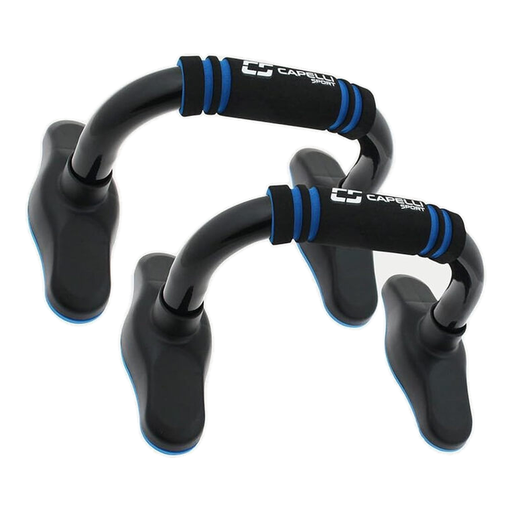
Why This Fits Their Persona: These compact push-up bars need no assembly and can be stored easily in a flat, making them practical for beginners with limited room or a modest starting budget.
The stainless-steel handles, EVA foam grips and large TPR rubber pads address common concerns about wrist comfort and sliding on suitable flooring.
Portable design; 300 lb stated capacity; counter function for tracking repetitions.
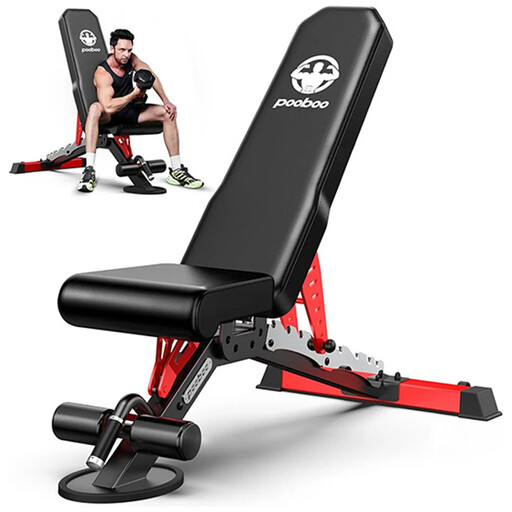
Why This Fits Their Persona: Users seeking one adaptable base for dumbbell pressing, abdominal work and varied full-body strength training can change between flat, incline and decline positions.
Its adjustment range is clearly specified, helping buyers compare real exercise positions instead of relying on vague versatility claims.
Alloy-steel frame; flat, incline and decline settings; stated 1,500 lb maximum capacity.
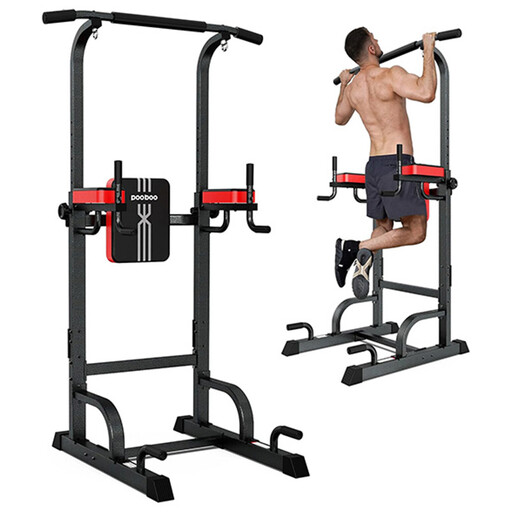
Why This Fits Their Persona: This freestanding power tower is suited to users prioritising pull-ups, dips and upper-body bodyweight training in a dedicated home gym area.
The listing provides assembled dimensions and a 440 lb stated capacity, making ceiling clearance and user-load calculations easier before purchase.
Adjustable height; alloy-steel construction; combines a pull-up bar and dip station.
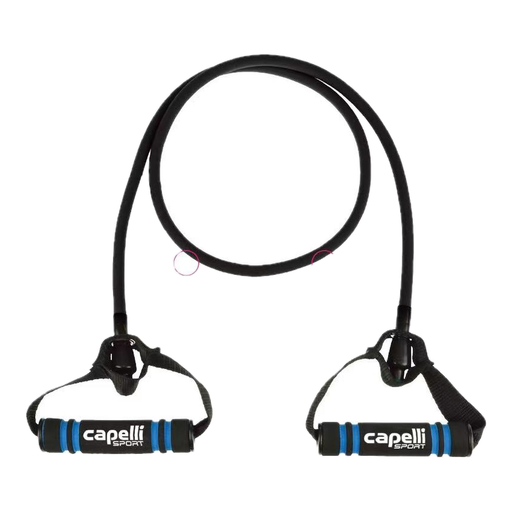
Why This Fits Their Persona: A handled band is easy to store and can support controlled arm, shoulder and mobility exercises at home, during travel or alongside a rehabilitation plan.
The TPE material and single-band format are specified clearly, while different resistance levels allow a closer match to the intended exercise.
120 cm length; foam handles; suitable for resistance training, Pilates and home workouts.
Place large equipment on a level surface with sufficient clearance around moving parts. Use floor protection where appropriate, particularly in flats or rooms with hard flooring. Assemble products according to the supplied instructions and recheck bolts after initial use.
Wipe upholstery, grips and frames regularly. Keep latex or TPE resistance bands away from sharp edges, excessive heat and direct sunlight. Do not overstretch a band beyond its recommended range. Stop exercising if you experience pain or unusual discomfort, and seek suitable medical guidance before beginning a new programme if you have an existing condition.
A combination of an adjustable workout bench, resistance bands and a power tower can cover pressing, pulling, core and bodyweight movements. Push-up bars are a compact addition, while a pull-up assistance band may help users modify pull-up exercises. Select equipment according to available space, training experience and load requirements.
It can be suitable when the doorway frame is strong, compatible with the specified adjustment range and free from damage. Check the frame and locking mechanism before every use. Do not use the bar if it shifts, bends or cannot be secured as directed. A freestanding power tower may be more appropriate where the doorway is unsuitable.
Lifespan depends on frequency of use, load, assembly quality, storage and maintenance. Steel frames may remain serviceable when connections are checked regularly, while foam, upholstery and elastic materials can wear sooner. Replace damaged bands, cracked grips or unstable components rather than continuing to use them.