Hosts serving a group
Six UK pints is approximately 3.41 litres, or about 17 cups at 200 ml each. Check the preparation volume and pack yield, then allow a little extra for larger cups or spills.


For roughly six UK pints of hot chocolate, choose by the stated serving size and preparation liquid, not tub weight alone. Sainsbury's lists 25 servings made with 200 ml hot milk for Galaxy Drinking Chocolate 450g, or 20 made with 200 ml hot water for Options Instant Belgian Hot Chocolate Drink 220g; either stated yield allows for about 17 planned cups, but the milk-based batch requires around 3.4 litres of milk, while the water-prepared Options product still contains milk ingredients.
Six UK pints is approximately 3.41 litres, or about 17 cups at 200 ml each. Check the preparation volume and pack yield, then allow a little extra for larger cups or spills.
A mix directed for hot-water preparation can simplify the outdoor set-up. Sainsbury's lists Options Instant Belgian Hot Chocolate Drink 220g as water-prepared, but its ingredients include milk.
Read the current label on the exact flavour and pack before serving. Listed products differ in their ingredients and allergen statements; preparation with water is not a dairy-free assurance.
Choose when: You want to make the batch with milk and can heat and serve it at the gathering.
Plan for: Around 3.4 litres of milk for 17 portions made with 200 ml each, plus any margin you need.
Choose when: Heating water is more practical than handling milk outdoors, provided the exact pack covers your planned servings.
Bear in mind: A water-based recipe can still contain milk ingredients; the listed Options Belgian Chocolate does.
| Priority | What to check | Your needs |
|---|---|---|
| Batch yield | Find the servings per pack, powder dose and liquid volume per serving. If only a dose is given, calculate portions from the pack weight and leave a margin. | I need enough for roughly 17 cups of 200 ml, with extra if people use larger mugs. |
| Outdoor preparation | Check whether the exact product calls for milk or water, then plan how to heat and serve that liquid. Sainsbury's lists 200 ml hot milk per Galaxy serving and 200 ml hot water per Options Belgian Chocolate serving. | Water may be easier to heat at the barbecue; if I choose a milk recipe, I need to handle the milk as well as the powder. |
| Ingredients and nutrition | Read the current ingredient and allergen label for the exact flavour. Compare prepared nutrition figures only when their stated liquid and serving size are clear. | I want guests to know what is in their drink, especially if the powder contains milk despite being mixed with water. |
Sainsbury's lists 20 water-prepared servings for the 220g Options Belgian Chocolate jar, while its 500g Cadbury Original listing gives a three-teaspoon recipe but no total serving count. Pack weight alone does not settle the batch yield.
Use a stated serving count where available. Otherwise, check the powder dose and calculate how many portions the pack can make.
The Galaxy and Tesco drinking-chocolate directions each use 200 ml of milk per serving. For around 17 such cups, heating and serving the milk is part of the barbecue plan.
Decide how you will transport, heat and serve the required milk before choosing a milk-prepared product.
Sainsbury's lists milk permeate powder and skimmed milk powder in Options Instant Belgian Hot Chocolate Drink 220g, despite its hot-water directions.
Check the current ingredients and allergen statement on the exact pack and flavour.
Galaxy's stated serving is made with semi-skimmed milk, whereas the listed Options Belgian Chocolate serving is made with water. Prepared-drink figures therefore describe different recipes.
Check the liquid and serving size behind each figure before comparing them.
Sainsbury's lists Cadbury Original Drinking Hot Chocolate in a 500g pack, with directions for stirring it into milk and an option to serve it hot or cold.
Sainsbury's lists 25 servings for Galaxy Drinking Chocolate 450g, each made with 18g powder and 200 ml hot milk.
Sainsbury's lists 20 servings for Options Instant Belgian Hot Chocolate Drink 220g, using 11g powder in 200 ml hot water per serving.
Tesco Drinking Chocolate 400g has directions for 18g powder with 200 ml warm semi-skimmed milk.
Sainsbury's lists own-label instant hot chocolate and drinking-chocolate products alongside branded packs.
Marks & Spencer lists several hot-chocolate formats, including traditional drinking chocolate, instant products and vegan options.
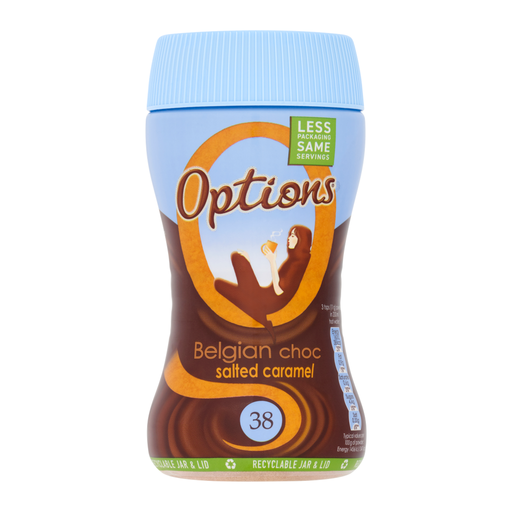
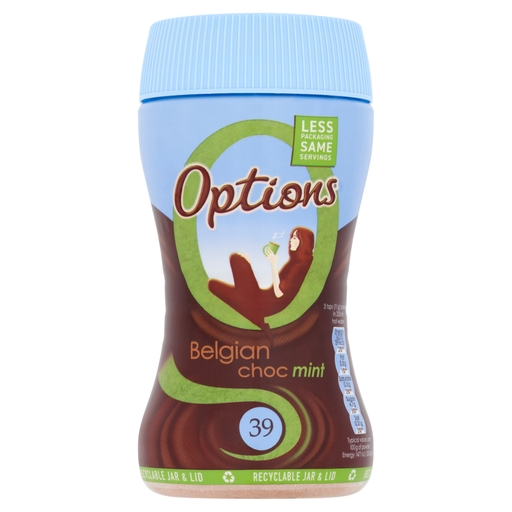
These Options Salted Caramel and Mint jars are choices to examine if you plan to prepare hot chocolate with water at the barbecue. Check each exact pack's directions and ingredients when working out the six-pint batch; the serving count for a different Options flavour does not establish either jar's yield.
 No image available
Consider this water-prepared flavour if heating milk outdoors is impractical. Check its current directions to calculate the powder and water needed for your cups; it contains milk despite its water-based preparation.
 No image available
This water-prepared mint flavour is another option when milk handling is difficult at a gathering. Check the current directions for batch quantities and the label for milk and its phenylalanine warning before serving guests with relevant dietary needs.
Six UK pints is approximately 3.41 litres. Plan for about 17 portions when the recipe uses 200 ml per drink, then allow a margin because 17 such portions make 3.4 litres and cups may be larger.
Yes, on the serving basis listed by Sainsbury's: the pack states 25 servings made with 200 ml hot milk each. Around 17 planned portions use about 3.4 litres of milk, with extra needed if you serve larger cups.
Yes, if you choose a product directed for hot-water preparation. Sainsbury's lists 20 servings made with 200 ml hot water for Options Instant Belgian Hot Chocolate Drink 220g, but its ingredients include milk; check other flavours on their own labels.
Yes. Read the current ingredient and allergen statement on the exact product and flavour before serving anyone with an allergy or intolerance, rather than relying on another variant's listing or its milk-or-water preparation directions.