Hosts serving a large family lunch
If the plan is six imperial pints of hot chocolate, work from roughly seventeen 200ml servings when calculating powder and preparation liquid.


For six imperial pints, or about 3.41 litres, plan roughly seventeen drinks using a 200ml-per-serving recipe. If you can heat around 3.4 litres of milk, One Stop’s 18g-per-serving directions for Cadbury Drinking Chocolate put the powder requirement at about 306g, within a 500g pack. If hot water is easier, Tesco’s 25g Galaxy sachet recipe would require about 425g for seventeen drinks; check the directions and allergens on the particular instant product you choose rather than applying that dose to another jar.
If the plan is six imperial pints of hot chocolate, work from roughly seventeen 200ml servings when calculating powder and preparation liquid.
An instant product with hot-water directions may suit a setup without a large pan for heating milk. Its own serving dose still determines how much powder to buy.
Check each pack before serving: a drink mixed with water can still contain milk or other allergens.
Decide whether you will heat milk or use hot water, then calculate the powder needed from the directions on the product you intend to serve.
| Priority | What to check | Your needs |
|---|---|---|
| Batch quantity | Six imperial pints is about 3.41 litres. At seventeen servings, One Stop’s 18g-per-200ml Cadbury recipe calls for about 306g powder and 3.4 litres of milk; compare the powder total with the pack size. | I want enough for the group, so I’ll calculate from the serving size rather than the number of people invited alone. |
| Preparation liquid | Check whether the particular product calls for hot milk or permits hot water. Tesco’s Galaxy 25g sachet directions specify 200ml hot water; do not assume the same powder dose applies to a Galaxy jar or another variant. | If heating several litres of milk is awkward at lunch, I’d look for an instant mix with explicit hot-water directions. |
| Allergens | Read the current ingredients and precautionary statements. Tesco lists milk and soya for its Galaxy 25g sachet; One Stop lists “may contain milk” for the cited Cadbury 500g product. | When serving guests with allergies, I need to check the exact pack even if I’m making the drink with water. |
| Pack yield | Look for a powder dose and liquid quantity per serving before calculating pack numbers. Sainsbury’s Galaxy 370g jar directions use four heaped teaspoons per mug, while the cited M&S flakes information does not give a serving dose. | I’d rather check how many full servings a pack makes than assume its weight alone covers six pints. |
Six imperial pints is about 3.41 litres of drink, so powder and preparation liquid need to be planned together.
Choose a milk-mixed or hot-water recipe, then multiply its labelled serving quantities by the number of drinks you intend to make.
Sainsbury’s gives a four-heaped-teaspoon instruction for the Galaxy 370g jar. Tesco’s separate 25g Galaxy sachet recipe cannot establish how many servings that jar makes.
Use the jar’s current pack directions to calculate its yield before deciding how many jars to buy.
Tesco lists milk and soya for its Galaxy 25g instant sachet, despite its hot-water preparation directions.
Check the ingredients, allergen declaration and precautionary wording on every pack you plan to serve.
The cited 500g drinking chocolate is a hot-milk option with a stated serving dose, making its powder quantity straightforward to calculate.
The cited Galaxy sachet and jar offer hot-water preparation, but their directions should be treated separately.
Tesco lists a 220g Options Belgian Choc jar as another hot-chocolate format.
Marks & Spencer describes its Belgian Milk Hot Chocolate Flakes as a product to melt into hot milk and states that the recipe contains 45% cocoa solids.
These packs offer drinking-chocolate and instant-hot-chocolate starting points for the lunch. Use each pack’s own directions to plan the six-pint quantity.
 No image available
This hot-milk option suits a group setup where you can heat and serve several litres of milk. One Stop’s directions for the cited 500g Cadbury product use 18g powder with 200ml hot semi-skimmed milk per serving, or about 306g powder for seventeen servings; check the current pack before making the batch. Its cited allergen wording says “may contain milk”.
 No image available
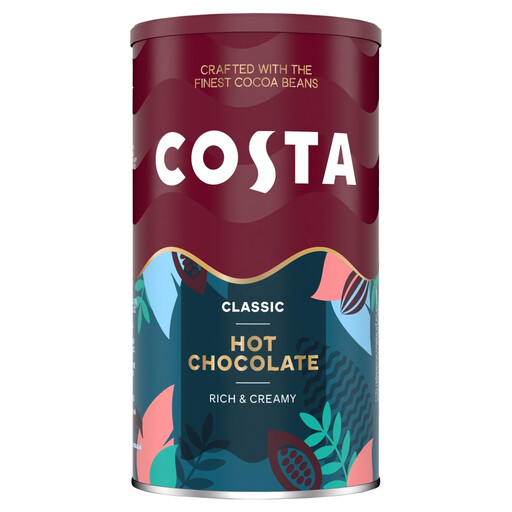
For a group lunch, check this pack’s preparation liquid and powder dose before deciding how many 300g packs to buy. Calculate from the number of servings you plan to pour, and check the current ingredients and allergen statement for guests with allergies.
 No image available
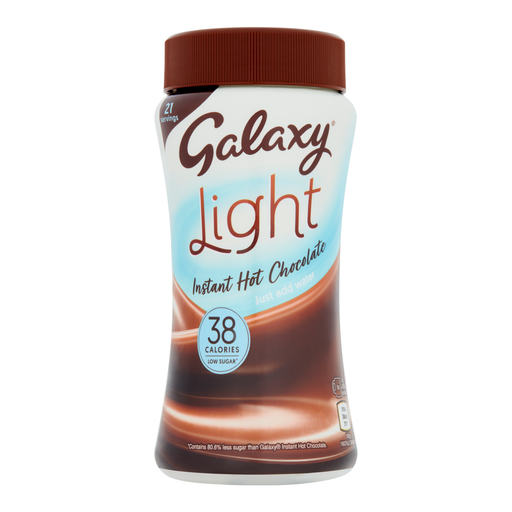
If you want an instant option for the lunch, use this variant’s own liquid instructions and serving dose to calculate how many 210g packs the group needs. Check its current allergen statement as well; directions for a different Galaxy product do not establish this variant’s dose or ingredients.
No: six imperial pints is about 3.41 litres, equivalent to roughly seventeen 200ml servings. If you meant six individual mugs, calculate from six servings using your chosen pack’s directions instead.
On One Stop’s stated recipe for the cited 500g product—18g powder with 200ml hot semi-skimmed milk—seventeen servings use about 306g powder and 3.4 litres of milk. A 500g pack covers that powder calculation; follow the directions on the pack you buy.
Yes, if the instant product’s own directions permit hot water. Tesco’s cited Galaxy 25g sachet uses 200ml hot water, making seventeen servings about 425g of that sachet formulation; calculate a jar or another variant from its own instructions.
Hot-water preparation does not establish that a product is milk-free: Tesco lists milk and soya for its cited Galaxy instant sachet. Check the current pack of the exact product you intend to serve and confirm guests’ requirements before preparing it.