What matters when choosing?
Start with the recipe: decide whether it needs cocoa or cooking chocolate as an ingredient, or whether it can accommodate a sweetened drinking mix.
| Priority |
What to check |
Your needs |
| Chocolate flavour |
Check disclosed cocoa content, other chocolate ingredients and whether the drink is prepared with milk or water. Tesco Groceries lists 10% fat-reduced cocoa powder for Galaxy; Twinings lists 21% fat-reduced cocoa powder and 7% Belgian chocolate for Options Belgian Choc. These figures describe formulations, not how mild either will taste. |
I want a gentle chocolate note, but I do not want to choose by a ‘mild’ description alone. |
| Recipe fit |
Check whether the recipe specifies cocoa powder or cooking chocolate and whether it can accommodate a sweetened drink mix. Marks & Spencer notes that cocoa solids and milk content influence the flavour of cooking chocolate. |
For a cake or icing built around cocoa, I want to keep control of the chocolate ingredient and sweetness. A drink or flexible glaze gives me more room to adjust. |
| Sugar and portion |
Compare the powder per 100 g, then check the serving size, preparation liquid and quantity used in the recipe. The NHS explains that pre-packed-food nutrition labels give figures per 100 g or 100 ml, sometimes alongside per-portion figures. |
If I add a drinking mix to an already sweet recipe, I need to account for the amount of powder I actually use—not compare prepared cups of different sizes. |
| Ingredients and guests |
Read the current pack for milk, soya, sweeteners and precautionary statements. Twinings states that Options Belgian Choc contains a source of phenylalanine; Tesco Groceries lists milk and soya in Galaxy. |
When I am baking for guests, the ingredient list matters as much as the flavour I am aiming for. |
| Preparation liquid |
Follow the directions for the exact product and account for liquid added to a recipe. Tesco Groceries directs Cadbury drinking chocolate to be mixed with hot milk, while its Galaxy listing gives hot-water preparation; Twinings also gives hot-water instructions for Options Belgian Choc. |
A hot-milk drink may suit what I am serving alongside a bake, but I do not want to add unplanned liquid to the bake itself. |
Brand references
These notes concern the documented products, not every hot chocolate made by each brand.
Cadbury
The 500 g drinking chocolate documented by Tesco Groceries is intended to be mixed with hot milk.
- Its listed ingredients are sugar, cocoa powder, potassium carbonates and flavouring.
- It is not unsweetened baking cocoa. Tesco Groceries lists 23 g sugars for the documented milk-prepared serving and states that the powder may contain milk.
Galaxy
Tesco Groceries describes the documented 370 g instant hot chocolate as a drink prepared with hot water.
- The listing discloses 10% fat-reduced cocoa powder, making its formulation easier to compare with other products that disclose cocoa content.
- It contains milk and soya. Tesco Groceries lists 16 g sugars for a serving made with 25 g powder and 200 ml hot water; that serving is not directly comparable with a smaller one.
Options
Twinings documents Belgian Choc as an instant drink prepared with 11 g powder in 200 ml water.
- Its documented formulation lists 21% fat-reduced cocoa powder and 7% Belgian chocolate, with 5.7 g sugars for the stated serving.
- It is a sweetened drink mix, not plain cocoa, and contains milk and a source of phenylalanine.
Joybuy drinking-chocolate options
These drinking-chocolate options cover plain and flavoured mixes for a festive drink or a recipe you can adjust. They are not substitutes for every baking-cocoa or cooking-chocolate recipe.
 No image available
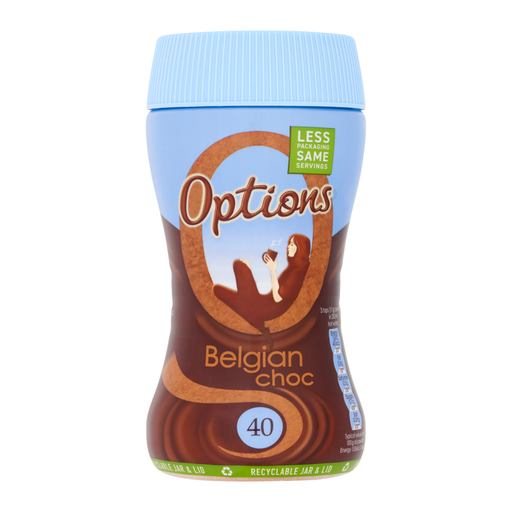
Options Belgian Chocolate 220 g
Consider this for a measured hot-water drink or a small addition to a recipe that can accommodate a sweetened mix. Twinings documents 11 g powder in 200 ml water, with 5.7 g sugars per serving, for Options Belgian Choc. It lists 21% fat-reduced cocoa powder and 7% Belgian chocolate. Check the current pack for milk and the phenylalanine statement before serving guests.
View on Joybuy
 No image available
Cadbury Drinking Chocolate 500g
A drinking-chocolate option for a hot-milk serving or a recipe in which milk and sweetness are intentional. Account for the powder’s sugar rather than treating it as plain cocoa, and check the current pack’s milk precaution before serving guests.
View on Joybuy
 No image available
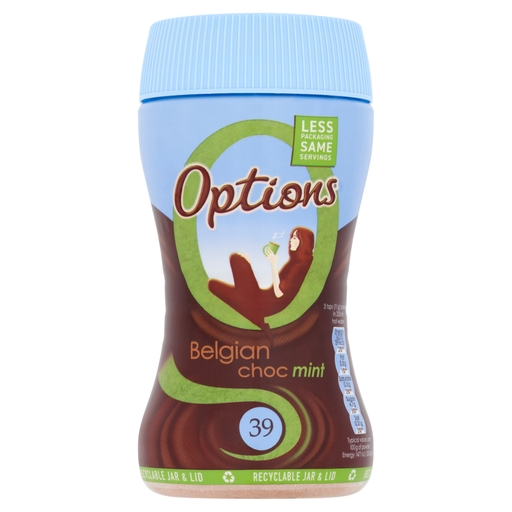
Options Belgian Choc Mint 220g
Choose the mint variant only where that flavour fits the drink or bake. It is a sweetened drinking mix rather than a direct cocoa substitute; check the current pack for milk and the phenylalanine statement before serving guests.
View on Joybuy
 No image available
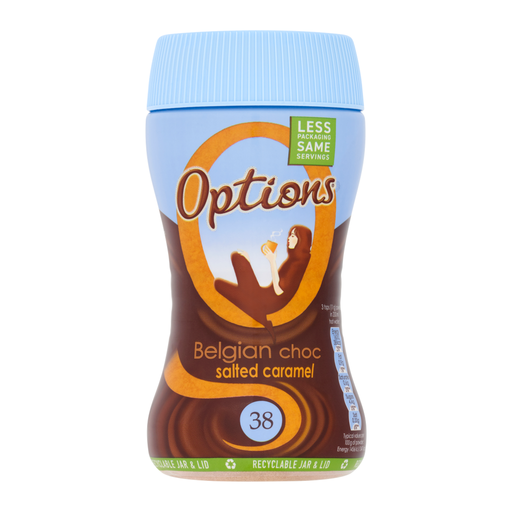
Options Belgian Choc Salted Caramel 220g
The salted-caramel flavour is a deliberate choice for a drink or a flexible recipe, not a neutral chocolate addition. Allow for the mix’s sweetness and check the current pack for milk and for the serving details you need to calculate the amount used.
View on Joybuy
 No image available
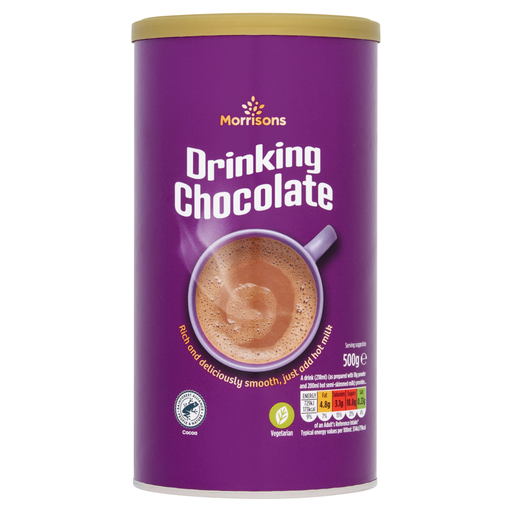
Morrisons Drinking Chocolate 500g
Consider this drinking chocolate for a hot-milk drink or a flexible recipe that already includes milk. Before using it in a bake, check the pack’s ingredients and nutrition basis for the quantity of powder you plan to add; do not substitute it directly for plain cocoa.
View on Joybuy
Questions about baking with hot chocolate
Does ‘mild’ mean a hot chocolate has less sugar?
No. Mildness describes a flavour impression, not a sugar measure. Check the ingredients and compare nutrition figures on the same basis: Tesco Groceries lists 16 g sugars for Galaxy made with 25 g powder in water, while Twinings lists 5.7 g for an 11 g serving of Options Belgian Choc in water. Those serving sizes differ.
Can I use hot-chocolate powder instead of cocoa in a Christmas cake or brownie?
Do not assume a gram-for-gram swap will work. The documented drinking mixes are sweetened and can contain other ingredients, so use the cocoa or cooking chocolate specified by a recipe when its chocolate flavour and texture depend on that ingredient. For a flexible recipe, review the mix and test an adjustment in a small batch.
Should I make a festive hot chocolate with milk or water?
Follow the directions for the product you choose. Tesco Groceries directs the documented Cadbury drinking chocolate to be mixed with hot milk and Galaxy instant hot chocolate with hot water; Twinings gives hot-water instructions for Options Belgian Choc. Include the preparation liquid when comparing drinks or adapting a recipe.
What should I check before serving a chocolate bake to guests?
Read the current pack for allergens, precautionary statements and other relevant ingredients. Tesco Groceries says the documented Cadbury product may contain milk and that Galaxy contains milk and soya; Twinings lists milk and a source of phenylalanine for Options Belgian Choc. Choose an ingredient that suits the guests rather than relying on the flavour description.
How can I compare sugar figures between drinking chocolates?
Compare the powders per 100 g, then check each serving’s powder quantity and preparation liquid before applying the figure to your recipe. The NHS explains that pre-packed-food nutrition labels give values per 100 g or 100 ml and sometimes per portion. Prepared cups of different sizes are not a like-for-like powder comparison.


