Households serving several people
Four UK pints are 2.272 litres, using nidirect’s 568 ml pint. If you are filling several mugs or a large jug, choose a product whose directions you can scale using the liquid and powder quantities on its pack.


Treat four UK pints as a target of 2.272 litres of finished hot chocolate, rather than assuming you need a four-pint bottle; nidirect gives a pint as 568 ml. Drinking chocolate is worth considering for a shared hot-milk batch, while instant powder with clear portion directions makes it easier to measure individual drinks. Check the exact pack’s preparation instructions and allergens before scaling up, and bear in mind that hot chocolate can contain caffeine if you plan to serve it near bedtime.
Four UK pints are 2.272 litres, using nidirect’s 568 ml pint. If you are filling several mugs or a large jug, choose a product whose directions you can scale using the liquid and powder quantities on its pack.
Hot chocolate is not necessarily caffeine-free. Oxford Health CAMHS identifies it as a possible caffeine source, so timing matters when caffeine affects someone’s bedtime routine.
Drinking chocolate made with hot milk, instant powder and products with prepared-drink sugar claims call for different checks. Compare directions and nutrition for the drink you intend to make, and read the current allergen label.
Start with the amount you want to serve, then use the exact pack’s recipe to work out the powder and preparation liquid needed.
| Priority | What to check | Your needs |
|---|---|---|
| Batch volume | Four UK pints equal 2.272 litres, based on nidirect’s 568 ml pint. Check whether the pack specifies liquid added, finished-drink volume or both before calculating portions. | I’m serving several mugs and need to know how much drink the recipe will make. |
| Preparation method | Check the powder amount, liquid and method on the chosen pack. Sainsbury’s lists Galaxy Frothy at 25 g with 200 ml semi-skimmed milk per portion; Cadbury drinking chocolate directions listed by Tesco Groceries call for three teaspoons stirred into hot milk. | I’d rather measure individual servings, or I want to prepare one shared hot-milk batch. |
| Prepared-drink nutrition | Compare values on the same preparation basis and check which liquid is used. Tesco Groceries lists Cadbury Highlights’ product-specific claim as less than 2.5 g sugar per 100 ml of prepared drink. | I’m comparing what will be in the finished mug, not just the dry powder. |
| Milk ingredients | Read the current ingredient and allergen label as well as the recipe. Tesco Groceries lists Cadbury Highlights with milk-derived ingredients; its Cadbury drinking chocolate listing says it may contain milk. | If milk allergy or dairy avoidance matters, I need to check the powder itself as well as the liquid I add. |
| Bedtime timing | Check whether the drink contains cocoa or chocolate and consider caffeine sensitivity. Oxford Health CAMHS notes that hot chocolate can contain caffeine and advises avoiding caffeinated drinks at least 5–6 hours before bed in its sleep guidance. | I want a warm evening drink, but caffeine close to bedtime may not suit my routine. |
Tesco, Sainsbury’s and M&S hot-chocolate listings include dry formats such as powders and pods. The pack quantity is not the amount of finished drink.
Plan for 2.272 litres of drink, then scale the exact product’s directions rather than choosing by pack size alone.
Sainsbury’s states that a 275 g Galaxy Frothy jar contains 11 portions, each mixed with 200 ml semi-skimmed milk. Those portions use 2.2 litres of milk, short of a 2.272-litre liquid target.
Check the declared portion count and liquid quantity before relying on one pack. Added powder may also affect the final drink volume.
Milk or water becomes part of what is served, while a claim per 100 ml of prepared drink applies to its stated preparation.
Use nutrition figures with a comparable preparation liquid and serving basis, and check the recipe you will actually follow.
Oxford Health CAMHS identifies hot chocolate as a possible caffeine source. Product ingredient and allergen information also varies: some powders contain milk-derived ingredients, while others carry a may-contain-milk notice.
Consider caffeine timing for an evening serving, and check the current pack label for any ingredient or allergen requirement.
These brand references describe particular products or listed ranges, not every hot chocolate sold under each name.
Tesco Groceries lists a 500 g drinking chocolate for mixing with hot milk and a separate Cadbury Highlights instant drink.
Sainsbury’s lists Galaxy Frothy powder with a stated portion recipe and, separately, machine-specific hot-chocolate pods.
Options instant hot chocolate appears in the Tesco and Sainsbury’s ranges, including a 220 g Belgian Hot Chocolate Drink listed by Sainsbury’s.
Tesco Groceries lists own-label instant hot chocolate alongside drinking chocolate and other brands.
Sainsbury’s lists own-label instant hot chocolate alongside branded products, including Galaxy and Options.
The M&S Food range lists drinking chocolate, instant hot chocolate and cocoa powder.
These Joybuy options include instant drinks and drinking chocolate to consider for individual servings or a shared batch. Use each pack’s directions to check how it fits a four-pint plan.
 No image available
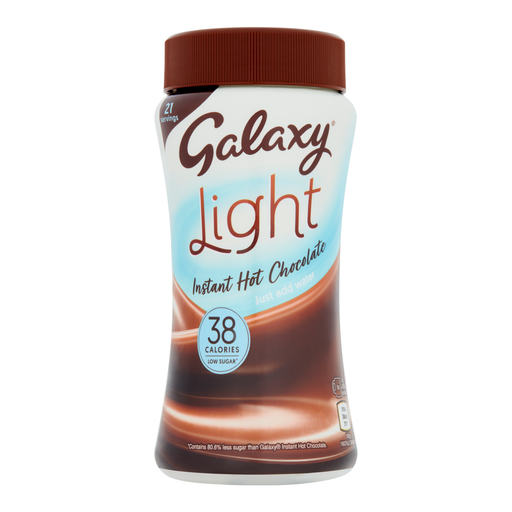
This instant option may suit a plan based on measured servings. Check the pack’s powder-to-liquid directions before scaling its 210 g contents for a shared batch; the name alone does not establish the finished-drink yield.
 No image available
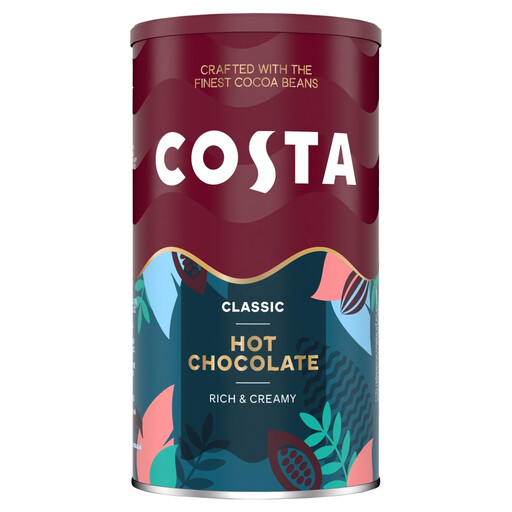
For several servings from this 300 g pack, check how much powder and liquid its directions specify per drink. A pack weight on its own cannot tell you whether it will make four pints.
 No image available
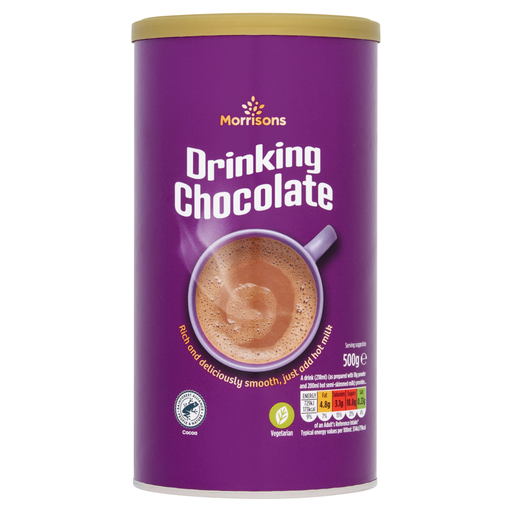
This 500 g drinking-chocolate pack is an option to consider for a shared batch. Follow its current preparation directions when scaling the recipe, and check the allergen label if milk matters.
 No image available
Consider this 500 g drinking chocolate if you plan to make a batch rather than separate instant portions. Check the pack’s powder and liquid quantities to work out the amount needed for four pints.
 No image available
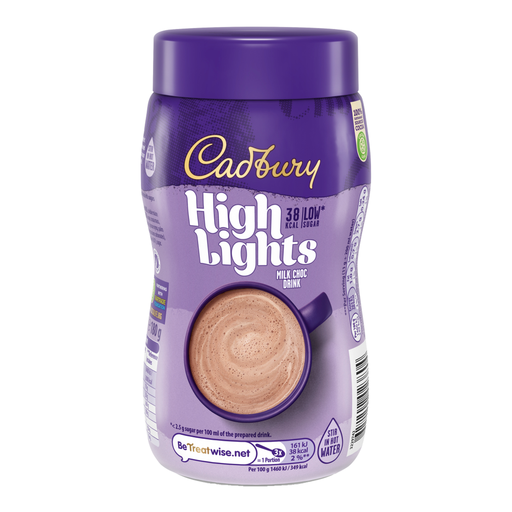
This 180 g instant drink is relevant if you are comparing sugar in the prepared drink. Tesco Groceries lists its product-specific claim as less than 2.5 g sugar per 100 ml when prepared as directed; its ingredients include milk-derived ingredients and sweeteners. Check the current recipe to calculate a batch.
No: you can plan four UK pints as 2.272 litres of finished drink and make it from a product with suitable preparation directions. Nidirect gives a UK pint as 568 ml; check the chosen pack’s recipe and remember that the liquid added is not necessarily identical to the final drink volume.
Use the ratio on the exact pack. As one example, Sainsbury’s lists Galaxy Frothy at 25 g powder with 200 ml semi-skimmed milk: using 2.272 litres of milk at that ratio would take about 284 g powder, more than its 275 g jar. That calculation measures the milk used, not an assured final volume of exactly four pints.
Consider caffeine and the time you plan to serve it. Oxford Health CAMHS notes that hot chocolate can contain caffeine and advises avoiding caffeinated drinks at least 5–6 hours before bed in its sleep guidance; that does not mean every drink will affect everyone in the same way.
Yes. Tesco Groceries lists Cadbury Highlights’ claim as less than 2.5 g sugar per 100 ml of prepared drink, while its ingredient list includes milk-derived ingredients and sweeteners. Check the current pack if either ingredient matters to you.