What matters when choosing?
Decide when the drink will be served, then compare portions and ingredients on the basis of a mug made according to each pack’s directions.
| Priority | What to check | Your needs |
|---|
| Evening timing |
For children, distinguish an earlier evening drink from one served at bedtime. Royal United Hospitals Bath NHS Foundation Trust advises avoiding sugar-containing drinks at bedtime; NHS Borders advises avoiding caffeine for four hours before bed and names cocoa as a source. |
I’m planning a drink for a child and need to decide whether hot chocolate belongs earlier in the evening, rather than after toothbrushing or immediately before sleep. |
| Prepared serving |
Check the powder portion, liquid volume and whether the label’s figures use milk or water. Tesco lists 23 g sugars for a prepared serving of Cadbury 500 g drinking chocolate made with milk, while its Options 11 g sachet lists 5.7 g when made with 200 ml water; these are different preparation bases. |
I want to know what goes into the mug I’ll actually make, not compare a water-made sachet directly with a milk-made serving as though they were identical. |
| Pack format |
Compare pack weight with the stated portion or serving count. Sainsbury’s lists approximately 16 servings for its 300 g drinking-chocolate tub; Tesco lists its Options product as an individual 11 g sachet. |
A shared tub makes sense if we will use it regularly. For occasional mugs, I would check whether a smaller pack or a single portion fits our use better. |
| Allergens |
Read the current ingredients and precautionary statements. Tesco lists milk ingredients for Options; Sainsbury’s says its 300 g drinking chocolate is not suitable for customers with a milk or soya allergy due to manufacturing methods. |
Someone in my household needs an ingredient or allergen check, so I cannot decide from the words “hot chocolate” alone. |
| Opened-pack use |
Check storage directions and any period stated for use after opening. M&S says its 300 g drinking chocolate should be consumed within four weeks of opening. |
Before buying a tub, I want to know whether our usual number of mugs fits its opened-pack instructions. |
Relevant brand references
These examples show how formats and labels differ; a brand name alone does not establish the details of every product it sells.
Cadbury
Tesco lists a 500 g Cadbury drinking-chocolate tub prepared by mixing powder with hot milk.
- The listed pack weight makes it an option to consider for shared use.
- Tesco lists 23 g sugars for its prepared serving; check the current pack’s directions and allergen statement.
Options
Tesco lists an individual 11 g Belgian Choc sachet prepared with 200 ml hot water.
- The individual sachet fixes the amount of powder used for that serving.
- This listing is for one sachet rather than a shared tub, and the product contains milk ingredients and sweeteners.
Sainsbury’s
Sainsbury’s lists a 300 g drinking-chocolate tub containing approximately 16 servings.
- The stated serving count helps households estimate how long the tub may last.
- Sainsbury’s says this product is not suitable for customers with a milk or soya allergy due to manufacturing methods.
M&S
M&S lists a 300 g drinking-chocolate tub for preparation with hot milk.
- Its pack directions give households a defined preparation method.
- M&S says the product is not suitable for people with a milk allergy and should be consumed within four weeks of opening.
Joybuy hot chocolate options
These drinking-chocolate packs offer different tub sizes for households considering an earlier evening drink. Their inclusion does not make sweetened hot chocolate a suitable last drink at bedtime for a child.
 No image available
Cadbury Drinking Chocolate 500 g
The 500 g pack is an option for a household planning to share drinking chocolate earlier in the evening. Check the current pack for its serving directions and milk-allergen statement.
View on Joybuy
 No image available
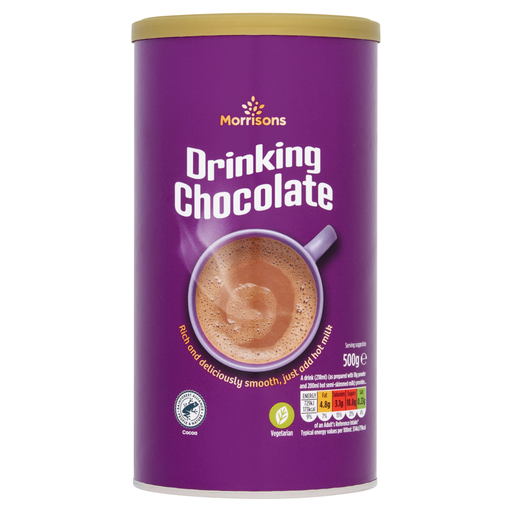
Morrisons Drinking Chocolate 500 g
This 500 g pack offers another size for shared use earlier in the evening. Check the current pack’s preparation directions, prepared-serving nutrition and allergen statement before choosing it.
View on Joybuy
 No image available
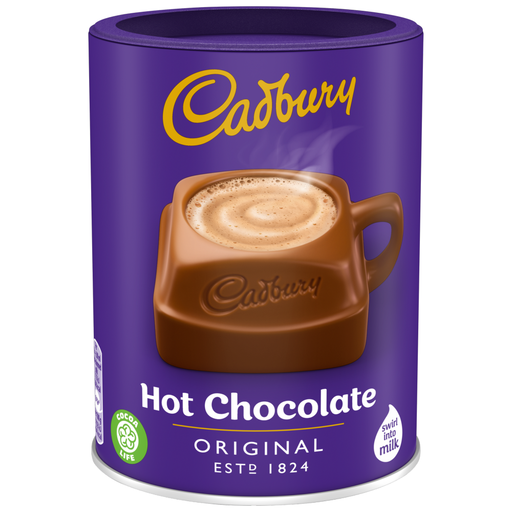
Cadbury’s Drinking Chocolate 250 g
The 250 g pack is a smaller choice for a household expecting to make fewer mugs. Use the current label to check the portion, preparation method and allergen wording.
View on Joybuy
 No image available
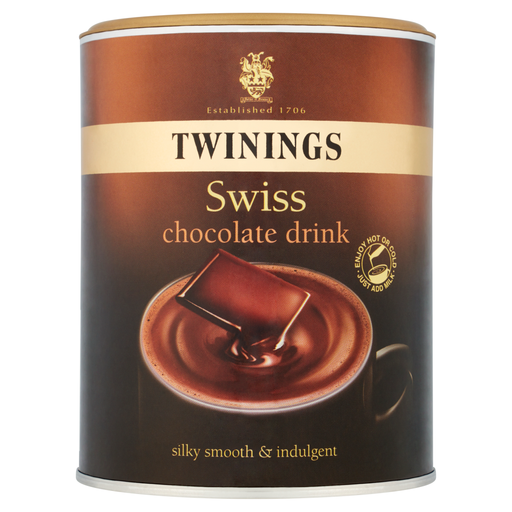
Twinings Swiss Chocolate Drink 350 g
At 350 g, this pack falls between the 250 g and 500 g options shown here. Check the physical pack for its preparation, serving nutrition and milk-allergen wording before serving.
View on Joybuy
Questions about evening hot chocolate
Can hot chocolate be a child’s last drink before bed?
A sweetened hot chocolate is not a suitable last drink at bedtime for a child. Royal United Hospitals Bath NHS Foundation Trust advises avoiding sugar-containing drinks at bedtime, when saliva flow is reduced; NHS Borders also advises avoiding caffeine for four hours before bed and identifies cocoa as a source.
Does a sachet with less listed sugar change the bedtime advice?
No. Tesco lists 5.7 g sugars for an Options sachet made with 200 ml water, but it remains a sugar-containing drink. The Royal United Hospitals Bath NHS Foundation Trust advice concerns sugar-containing drinks at bedtime, not only drinks above a particular sugar figure.
Why are the nutrition figures for different mugs hard to compare?
The listed drinks are prepared differently: Tesco gives a water-made serving for the Options sachet and a milk-made serving for its Cadbury drinking chocolate. Compare powder portions and preparation liquids alongside the figures for each finished mug.
Can a household avoiding milk choose any drinking chocolate?
No; check the specific current pack. Tesco lists milk ingredients in Options, Sainsbury’s says its drinking chocolate is not suitable for customers with a milk or soya allergy due to manufacturing methods, and M&S says its product is not suitable for people with a milk allergy.
How should I decide whether a tub is too large?
Compare the labelled portion or serving count with how often your household makes hot chocolate, then check the opened-pack instructions. M&S, for example, states that its drinking chocolate should be consumed within four weeks of opening.


