Households making regular afternoon mugs
A larger cupboard pack may suit several tea breaks. Decide whether you want a drinking chocolate prepared with hot milk or an instant mix prepared with water.


For repeated afternoon mugs, a larger pack makes sense if you expect to use it: Cadbury’s 500 g drinking chocolate is prepared with hot milk, while Tesco’s 400 g instant hot chocolate uses hot water. If the nutrition per mug matters more than pack size, compare the prepared-serving labels; Sainsbury’s 250 g low-calorie instant product lists less sugar per mug than its 350 g standard instant product, but contains sucralose.
A larger cupboard pack may suit several tea breaks. Decide whether you want a drinking chocolate prepared with hot milk or an instant mix prepared with water.
If warming milk is inconvenient, check the instructions for an instant mix. The Tesco and Galaxy instant products described by Tesco Groceries use hot water.
Compare figures per prepared mug, and read the pack’s current ingredients and allergen statements before serving guests.
Start with how you will make the drink, then compare pack size, the stated serving amount and any dietary information that matters to those drinking it.
| Priority | What to check | Your needs |
|---|---|---|
| Pack capacity | Compare pack weight and the stated amount used per mug. Tesco Groceries lists 14 portions for its 370 g Galaxy jar; Sainsbury’s lists approximately 12 servings for its 350 g standard instant pack. | I make hot chocolate regularly and want a pack I expect to use, rather than choosing by weight alone. |
| Preparation | Read whether the powder calls for hot milk or hot water. Sainsbury’s instructions for Cadbury’s 500 g drinking chocolate specify hot milk; Tesco’s 400 g instant mix specifies hot, not boiling, water. | Will I have milk ready to heat, or do I need to make a mug with hot water? |
| Nutrition per mug | Use the prepared-serving figures, not figures for dry powder alone. Sainsbury’s lists 4.6 g sugars and 41 kcal per mug for its 250 g low-calorie instant product, compared with 16.1 g sugars per mug for its 350 g standard instant product; the low-calorie version lists sucralose. | I want to compare what is in a prepared mug, and whether the ingredients suit my preferences. |
| Allergens | Check the current pack’s ingredients, highlighted allergens and precautionary statements. The Food Standards Agency explains that precautionary allergen labelling communicates possible unintentional allergen presence. | If I am serving someone with an allergy, I need to check the actual pack before making their drink. |
Cadbury’s 500 g drinking chocolate is prepared with hot milk, while the Tesco and Galaxy instant products described by Tesco Groceries use hot water. The preparation method can change what you need to have ready for an afternoon mug.
Check the selected pack’s instructions before choosing a larger format.
Milk or a suitable alternative is needed separately for a milk-prepared drink.
Sainsbury’s 250 g low-calorie instant hot chocolate lists sugar and sucralose. Its product information also says it is not suitable for customers with a soya allergy because of manufacturing methods.
Compare the prepared-mug nutrition panel and read the full ingredients and allergen statements.
Food formulations can change, and precautionary allergen statements matter when cross-contact is a concern.
Check the physical pack immediately before serving and confirm that the drink suits the person who will have it.
These brand examples illustrate different pack sizes and preparation methods; check the individual product rather than assuming every item in a range is made the same way.
Cadbury lists hot chocolate and cocoa powder products. Sainsbury’s instructions for its 500 g Original Drinking Hot Chocolate specify hot milk.
Tesco Groceries lists a 370 g Galaxy Instant Hot Chocolate jar prepared with hot water.
Tesco Groceries lists Options Belgian Choc Instant Drink in a 220 g jar.
Tesco Groceries lists both a 400 g instant hot chocolate for preparation with water and a 400 g drinking chocolate for hot milk.
Sainsbury’s lists a 350 g standard instant hot chocolate and a 250 g low-calorie instant version.
M&S describes a hot-chocolate range that includes vegan-labelled drinking chocolate options and lower-calorie powder.
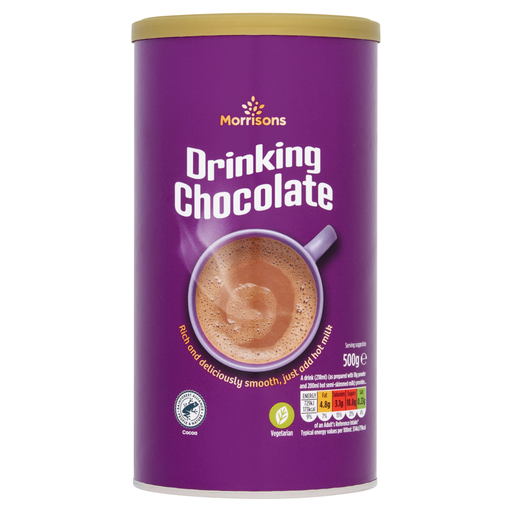
These 500 g drinking-chocolate packs are options for repeated afternoon mugs made with hot milk. If you need a hot-water instant mix, check its preparation instructions rather than assuming these packs work the same way.
 No image available
A 500 g pack for repeated afternoon mugs where hot milk is available. The stated preparation is to swirl three teaspoons into hot milk; check the current pack’s allergen statement before serving.
 No image available
A 500 g pack for repeated afternoon mugs. Its stated preparation uses hot milk, so check that this method suits how you plan to serve it.
A 350–500 g pack is worth considering if you expect to use it regularly. Tesco Groceries lists a 400 g instant mix, Sainsbury’s lists a 350 g instant mix, and Cadbury’s drinking chocolate comes in a 500 g format. Check the stated amount per mug as well as pack weight.
Choose by how you intend to prepare it: the Tesco and Galaxy instant products described by Tesco Groceries use hot water, while Sainsbury’s instructions for Cadbury’s 500 g drinking chocolate specify hot milk. Read the particular pack’s directions before serving.
No. Sainsbury’s 250 g low-calorie instant hot chocolate lists 4.6 g sugars and 41 kcal per prepared mug, but also lists sucralose. Compare its prepared-serving label and ingredients with the other products you are considering.
Read the ingredients, highlighted allergens and any precautionary statement on the current physical pack. The Food Standards Agency explains that precautionary allergen labelling communicates possible unintentional allergen presence; confirm the selected drink suits the person you are serving.