Who is this choice for?
The deciding question is whether you want to reduce caffeine, avoid it altogether or simply check what is in an afternoon chocolate drink.
Afternoon drinkers reducing caffeine
If you enjoy hot chocolate but are cutting back on caffeine, do not assume a cocoa-based drink is decaf. NHS Tayside lists hot chocolate and chocolate as caffeine sources; check the exact drink rather than relying on its flavour or an absence of coffee.
Pregnant shoppers counting caffeine
The NHS advises no more than 200mg of caffeine a day during pregnancy and includes chocolate among caffeine sources. Account for a conventional hot chocolate alongside other sources during the day; ask the manufacturer for the exact drink’s caffeine content if you need a figure.
Shoppers checking ingredients and preparation
If milk or another ingredient matters to your choice, read the selected pack rather than making assumptions about a brand’s whole range. The Food Standards Agency says allergens present in prepacked food must be emphasised in its ingredients list. Preparation instructions also tell you whether the drink calls for water or milk.
What should you check?
Choose the type of drink before comparing labels: a conventional cocoa drink, a documented cocoa-free chocolate-style product and a non-chocolate hot drink answer different needs.
Conventional cocoa hot chocolate
Choose it when: You want a familiar chocolate drink and do not require confirmed caffeine-free status.
Trade-off: NHS Tayside identifies hot chocolate as a caffeine source, so the product’s caffeine content matters if you are cutting back.
Cocoa-free carob product
Choose it when: An explicitly caffeine-free, chocolate-style product matters more than a conventional cocoa recipe; Caroboo describes its carob products as caffeine-free.
Trade-off: Caroboo’s documented products are principally chocolate-style snacks, so check the exact format before planning to make a hot drink.
Non-chocolate hot drink
Choose it when: A warm afternoon drink matters more than chocolate flavour, and you can select one explicitly identified as caffeine-free.
Trade-off: Changing drink type will not give you the same chocolate-drink experience.
| Priority | What to check | Your needs |
|---|
| Caffeine status |
Look for an explicit caffeine-free statement for the exact product. For a cocoa drink, ask the manufacturer for caffeine information if you need to track an amount. |
I want a chocolate-style afternoon drink without assuming that ordinary cocoa powder is decaf. NHS Tayside identifies hot chocolate as a caffeine source. |
| Daily intake |
Check the amount used per mug and any caffeine figure available for that serving. Count chocolate alongside other caffeine sources. |
During pregnancy, I need to account for caffeine across the whole day. The NHS advises no more than 200mg a day during pregnancy. |
| Ingredients |
Read the ingredients list for the exact variant and its emphasised allergens. Check any dietary claim on that product’s current pack. |
Milk or another ingredient could affect my choice; a different product from the same brand might have a different recipe. The Food Standards Agency says allergens present in prepacked food must be emphasised in the ingredients list. |
| Nutrition and portion |
Compare the stated portion, nutrition per 100g and, where given, the prepared-drink serving. Note whether the instructions add milk. |
For a regular afternoon snack, I want to compare sugar and energy using the same preparation and serving basis, without mistaking “light” for a caffeine claim. |
| Preparation |
Check whether the selected product is a drink powder, flakes or a chocolate-style snack, then read its preparation instructions. |
I want something I can prepare as a hot drink; a caffeine-free chocolate-style bar may not meet that need. |
| School provision |
Check the rules for the relevant UK nation, school type and food-service setting; do not use a retail HFSS description as the sole test. |
If I am choosing food or drink for pupils, I need the applicable school-food requirements, not an assumption based on retail promotion rules. |
Brand and retailer ranges
These range examples help distinguish formats and variants; a brand name or a lower-calorie description does not establish caffeine-free status.
Cadbury
Tesco lists Cadbury instant hot chocolate and drinking chocolate among its cocoa-drink choices.
- An instant powder and a drinking-chocolate format offer different products to compare.
- Tesco’s drinking-chocolate description does not establish that the product is decaffeinated; check the current pack if caffeine matters.
Galaxy
Tesco lists Galaxy instant hot chocolate, including a Light variant.
- The listed instant format may suit someone looking for a powder to prepare as a drink.
- “Light” does not confirm caffeine-free status; assess the exact variant separately.
Options
Tesco lists Options hot chocolate in Belgian chocolate, white chocolate and salted-caramel variants.
- The listed flavours give shoppers recipe choices within the range.
- A flavour name does not answer whether the selected drink contains caffeine.
Tesco
Tesco’s hot-chocolate range includes named-brand cocoa drinks alongside other hot-chocolate choices.
- Its listed products include both instant hot chocolate and drinking chocolate.
- Tesco’s separate decaf-tea category is not a caffeine claim for products in its hot-chocolate range.
Sainsbury's
Sainsbury’s lists own-label Instant Fairtrade Hot Chocolate and a Low Calorie Instant Fairtrade variant.
- The standard and low-calorie listings allow comparison of two distinct variants.
- “Low calorie” does not establish whether a product is caffeine-free.
M&S
M&S lists instant hot chocolate, drinking chocolate and chocolate flakes.
- Its Collection Belgian Dark Hot Chocolate Flakes are labelled 70% cocoa solids by M&S, distinguishing them from its powder formats.
- Cocoa content is not a decaf claim. M&S advises reading the product label rather than relying solely on its online information.
Conventional hot chocolate on Joybuy
These three products are cocoa-style choices for an afternoon chocolate drink, not confirmed caffeine-free alternatives. If reducing caffeine is central to your decision, check the exact product with its manufacturer before choosing one.
 No image available
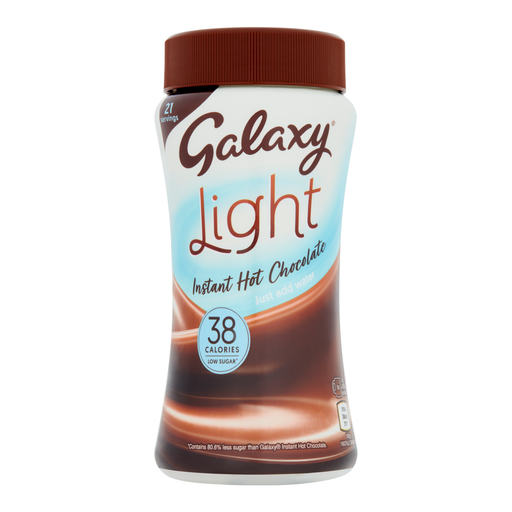
Galaxy Light Instant Hot Chocolate 210g
An instant hot-chocolate option for an afternoon drink when confirmed caffeine-free status is not required. “Light” does not establish caffeine status; check the current pack for preparation directions and allergens, particularly if milk, soya or barley is a concern.
View on Joybuy
 No image available
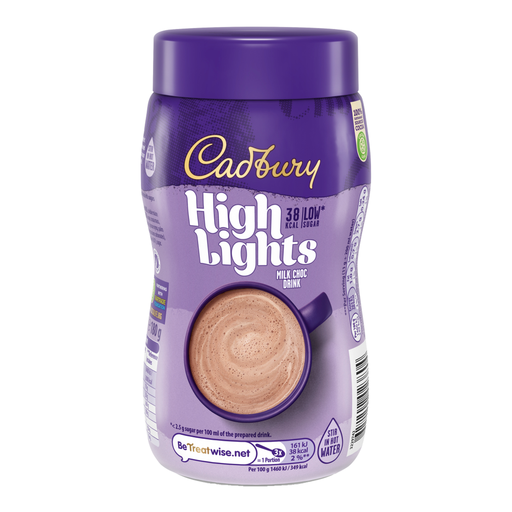
Cadbury Highlights Milk Chocolate Drink 180g
A milk-chocolate drink choice for shoppers comparing conventional chocolate drinks. Check the current pack for caffeine and milk-allergen information, and follow its preparation instructions rather than assuming it should be mixed with either water or milk.
View on Joybuy
 No image available
Cadbury Drinking Chocolate 500g
A drinking-chocolate format for an afternoon cocoa drink when verified caffeine avoidance is not the requirement. Read the current pack for the amount to use, preparation directions and milk-allergen information, and confirm caffeine content with the manufacturer if you need to track it.
View on Joybuy
Questions about caffeine and hot chocolate
Is ordinary hot chocolate decaf?
Do not assume so: NHS Tayside identifies hot chocolate and chocolate as caffeine sources. If you need a decaffeinated or caffeine-free drink, look for an explicit statement about the exact product or ask its manufacturer.
What if I want to avoid caffeine but still want a chocolate-style snack?
Look for an explicitly caffeine-free product and check its format. Caroboo says its cocoa-free carob products are naturally caffeine-free, but its documented range is principally chocolate-style snacks; check whether a particular product is intended for making a hot drink.
Does “light” or “low calorie” mean caffeine-free?
No. Those descriptions concern a product’s recipe or nutrition positioning, not its caffeine status. Check a separate caffeine-free statement for the exact variant rather than relying on the front-of-pack wording.
What if milk or another allergen affects my choice?
Read the current ingredients list for the exact product and check how you will prepare it. The Food Standards Agency says allergens present in prepacked food must be emphasised whenever they appear in the ingredients list; another variant from the same brand may have different ingredients.
Do retail HFSS rules determine whether hot chocolate can be served at school?
Not on their own. Department of Health and Social Care guidance addresses promotion and placement of certain products in retail settings, while Department for Education school food standards address food supplied in a different setting. Check the current requirements for the relevant UK nation, school type and service before making a school catering decision.


