Students using a campus hot-water point
If you only have a mug and hot water at lunch, check for directions that prepare the drink with water alone. A powder intended for hot milk calls for a different arrangement.


If a campus hot-water point is all you have between lectures, choose a mix whose directions specify hot water. For a less-sweet choice, compare sugars per prepared mug rather than relying on words such as ‘dark’ or ‘light’: the Options and Sainsbury’s low-calorie instant products reviewed here have lower labelled total sugars per mug than the reviewed Galaxy and Cadbury instant products. Plain cocoa gives you control over added sweetener, but the reviewed cocoa directions call for hot milk.
If you only have a mug and hot water at lunch, check for directions that prepare the drink with water alone. A powder intended for hot milk calls for a different arrangement.
Look at the nutrition information for the prepared serving, including the specified powder and liquid. A flavour name does not tell you how many grams of sugars are in the mug.
Plain cocoa lets you decide how much sweetener to add. The reviewed Sainsbury’s cocoa directions use hot milk, so check that you can prepare it where you plan to drink it.
Start with the liquid you can use at lunch, then compare the drink as prepared and read the current ingredients and allergen label.
| Priority | What to check | Your needs |
|---|---|---|
| Preparation | Read the directions for the required liquid and equipment. The Options, Galaxy and Cadbury instant examples use hot water; the reviewed Cadbury drinking chocolate and Sainsbury’s cocoa directions use hot milk, according to their retailer listings. | I only have a mug and a campus hot-water point, so I need directions that work with water rather than milk. |
| Prepared mug | Compare the stated powder quantity, liquid and nutrition per prepared serving. ASDA lists Options Belgian Choc at 5.7 g sugars and 40 kcal for 11 g powder in 200 ml water; Sainsbury’s lists its Low Calorie Instant mix at 4.6 g sugars and 41 kcal per mug. The reviewed Galaxy and Cadbury instant servings use different powder quantities and list 16 g and 17 g sugars respectively. | If labelled sugars matter to my choice, I want figures for the mug I will make, not just values per 100 g of powder. Total sugars do not directly measure free sugars; NHS guidance distinguishes sugars naturally present in milk. |
| Ingredients and allergens | Check the current pack for milk, soya and any manufacturing warnings relevant to you. The reviewed instant mixes contain milk ingredients; the Galaxy listing also identifies soya, while the Sainsbury’s cocoa listing carries a milk and soya manufacturing warning. | I need to check the exact product label before drinking it if an ingredient or allergen affects my choice. |
| Sweetness control | Compare labelled sugars per prepared mug for instant mixes. For plain cocoa, follow its preparation directions and decide how much sweetener to add; the final drink also depends on the milk used. | I would rather adjust a cocoa drink myself than assume a ‘dark’ or ‘premium’ name means it tastes less sweet or contains less sugar. |
A drinking chocolate or cocoa powder with hot-milk directions may be awkward to prepare at a water-only point.
Check the directions for the exact product before bringing it to campus. If you only have hot water, choose a mix that specifies water preparation.
Powder quantities and added liquids differ between the reviewed products, so powder-only figures do not describe the same finished drink.
Use nutrition values for the stated serving and note whether they include water or milk.
Flavour descriptions do not replace the prepared-serving nutrition panel. With plain cocoa, the amount of sweetener added changes the finished drink.
Check labelled sugars if you are comparing mixes, or choose plain cocoa when you have hot milk and want to adjust the recipe yourself.
Ingredients and allergen information can change, which matters when choosing between milk-containing mixes and products with soya warnings.
Read the current pack label for the exact product before buying and consuming it.
These examples illustrate preparation and label differences; a retailer reference does not mean that every product in its range has the same ingredients or directions.
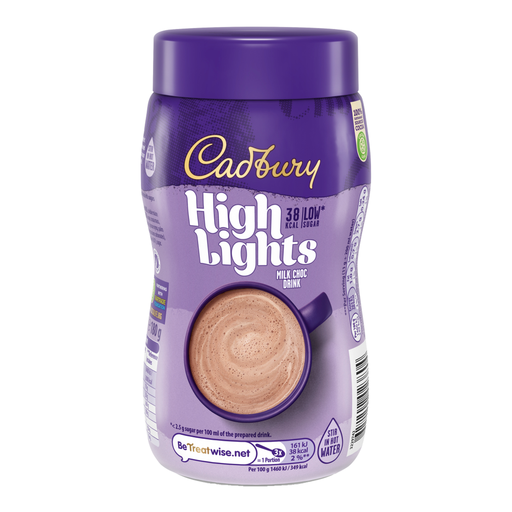
The reviewed Cadbury products include a drinking chocolate made with hot milk and an instant mix made with water.
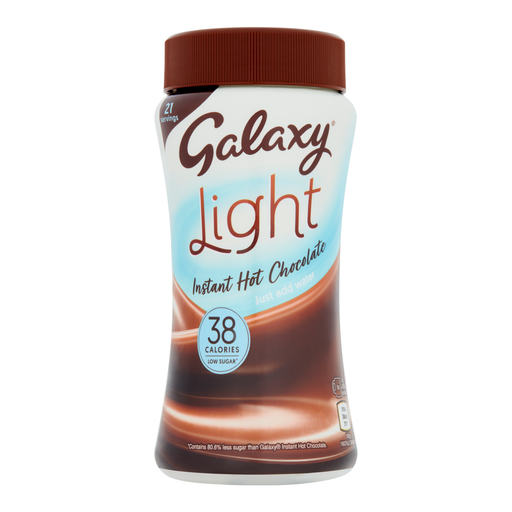
The reviewed Galaxy Instant product is a hot-water mix.
The reviewed Belgian Choc instant product is prepared with hot water.
M&S describes powder formats whose intensity can be adjusted and lists a Low Calorie Instant Hot Chocolate.
Tesco’s reviewed listings cover branded Cadbury and Galaxy hot-chocolate products with different preparation directions.
The reviewed own-label products offer two distinct routes: a water-prepared instant mix and cocoa powder prepared with milk.
These Joybuy products are hot-water instant mixes to consider when you are making a drink between lectures. Check each pack’s prepared-serving nutrition before using either one to compare sugars or calories per mug.
 No image available
The product description specifies mixing this drink with hot water, which fits a mug-and-hot-water lunch. It lists milk ingredients and sweeteners. Check the current pack for allergens, exact preparation directions and nutrition per prepared mug before comparing it with other mixes.
 No image available
The stated directions use 20 g powder in 200 ml hot water, so this is another water-prepared option for a lecture lunch. The product description lists gluten from barley, milk and soya as allergens. Check the current pack for prepared-mug sugars and calories if those figures affect your choice.
Choose an instant mix whose directions explicitly specify hot water. The reviewed Options, Galaxy, Sainsbury’s Low Calorie Instant and Cadbury Instant products use water; the reviewed drinking chocolate and plain cocoa directions call for hot milk.
Among the reviewed water-prepared examples, Sainsbury’s lists 4.6 g total sugars per mug for its Low Calorie Instant mix, and ASDA lists 5.7 g for Options Belgian Choc made with 11 g powder in 200 ml water. The reviewed Galaxy Instant serving lists 16 g and Cadbury Instant lists 17 g; their stated powder quantities differ, so compare the serving you will actually make.
No. NHS guidance explains that total sugars on a label include sugars naturally present in milk as well as free sugars. Use the stated serving and ingredients when comparing drinks, rather than treating the total-sugars figure as a direct free-sugars measure.
No. The reviewed instant mixes include milk-containing products, and the reviewed Galaxy Instant listing also identifies soya. Sainsbury’s cocoa listing carries a milk and soya manufacturing warning. Read the current pack’s ingredients and allergen information for the exact product before consuming it.