Teams running regular drink rounds
Individual sachets give staff a fixed powder portion. A shared tin calls for a consistent way to measure and prepare each drink.


Choose individual sachets when staff need a fixed powder portion for each drink; consider a shared tin when they can measure portions consistently. Milk-prepared flakes are a different service option, not a direct substitute for water-prepared instant chocolate. Whichever format you choose, check it against each resident’s care plan, the current allergen label and any prescribed drink consistency.
Individual sachets give staff a fixed powder portion. A shared tin calls for a consistent way to measure and prepare each drink.
East Suffolk and North Essex NHS Foundation Trust includes nutritious drinks among the options in its Food First guidance for older adults with poor appetite or weight loss. A hot chocolate still needs to fit the resident’s individual plan; an ordinary product is not a prescribed nutritional supplement.
These teams need to check the current product label and each resident’s plan before service. For a resident prescribed modified fluids, the finished drink must meet the required consistency—not merely be prepared according to a standard hot-chocolate recipe.
Choose when: A fixed powder portion makes repeated drink-round preparation easier to organise.
Bear in mind: A fixed portion does not establish that its ingredients or finished consistency suit every resident.
Choose when: Staff can use a consistent measure for each serving and manage an opened pack.
Bear in mind: The pack’s preparation and storage instructions become part of the drink-round process.
Choose when: A separate hot-milk preparation fits the resident’s plan and the home’s service routine.
Bear in mind: Flakes are not interchangeable with instant powder intended for preparation with water.
Settle resident-specific requirements before comparing formats. Then check how the chosen product will be portioned, prepared and served.
| Priority | What to check | Your needs |
|---|---|---|
| Individual plan | Check the resident’s nutrition and hydration plan, preferences and any relevant dietary requirements. If comparing nutrition figures, use the stated portion and preparation method: Sainsbury’s lists 112 kcal per Cadbury 28 g sachet, while ASDA lists 99 kcal for a Galaxy 25 g sachet made with 200 ml hot water. | I need a drink choice that fits the person being served, rather than one recipe for the whole dining room. |
| Allergens | Read the current pack for each product and check the serving ingredients too. The cited Cadbury sachet contains milk ingredients; ASDA lists milk and soya for the cited Galaxy sachet. Marks & Spencer marks its Belgian milk flakes unsuitable for people with a nut or peanut allergy. | If residents have different allergies, I need a product-specific check and a serving process that keeps their drinks distinct. |
| Drink consistency | Check the resident’s prescribed fluid level and the finished drink. The International Dysphagia Diet Standardisation Initiative describes water and milk as examples of Level 0 Thin drinks; a standard recipe does not establish that hot chocolate meets a different prescribed level. | For someone on modified fluids, I need the prepared drink to match their swallowing plan. |
| Portions and preparation | Check the powder measure, required liquid and storage directions on the chosen pack. Cadbury’s cited 28 g instant sachet is made with water; Marks & Spencer says its Belgian milk flakes melt into hot milk. | Our team needs a preparation method it can follow consistently across drink rounds. |
A usual water- or milk-prepared drink should not be assumed to meet a resident’s prescribed modified-fluid level.
Follow the resident’s swallowing plan and the approved preparation process, then check the finished drink against the required IDDSI level.
Ingredients and allergen information can change. The cited sachets and milk-prepared flakes also have different allergen information, so one product’s record cannot stand in for another’s.
Check the delivered pack and review the allergen record when a batch or recipe changes.
Marks & Spencer describes its Belgian milk flakes as melting into hot milk. That preparation differs from the cited Cadbury and Galaxy sachets, which use water.
Choose flakes only when their preparation method and current allergen information fit the intended residents and service routine.
These examples show why the exact format and label matter more than the brand name alone.
Sainsbury’s lists a 28 g Cadbury instant hot-chocolate sachet prepared with water.
ASDA lists a 25 g instant sachet made with 200 ml hot water; Sainsbury’s also lists a larger Galaxy instant jar.
Sainsbury’s lists an 11 g Options instant hot-chocolate sachet.
Its hot-chocolate listings include individual sachets and larger instant products, including an own-label 350 g pack.
Marks & Spencer lists a 250 g instant hot chocolate and separate 250 g Belgian milk hot-chocolate flakes.
These larger packs are options for homes planning to measure drinks from a shared tin. Check each pack’s directions and each resident’s requirements before using it for service.
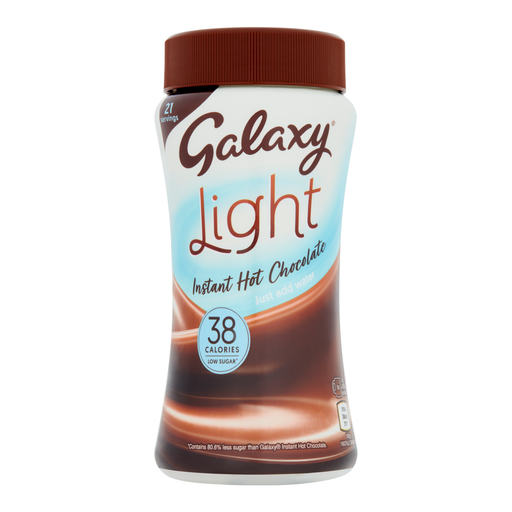 No image available
A 210 g shared tin for drink rounds where staff can measure each portion. Check the current ingredients, preparation directions and finished drink against the resident’s plan.
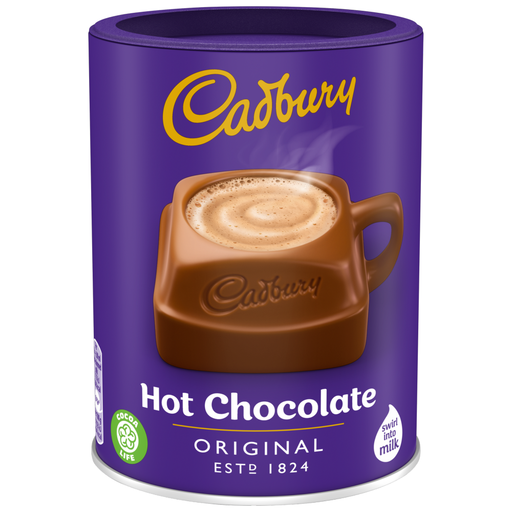 No image available
A 250 g shared tin rather than individual sachets. Check its current serving and liquid instructions, allergen label and suitability for the resident’s dietary and swallowing plans.
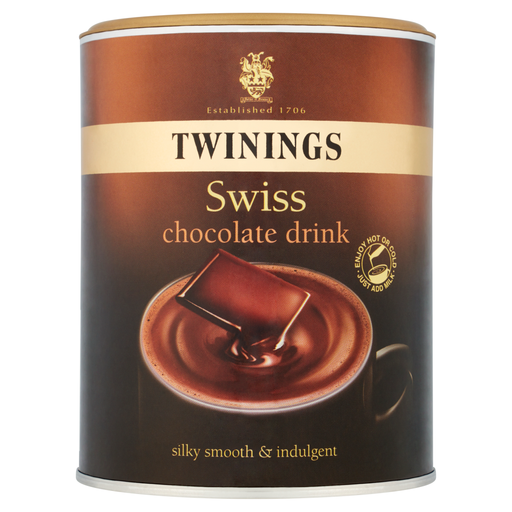 No image available
A 350 g shared tin for a measured-serving routine. Confirm the serving measure, preparation directions and allergens on the pack before planning drink rounds or serving a resident.
No. A fixed sachet portion does not establish suitability for someone’s dietary needs, allergies or swallowing plan. Check the current label and the individual care plan before service.
A suitable drink may be considered within an individual plan, but ordinary hot chocolate is not a prescribed nutritional supplement. East Suffolk and North Essex NHS Foundation Trust includes nutritious drinks in its Food First guidance for older adults with poor appetite or weight loss; the specific drink still needs to fit the person’s assessed needs.
Do not assume a standard recipe meets their prescribed level. The International Dysphagia Diet Standardisation Initiative gives water and milk as Level 0 Thin examples. Follow the resident’s swallowing plan and check the finished drink against the required IDDSI level.
Check the current pack for the exact product and account for ingredients added during preparation. The cited Cadbury sachet includes milk ingredients, ASDA lists milk and soya for the cited Galaxy sachet, and Marks & Spencer gives additional nut- and peanut-allergy warnings for its Belgian milk flakes.
Choose sachets when a fixed powder portion simplifies the home’s service routine; consider a tin when staff can measure servings consistently and follow its storage and preparation directions. Neither format removes the need to check individual plans, allergens and any prescribed drink consistency.