How to choose the format
Decide whether guests will make their own mugs or you will prepare each drink, then check the serving instructions and ingredients of the packs you are considering.
| Priority |
What to check |
Your needs |
| Amount for the group |
Compare pack weight with the stated amount needed per mug. Tesco Groceries lists 400g, 450g and 500g drinking-chocolate formats; Cadbury also describes a 1.5kg Bournville Cocoa product for baking or drinking. |
I’m making several mugs and want to plan how much product the brunch will use. |
| Preparation |
Check whether the selected pack calls for water, hot milk or another liquid. ASDA gives 11g powder in 200ml hot water for Options Belgian Choc; Tesco Groceries describes a Hotel Chocolat flakes sachet prepared with 220ml milk. |
Guests may want to make their own drinks quickly, or I may have time to prepare milk-based mugs individually. |
| Drink style and label figures |
Check the cocoa description, serving amount and whether nutrition figures refer to dry product or a prepared drink. Marks & Spencer states that its 72% Dark Drinking Chocolate contains at least 72% cocoa solids; ASDA gives 40 kcal for the specified Options 11g water-prepared serving. |
I want to offer a choice of drink styles without treating figures for different products and preparation methods as directly comparable. |
| Allergens |
Read the ingredient and allergen statements on the exact current pack, including precautionary wording. Ask a café or caterer about ingredients and cross-contact if they are preparing the drinks. |
Someone joining brunch has an allergy, so I need to check the particular product and how their drink will be made. |
Brand and product-line examples
These examples illustrate different pack formats and preparation methods; a brand name alone does not establish the ingredients of a particular product.
Cadbury
Cadbury describes Bournville Cocoa 1.5kg as suitable for baking or drinking, while Tesco Groceries lists a Cadbury 500g cocoa-powder product.
- The Bournville cocoa format is relevant if the same ingredient will also be used for brunch baking.
- Use the selected cocoa product’s recipe and label rather than assuming it prepares like a drinking-chocolate mix.
Galaxy
Tesco Groceries lists Galaxy Drinking Chocolate in a 450g format.
- Its listed pack weight makes it one format to consider when planning several mugs.
- Check the selected pack for its serving instructions, ingredients and allergens.
Options
The Options Belgian Choc jar is a 220g instant format, rather than one of the larger 400–500g examples.
- ASDA specifies a serving of 11g powder prepared in 200ml hot water, giving a clear basis for planning individual mugs.
- Do not infer allergy suitability from water preparation; check the ingredients on the exact pack.
Tesco
Tesco Groceries lists its own-label Drinking Chocolate in a 400g format.
- The listed weight provides another pack-size option for a group brunch.
- Use the product’s current label to check preparation and dietary details before serving.
M&S
Marks & Spencer describes a Drinking Chocolate prepared with hot milk and a separate 72% Dark Drinking Chocolate.
- The products offer distinct descriptions to consider when planning individually prepared milk-based drinks.
- Marks & Spencer states that its 72% Dark Drinking Chocolate is not suitable for someone with a milk allergy.
Large-pack drinking chocolate on Joybuy
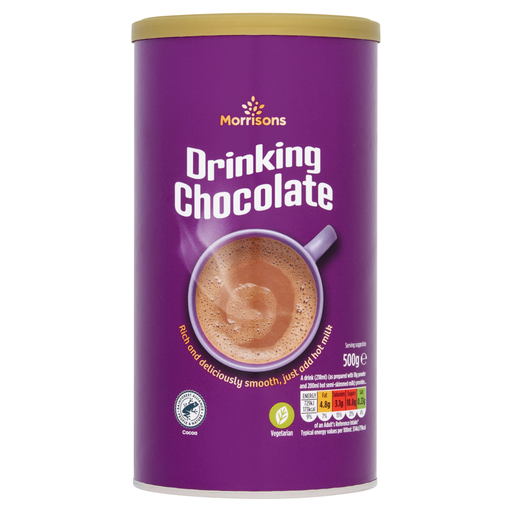
This 500g drinking-chocolate option fits a brunch plan centred on making several mugs from one pack. Check its preparation directions before choosing it for hot drinks.
 No image available
Morrisons Drinking Chocolate 500g
The 500g pack is a format to consider when making several brunch mugs. Check the current pack’s preparation directions before planning hot drinks, and read its allergen statement before serving anyone with an allergy.
View on Joybuy
Brunch hot-chocolate questions
Which hot-chocolate format should I buy for a brunch group?
For several mugs, start by comparing the serving directions on larger drinking-chocolate packs; Tesco Groceries lists 400g, 450g and 500g examples. Cocoa also works as a baking ingredient if you want to choose your own drink recipe, while flakes such as Tesco’s sachet-based Hotel Chocolat example suit individually prepared milk-based drinks.
Can I use water instead of milk?
Use water only when the selected product’s instructions allow it. ASDA specifies 11g Options Belgian Choc powder in 200ml hot water, whereas Marks & Spencer instructs shoppers to prepare its Drinking Chocolate with hot milk.
Is hot chocolate made with water suitable for someone with a milk allergy?
Water preparation does not establish that a powder is milk-free. Check the exact current pack’s ingredients, allergen statement and any precautionary wording before serving someone with a milk allergy.
What should I ask if a café or caterer makes the drinks?
Ask which product and liquid they use, what allergens are in the ingredients and whether cross-contact is a concern for your guest. If you are preparing packaged hot chocolate at home, read the exact pack label.
How should I keep a large pack after opening?
Follow that product’s storage and after-opening directions. Marks & Spencer’s Drinking Chocolate, for example, says to consume it within four weeks of opening; do not assume the same period applies to another pack.


