What should you check before buying?
Decide whether cocoa character, preparation speed or the way you make the drink matters most, then compare labels on the same basis.
| Priority |
What to check |
Your needs |
| Cocoa character |
Look for a declared cocoa percentage and whether it refers to dark chocolate or cocoa powder. Marks & Spencer lists 72% minimum cocoa solids for its Collection Dark Drinking Chocolate; Tesco lists Hotel Chocolat Classic as 70% dark-chocolate flakes. Neither figure establishes how sweet the prepared drink will taste to you. |
I would prefer a cocoa-led drink with breakfast, rather than choosing solely because a product is labelled instant or dark. |
| Preparation |
Check whether the instructions call for hot milk, a dairy alternative or hot water, and how much liquid a serving needs. Sainsbury’s Drinking Chocolate is made with milk; Sainsbury’s lists hot-water instructions for Cadbury Instant Hot Chocolate. |
On a busy morning, I may have hot water ready but not want to heat milk. For a slower breakfast, milk preparation may be practical. |
| Sugar information |
Compare figures only after checking the serving size and whether they describe dry mix or a prepared mug. Sainsbury’s lists 20.6 g sugars per mug of its drinking chocolate made with 200 ml semi-skimmed milk, and 17 g per serving of Cadbury Instant made with 200 ml water; those drinks use different ingredients and liquids. |
I want to know what is in the mug I will serve, particularly if breakfast also includes sweet pastries or jam. |
| Allergens |
Read the current pack’s ingredients, allergy advice and precautionary wording. Marks & Spencer says its 72% Dark Drinking Chocolate is unsuitable for milk or soya allergy; Tesco says Hotel Chocolat Classic cannot be guaranteed free from milk, even when made with a dairy alternative. |
If a guest avoids milk or soya, I need to check the exact product rather than rely on its cocoa percentage or preparation suggestion. |
Brand and product-line references
These examples show how preparation and formulation differ between specific UK-listed products; a brand name alone does not settle the choice.
M&S
Its drinking-chocolate range includes a Collection 72% Dark product as well as a standard drinking chocolate.
- Marks & Spencer declares 72% minimum cocoa solids for the Collection Dark product and 39% minimum cocoa solids in the cocoa powder used for its standard Drinking Chocolate.
- The 72% Dark product is labelled unsuitable for milk or soya allergy; check the current pack for the product you choose.
Hotel Chocolat
The Classic 70% product listed by Tesco uses dark-chocolate flakes in five 31 g sachets.
- Tesco describes the product as 70% dark-chocolate flakes that can be prepared with a dairy alternative.
- The listing says it cannot be guaranteed free from milk. Check its full allergy advice if serving someone with an allergy.
Cadbury
Sainsbury’s lists Cadbury Instant Hot Chocolate as a hot-water preparation option.
- The listed Instant product is prepared with hot water and contains 15% fat-reduced cocoa powder.
- Sainsbury’s lists 17 g sugars per serving made with 200 ml water and identifies milk-derived ingredients.
Galaxy
Tesco’s hot-chocolate listings include Galaxy instant, frothy, light and vegan-named formats.
- The named formats give shoppers different preparation and product-label options to examine.
- Check the exact product’s ingredients, cocoa information and instructions; the format name alone cannot answer those questions.
Options
Tesco lists Options Belgian Choc among its hot-chocolate products.
- It offers a named chocolate-flavour option to compare with other listed drinks.
- Use the exact pack to assess its cocoa content, preparation and allergens rather than inferring them from the flavour name.
Sainsbury’s
Its own-label Drinking Chocolate is a powder for a mug prepared with hot milk.
- Sainsbury’s lists 25% cocoa powder in the 300 g product’s ingredients.
- The listed prepared mug contains 20.6 g sugars when made with 200 ml semi-skimmed milk; the product is also labelled unsuitable for customers with milk or soya allergy because of manufacturing methods.
Joybuy hot chocolate for breakfast
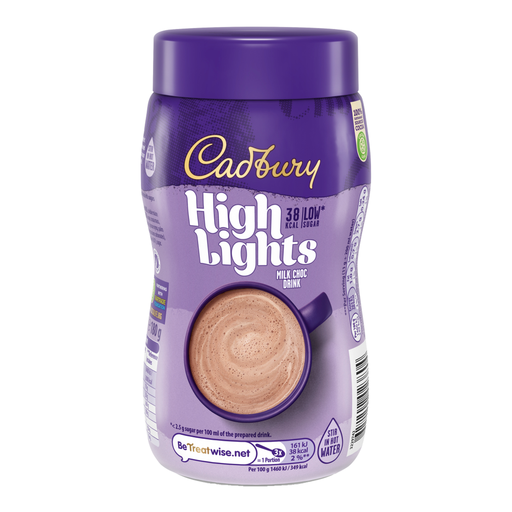
This Cadbury Highlights milk chocolate drink is an option to consider for breakfast service. Check its pack instructions to see whether its preparation fits your morning routine.
 No image available
Cadbury Highlights Milk Chocolate Drink 180g
For a quick breakfast drink, confirm the preparation method on the current 180g pack before choosing it. Check its ingredients and allergy advice if serving someone who avoids milk.
View on Joybuy
Breakfast hot chocolate questions
What does a more mature hot chocolate mean here?
It means a preference for a more cocoa-led, less overtly sweet drink with a continental breakfast, not an age-restricted product category. A declared dark-chocolate cocoa percentage can help you identify a formulation to consider, but check the exact product’s sugar information and preparation method too.
Does a higher cocoa percentage guarantee less sugar?
No. Cocoa percentage describes part of a product’s formulation, not the sugar content of the mug you will make. Read the nutrition panel and its serving basis before comparing products, particularly when one figure is for dry chocolate and another is for a prepared drink.
Should I compare dry mix or the prepared drink?
For the mug served at breakfast, use prepared-serving information when it states the portion and liquid. Sainsbury’s lists 20.6 g sugars for a mug of its Drinking Chocolate made with 200 ml semi-skimmed milk; its listing for Cadbury Instant gives 17 g for a serving made with 200 ml water. Keep the different preparations in view when comparing those figures.
Is dark or vegan-labelled hot chocolate suitable for a milk allergy?
Not on the strength of those descriptions alone. Marks & Spencer labels its 72% Dark Drinking Chocolate unsuitable for milk allergy, while Tesco says Hotel Chocolat Classic cannot be guaranteed free from milk even when made with a dairy alternative. Check the current pack of the exact product.
What allergen information should I check before serving guests?
Check the current pack’s ingredients, highlighted allergens and precautionary wording. The Food Standards Agency explains that precautionary allergen labelling communicates possible unintended allergen presence; it is different from an ingredient deliberately used in the product.


