Hosts serving hot chocolate after dinner
If you are making several mugs, compare the fat, sugars and energy declared for the drink as prepared. Check the stated number of servings before deciding whether one jar will cover your guests.


Choose a hot chocolate by its declared nutrition per prepared mug, then check how many mugs the jar makes and whether its ingredients suit your guests. Sainsbury’s lists 0.8g fat and 5.7g sugars for an Options serving made with 200ml water, while Tesco lists 1.0g fat and 2.7g sugars for a Cadbury Highlights stated serving; check portion sizes before comparing the figures directly. A milk-containing powder remains unsuitable for a guest with a milk allergy when mixed with water.
If you are making several mugs, compare the fat, sugars and energy declared for the drink as prepared. Check the stated number of servings before deciding whether one jar will cover your guests.
A lower reported fat figure need not mean a lower sugar figure. Sainsbury’s lists 5.7g sugars for an Options Belgian Chocolate serving made with 200ml water; Tesco lists 2.7g for a Cadbury Highlights stated serving, whose preparation basis should be checked on the pack.
The hot-chocolate powders discussed here contain milk-derived ingredients. Tesco’s Galaxy Light listing also declares barley and soya. Check each guest’s requirements against the current pack before serving.
Start with the drink you intend to serve: compare its prepared portion, then check the jar’s yield and the ingredients your guests need to avoid.
| Priority | What to check | Your needs |
|---|---|---|
| Fat and energy | Read the figures per prepared mug and its specified powder weight and liquid volume. Sainsbury’s lists 0.8g fat and 40kcal for 11g of Options powder in 200ml water; its Sainsbury’s hot chocolate lists 0.9g fat and 41kcal per prepared 200ml mug. | I want to compare the drink guests will receive, not a figure for dry powder against one for a finished mug. |
| Sugars | Compare sugars alongside fat on the stated serving basis. Tesco lists 2.7g sugars for a Cadbury Highlights serving and 3.1g for 10g of Galaxy Light in 200ml water; Sainsbury’s lists 5.7g for 11g of Options in 200ml water. | If I am serving dessert as well, I still want to see the drink’s declared sugars rather than choose from its fat figure alone. |
| Servings and preparation | Check portions per jar, powder per mug and preparation instructions. Sainsbury’s states approximately 22 servings for its own-label jar and 20 for Options; Tesco states 21 portions for Galaxy Light. | There need to be enough mugs for everyone, with a preparation method I can manage when guests are ready for a drink. |
| Allergens | Read the current ingredients and allergen statement for the exact product. The cited powders contain milk ingredients; Tesco also declares barley and soya for Galaxy Light. | For a guest with a milk allergy, making a milk-containing powder with water does not make it suitable. |
Sainsbury’s lists 0.8g fat but 5.7g sugars for an Options Belgian Chocolate serving made with 200ml water. Tesco lists 1.0g fat and 2.7g sugars for a Cadbury Highlights stated serving, so the lowest reported fat figure does not answer every nutrition question.
Check fat, sugars and energy together, keeping each product’s stated serving basis in view.
A value per 100g of powder describes a different quantity from a prepared mug. The cited water-prepared recipes use specified powder portions, including 10g for Galaxy Light and 11g for Options.
Use figures for comparable prepared portions, and account for the liquid you actually add if it is not water.
These examples include milk-derived ingredients in the powder itself. Changing the mixing liquid cannot remove those ingredients.
Ask guests about allergies and check the current pack; if a milk-free drink is needed, check the ingredients of a separate product before serving it.
Declared yields differ: Sainsbury’s states approximately 22 servings for its own-label jar, 20 for Options and 21 for Galaxy Light. A jar that covers the planned mugs leaves less room for second servings.
Count the mugs you expect to make, allow for any extra servings and check current availability before shopping.
If the stated yield falls short of that count, you will need another jar or a different drink for the remaining mugs.
These details concern the named products, not every drink made by each brand; use the current pack for your final ingredient and serving checks.
Cadbury Highlights Milk Chocolate Drink is a water-prepared option when both fat and sugars per stated serving matter.
Galaxy Light uses a stated 10g portion with 200ml hot water and may suit guests who specifically want its flavour.
Options Belgian Chocolate is worth comparing when the reported fat per 200ml water-prepared mug is a deciding factor.
Tesco Low Fat Hot Chocolate is an own-label jar with instructions for making a mug using hot water.
Sainsbury’s Low Calorie Instant Fairtrade Hot Chocolate offers a stated yield that can help with planning several mugs.
M&S Low Calorie Instant Hot Chocolate is another instant option to consider when checking ingredients and serving instructions.
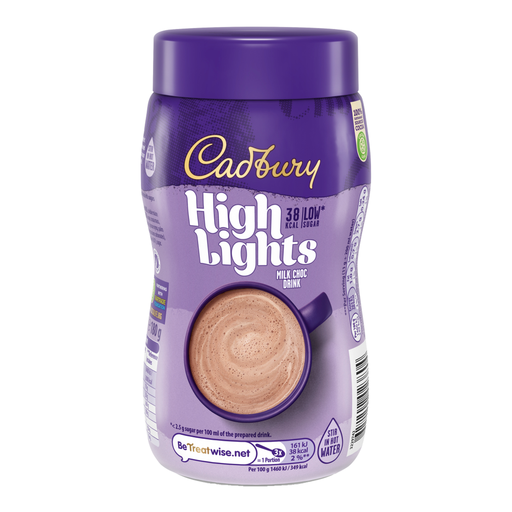
For a hot-water-prepared drink after dinner, this Joybuy option is Cadbury Highlights Milk Chocolate Drink. Check its current serving instructions and ingredients against the mugs and guests you are planning for.
 No image available
This 180g hot chocolate is an option for making an after-dinner drink with hot water. Tesco lists 38kcal, 1.0g fat and 2.7g sugars per stated serving for the named product. It contains milk-derived ingredients; check the current pack for the powder and water needed per mug, the number of servings and allergen information before serving guests.
The fat threshold depends on whether the claim applies to a solid or a liquid: the legislation.gov.uk annex to Regulation (EC) No 1924/2006 sets limits of 3g fat per 100g for solids and 1.5g per 100ml for liquids. For hot-chocolate powder, check what the pack’s claim describes, then use the nutrition figures for a comparable prepared drink when choosing what to serve.
The Department for Education’s school-food standards, as published in September 2026, apply to food and drink provided to pupils in state-funded schools, not drinks served at a private dinner party. They do not establish that every hot-chocolate product has the same HFSS classification.
Check the instructions for the particular powder. Sainsbury’s says Options Belgian Chocolate can be prepared with water, milk or a preferred milk alternative, but changing the liquid changes the finished drink’s nutrition. The Options powder itself contains milk, so a plant drink does not make it milk-free.
The named Cadbury, Galaxy, Options, Tesco, Sainsbury’s and M&S examples list milk or milk-derived ingredients, so do not serve them as milk-free options. Check the current physical pack before serving, including any other allergens relevant to your guests; Tesco’s Galaxy Light listing, for example, declares barley and soya as well as milk.