Shoppers serving mixed preferences
If one hot chocolate needs to suit guests who dislike pronounced dark-cocoa flavours, start with a plain option. Keep strongly flavoured or dark varieties as separate choices.


For a shared Easter drink where mildness matters, start with a plain instant or milk-style hot chocolate rather than a product described as dark or boldly cocoa-flavoured. Stated cocoa content can help distinguish comparable powders, but it cannot guarantee how a prepared mug will taste; drinking chocolate made with hot milk offers another route if you want to adjust the amount of powder. Check the current pack for preparation directions and allergens before serving guests.
If one hot chocolate needs to suit guests who dislike pronounced dark-cocoa flavours, start with a plain option. Keep strongly flavoured or dark varieties as separate choices.
An instant powder suits drinks made at different times. If you are happy to heat milk, drinking chocolate gives you a way to vary the powder amount according to the pack directions.
Compare the stated serving information and ingredients separately from flavour. For example, M&S lists 38 kcals per serving and sucralose for its Low Calorie Instant Hot Chocolate, which also contains a milk-derived ingredient.
Choose the flavour profile for the shared drink first, then check how it is made and whether the exact pack suits the people you are serving.
| Priority | What to check | Your needs |
|---|---|---|
| Chocolate flavour | Look for plain or dark-chocolate wording. Compare cocoa-powder percentages only between comparable powders; a percentage alone does not establish taste. M&S describes its 72% Dark Drinking Chocolate as boldly cocoa-flavoured. | I want one approachable chocolate flavour for guests who may not like dark or strongly flavoured drinks. |
| Preparation | Check whether the pack calls for hot water or hot milk and how much powder it specifies. Tesco Groceries directs shoppers to mix three teaspoons of Cadbury Drinking Chocolate with hot milk. | For mugs made at different times, I would rather use an instant powder; if I can heat milk, I may want to adjust the strength. |
| Allergens | Read the ingredients and allergen information on the current pack. Do not infer milk or soya suitability from words such as ‘dark’ or ‘instant’. | I need to check the exact product before offering it to a guest with an allergy. |
| Serving information | For a lower-calorie preference, compare stated values per serving alongside the serving size, sweeteners and ingredients. M&S lists 38 kcals per serving and sucralose for its Low Calorie Instant Hot Chocolate. | A lower-calorie label matters to me, but I do not want to assume it predicts flavour or allergen suitability. |
‘Smooth’ does not mean mild: M&S describes its 72% Dark Drinking Chocolate as having bold cocoa flavour.
Choose a plain instant or milk-style option for the shared drink, and offer dark chocolate separately if someone wants it.
M&S Low Calorie Instant Hot Chocolate lists whey permeate, a milk-derived ingredient, as well as sucralose.
Check calories, sweeteners and allergens independently on the exact pack.
Tesco Groceries lists Options varieties including white chocolate and mint. A named flavour is a separate preference, not evidence that the drink tastes milder.
Start with plain chocolate for the shared option; add a flavoured variety only if guests want that flavour.
The pack in hand is the place to check its current ingredients, allergens and preparation instructions.
Read it before purchase and again before making drinks for guests with dietary restrictions.
Its listed products provide distinct instant, drinking-chocolate and dark-chocolate routes.
Its Drinking Chocolate is a hot-milk preparation option.
Tesco Groceries lists Galaxy light instant and frothy hot-chocolate formats.
Tesco Groceries lists Belgian chocolate, white chocolate and mint varieties.
Its hot-chocolate listings include products from several brands and preparation formats.
These options cover an instant powder for individual mugs and a drinking chocolate for shoppers considering a milk-made drink. Check each pack’s directions and allergens before choosing for an Easter gathering.
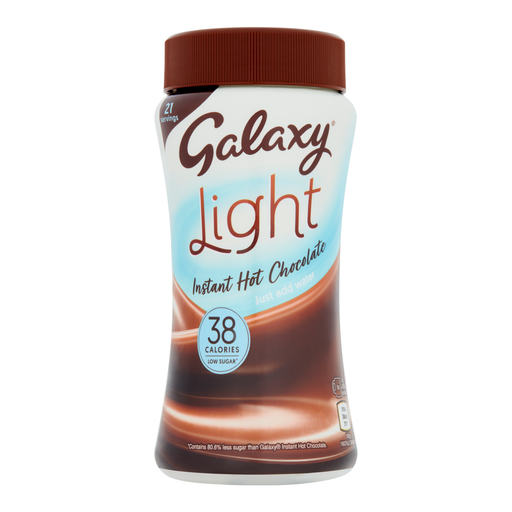 Image unavailable
An instant option to consider when guests may want individual mugs at different times. The listing identifies milk, soya and barley allergens; check the current pack before serving. ‘Light’ does not establish how mild the prepared drink will taste.
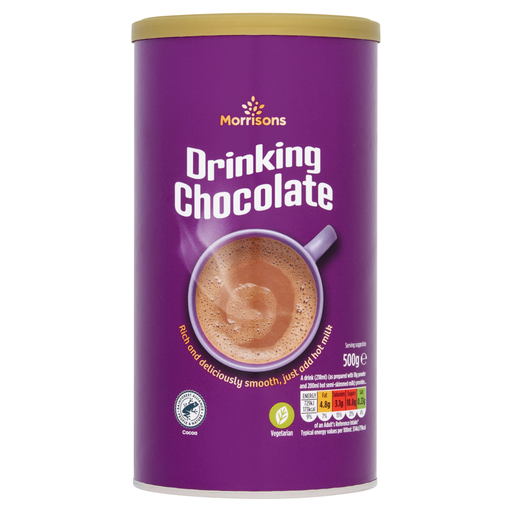 Image unavailable
A drinking-chocolate option if you plan to make hot-milk drinks. Check the pack for the powder-to-milk directions before deciding how to prepare a gentler mug, and read its current ingredients and allergen information for guests with dietary restrictions.
Start with a plain product rather than one described as dark or boldly cocoa-flavoured, then check its ingredients and preparation directions. Within M&S’s listed powders, Instant Hot Chocolate contains 20% cocoa powder and Drinking Chocolate contains 41%; those figures are formulation clues, not a taste test or a direct comparison with dark-chocolate cocoa-solids percentages.
Instant powder suits individual mugs made at different times; drinking chocolate is an option if you are happy to heat milk and adjust the powder amount. Check the chosen pack’s directions: Tesco Groceries, for example, directs shoppers to mix three teaspoons of Cadbury Drinking Chocolate with hot milk.
No. M&S states that its 72% Dark Drinking Chocolate is not suitable for people with a milk or soya allergy. Read the current allergen information for the exact product before serving it.
No. M&S Low Calorie Instant Hot Chocolate lists whey permeate, a milk-derived ingredient. Check the exact pack’s ingredients and allergen information rather than using its calorie description to judge suitability.
Read the current pack’s ingredients and emphasised allergen information, then follow its preparation directions. This matters particularly when a guest needs to avoid an ingredient such as milk or soya; a product name alone is not enough to establish suitability.