What should you check?
Start with any prescribed drink requirements, then choose a preparation method and a pack size that fit how often the household makes it.
Drinking chocolate made with milk
Consider it when: Several people use the powder regularly and making each drink with milk fits your routine.
Trade-off: It requires milk for the stated preparation method; pack size alone does not establish allergen or swallowing suitability.
Instant hot chocolate made with water
Consider it when: Quick individual mugs matter more than buying a larger tub.
Trade-off: The cited instant examples come in smaller jars, and some contain milk or other allergens despite their hot-water instructions.
| Priority |
What to check |
Your needs |
| Drink thickness |
If a swallowing plan applies, confirm the prescribed IDDSI drink level and test the prepared drink under its intended serving conditions. IDDSI classifies drinks at Levels 0–4 and foods at Levels 3–7. |
Someone in my household follows an easy-chew meal plan, so I need to know whether they also have a separate requirement for drinks. |
| Preparation |
Read whether the exact powder calls for hot milk or hot water, and check the stated amount of powder and liquid per mug. |
Heating milk fits our routine, or I would rather make individual mugs with hot water. |
| Pack size |
Compare the pack weight and stated servings where available; consider storage space and how often the tub will be used. |
We make hot chocolate regularly, so I want a pack that fits our likely use rather than choosing by the words “family pack”. |
| Ingredients |
Read the current pack’s allergen declaration, ingredients and any sweetener or precautionary statements. Do not infer ingredients from the preparation liquid. |
I need to check the exact product before serving it to anyone avoiding milk, soya, barley or a particular sweetener. |
Brand and retailer references
These examples help distinguish preparation methods and pack formats; they are not a list of products guaranteed to be available on Joybuy.
Cadbury
Cadbury has drinking-chocolate and instant hot-chocolate listings with different preparation instructions.
- Sainsbury’s lists the 500 g drinking chocolate for preparation with hot milk and the 300 g instant jar for preparation with hot water.
- The drinking-chocolate listing says “may contain milk”; check the exact pack if milk allergy matters.
Galaxy
Galaxy Light is a 210 g instant hot-chocolate option rather than a larger household tub.
- Its instant format offers a hot-water preparation route.
- The cited Galaxy Light listing identifies milk, soya and barley allergens.
Options
Options Belgian Choc is a smaller, water-prepared jar.
- Twinings UK states that its 220 g jar provides 20 servings.
- Twinings UK also states that it contains a source of phenylalanine; check the current label where that warning matters.
Tesco
Tesco’s hot-chocolate category lists several brands alongside its own-label instant hot chocolate.
- The category listing can help compare named pack formats, including Tesco Instant Hot Chocolate 400 g.
- Check live availability for a particular size; Tesco’s 2 kg Cadbury listing showed it as out of stock when cited.
Sainsbury's
Sainsbury’s product listings show how Cadbury’s milk-prepared drinking chocolate differs from its hot-water instant jar.
- The cited listings give preparation instructions for the 500 g drinking chocolate and 300 g instant product.
- Use the current physical pack for ingredient and allergen decisions.
M&S
M&S has separate drinking-chocolate and instant hot-chocolate products.
- The cited M&S listings distinguish a 300 g drinking chocolate from a 250 g instant product.
- M&S marks its drinking chocolate as unsuitable for people with a milk allergy; the instant product also lists milk ingredients.
Hot chocolate options on Joybuy
These options include larger milk-prepared drinking chocolates, smaller drinking-chocolate packs and one instant powder for hot-water mugs. Choose by the preparation method and pack size you need; none should be assumed suitable for a prescribed drink thickness without checking the individual plan.
 No image available
Cadbury Drinking Chocolate 500 g
A 500 g option for households that make drinking chocolate with hot milk. Sainsbury’s listing for this product says it may contain milk; check the current pack if allergy information matters.
View on Joybuy
 No image available
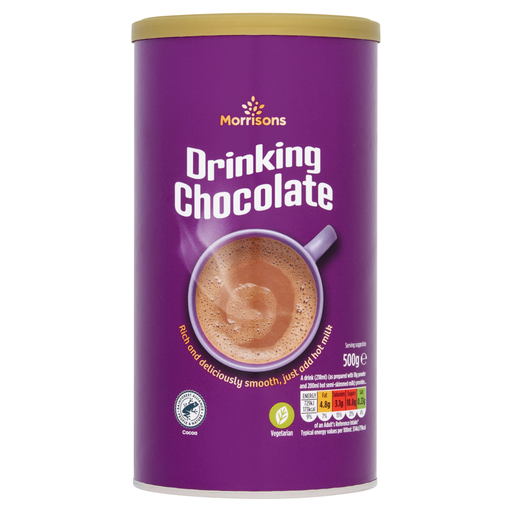
Morrisons Drinking Chocolate 500 g
Another 500 g drinking-chocolate option for a household comfortable preparing mugs with hot milk. Check the pack’s preparation and allergen instructions before serving.
View on Joybuy
 No image available
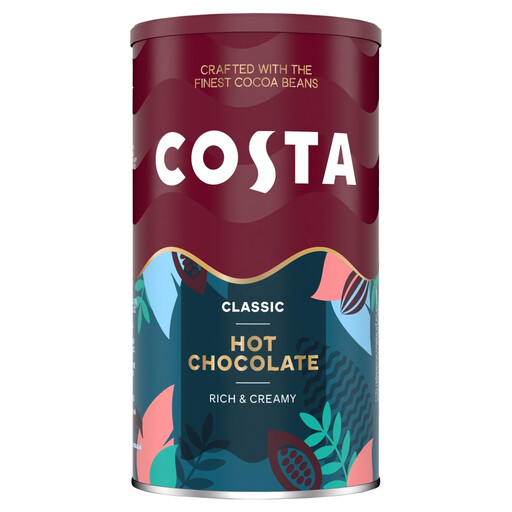
Costa Hot Chocolate 300 g
A smaller 300 g format to consider if the stated preparation with milk or a plant-based alternative fits your routine. A plant-based preparation does not establish that the powder suits a particular allergy; check the pack label.
View on Joybuy
 No image available
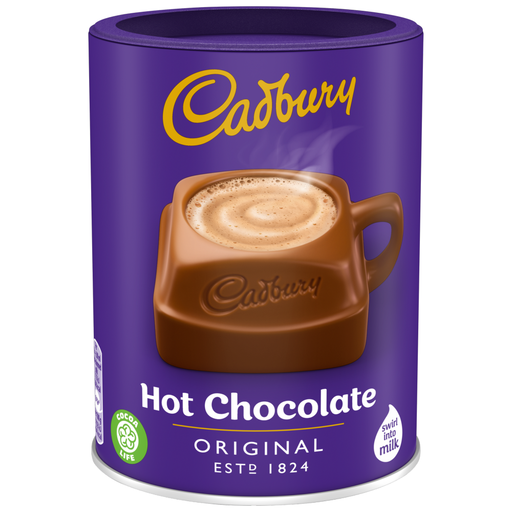
Cadbury's Drinking Chocolate 250 g
A 250 g drinking-chocolate pack for households that use hot milk but want a smaller format than the 500 g tubs shown here. Check its current precautionary milk statement on the pack.
View on Joybuy
 No image available
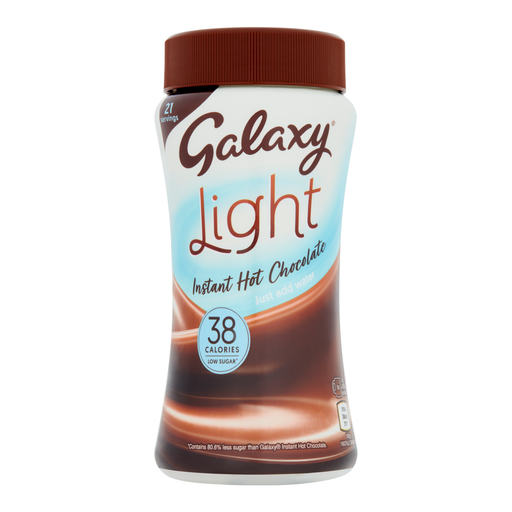
Galaxy Light Instant Hot Chocolate 210 g
A 210 g instant jar for households choosing hot-water preparation over a larger drinking-chocolate tub. Its listed allergens include milk, soya and barley; check the current pack before serving.
View on Joybuy
Frequently asked questions
Does an easy-chew diet mean ordinary hot chocolate is suitable?
No: an easy-chew food requirement does not establish the appropriate thickness of a drink. IDDSI classifies drinks and foods separately, so anyone following a swallowing-modified plan needs to follow their individually specified drink level.
Should a household choose drinking chocolate or instant hot chocolate?
Choose by how you make and use it: a larger milk-prepared drinking-chocolate tub may fit frequent shared use, while an instant powder suits hot-water mugs. Compare pack weight, serving instructions and current availability before selecting a size.
Can hot chocolate be served when thickened drinks are prescribed?
Follow the individual’s prescribed drink level and thickener plan rather than assuming a standard powder is suitable. IDDSI says to test drinks under intended serving conditions, and Buckinghamshire, Oxfordshire and Berkshire West Integrated Care System guidance links thickener recommendations to individual Speech and Language Therapist assessment.
Is hot-water instant chocolate dairy-free?
Not necessarily. The cited Galaxy Light product lists milk, soya and barley, while other instant powders may contain milk ingredients. Read the allergen declaration on the exact pack, regardless of what liquid you add.
Which ingredient information should I use before serving?
Use the current physical pack for ingredients, allergens and warnings, particularly when someone has an allergy or dietary restriction. A brand name or an online listing is not a substitute for checking the product being served.


