Large households buying for regular use
A shared cupboard pack calls for a look at its weight, preparation directions and storage instructions, particularly if several people will use it.


For regular household use, a 400–500g pack may be practical if the family will use it within the pack’s storage guidance. Choose drinking chocolate if making it with hot milk suits your routine; if you prefer to add hot water, check the directions on the exact instant product. Before sharing one pack, check its current ingredients and allergen statement for everyone who will drink it.
A shared cupboard pack calls for a look at its weight, preparation directions and storage instructions, particularly if several people will use it.
Some households are happy to make hot chocolate with hot milk; others want an instant product whose directions allow hot-water preparation.
When one pack is intended for several people, check the ingredients and allergen statement for that exact product before serving it.
Start with how often the household will use the pack and how it makes the drink, then check the label against everyone’s requirements.
| Priority | What to check | Your needs |
|---|---|---|
| Pack size | Compare the stated weight and any directions for storage after opening. The identified household-size examples include 400g and 500g packs. | Several of us will use the same pack regularly, so I want a size we can finish within its storage guidance. |
| Preparation | Read the exact pack directions: the Cadbury drinking chocolate identified by Sainsbury’s specifies hot milk, while instant products may have different instructions. | If we usually make drinks with hot water, I need a product whose directions say to use it. If we heat milk, drinking chocolate is another option. |
| Allergens | Check the current ingredients list and any precautionary allergen statement. GOV.UK says regulated allergens that are ingredients in UK prepacked food must be clearly identified in that list. | Before everyone shares a pack, I need to check whether it suits each intended drinker; a separate product may be necessary. |
| Flavour and formulation | Compare ingredients, cocoa percentage where stated, and nutrition information on the same basis, such as per 100g. M&S lists different cocoa-powder percentages for its instant and drinking chocolate. | Our preferences differ, so I would not use cocoa percentage alone to predict how the finished drinks will taste. |
Cadbury’s identified drinking chocolate directs you to mix it with hot milk. That may not fit a household’s usual preparation routine.
Read the directions before choosing; if you intend to use hot water, check that the exact instant product specifies it.
The Cadbury 500g product identified by Sainsbury’s says it may contain milk, while M&S says its 300g drinking chocolate is not suitable for people with a milk allergy.
Check the current pack’s ingredients and allergen statement for each intended drinker, and use a separate suitable product where needed.
M&S lists 20% cocoa powder for its instant hot chocolate and 41% for its drinking chocolate. Those figures describe different formulations, not how every person will experience the finished drink.
Consider the ingredients and preparation directions alongside the cocoa figure when choosing a style for the household.
These examples illustrate different pack sizes and preparation styles; check the exact product rather than applying one product’s details to a whole range.
The Cadbury Original Drinking Hot Chocolate 500g product identified by Sainsbury’s is a drinking-chocolate option for households that make it with hot milk.
Sainsbury’s lists a Galaxy Instant Hot Chocolate Jar in a 370g size.
Sainsbury’s lists Options hot chocolate in flavoured variants and an identified 200g vegan variant.
Sainsbury’s lists Stamford Street Co. Instant Hot Chocolate Drink in a 400g pack.
M&S describes a 250g instant hot chocolate and a separate 300g drinking chocolate made with hot milk.
These options include two 500g drinking chocolates for households preparing drinks with hot milk and a smaller instant product with hot-water directions. Check each product’s current pack details before choosing one for everyone.
 Image unavailable
A 500g drinking chocolate for a household that prepares it with hot milk. Its product directions specify hot milk, and its description says it may contain milk; check the current pack before serving anyone with an allergy.
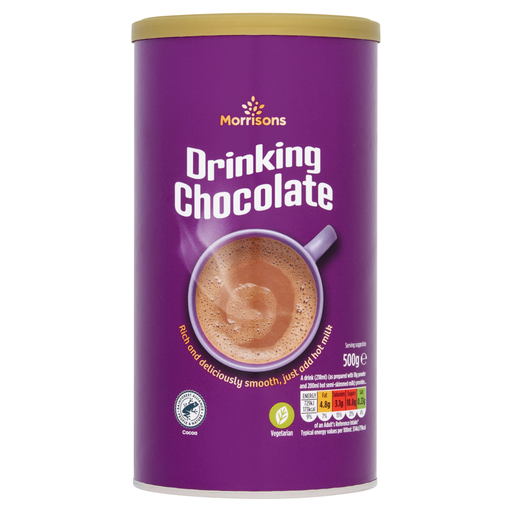 Image unavailable
This 500g drinking chocolate is another option for a household that uses hot milk. Check the physical pack’s ingredients and allergen statement before sharing it with anyone who has an allergy.
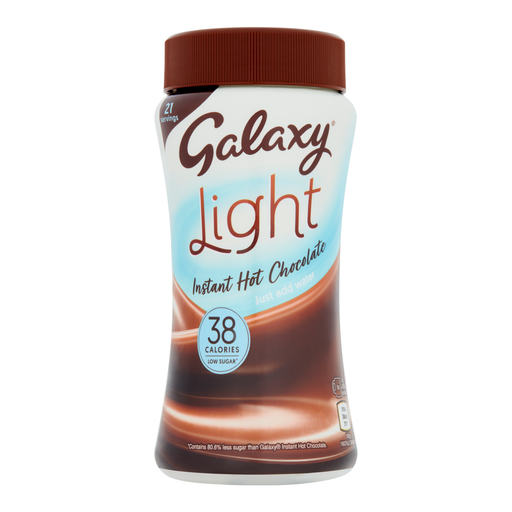 Image unavailable
Its directions specify hot-water preparation, while the 210g pack is smaller than the two 500g options here. The product description names milk, barley (gluten) and soya as allergens; check the current pack before serving.
No. A larger pack is useful only if the household expects to use it and its preparation method suits your routine. Check the weight and any storage instructions for the exact product.
Choose according to how you intend to make it: the identified Cadbury and M&S drinking chocolates specify hot milk, while the Galaxy Light 210g instant product’s directions specify hot water. Read the directions on the exact pack, as an instant label alone does not establish one preparation method for every product.
Check the exact product before serving it. Sainsbury’s identifies the Cadbury Original 500g product as possibly containing milk, and M&S says its 300g drinking chocolate is not suitable for someone with a milk allergy. GOV.UK says regulated allergens that are ingredients in UK prepacked food must be clearly identified in the ingredients list; also read any precautionary statement on the current pack.
Follow the instructions on that pack. M&S says its identified instant and drinking chocolates should be kept in a cool, dry place and consumed within four weeks of opening; do not assume the same period applies to another product.