What matters when serving friends?
Decide how you will prepare the drinks, then check portions and labels for the number of people you expect.
| Priority |
What to check |
Your needs |
| Pack and portions |
Compare pack weights, then read the stated amount per cup. Weight alone does not establish cup yield across tubs, flakes and solid bars. |
I’m making several drinks and want to know whether one pack covers the cups I plan to serve. |
| Preparation |
Check whether the exact pack calls for hot milk, water or either, and whether you have a way to heat and stir each serving. Cadbury’s 500g drinking chocolate calls for three teaspoons stirred into hot milk. |
If I only have a kettle available, I need a product whose own instructions allow water preparation. |
| Drink format |
Distinguish drinking-chocolate powder, flakes, instant mixes and solid bars. M&S describes its Belgian Milk Hot Chocolate Flakes as melting into hot milk; a solid bar requires a separate drink recipe if you intend to melt it. |
I’d rather choose the preparation style that fits the gathering than assume every large chocolate pack makes drinks in the same way. |
| Allergens |
Read the current ingredients and precautionary statements on the exact pack. Galaxy lists milk and soya ingredients for its 360g bar; Cadbury Drinking Chocolate says it may contain milk; M&S marks its Belgian Milk Hot Chocolate Flakes unsuitable for people with nut or peanut allergy. |
Before serving anyone with an allergy, I need to check the product I will actually use. |
| Sugar figures |
Compare the same label measure and portion basis. The NHS explains that total sugars on food labels include naturally occurring milk sugars, so the total is not necessarily an exact free-sugars figure. |
When comparing packs, I want the figures to describe the same thing rather than treating total sugars and free sugars as interchangeable. |
Which brands offer relevant formats?
These brand and retailer examples show different formats to check; they are not a ranking or a statement about current stock.
Cadbury
Cadbury’s 500g Drinking Chocolate is a drink format with instructions to stir three teaspoons into hot milk. Its large solid Dairy Milk bars are a separate confectionery format.
- The stated preparation amount helps when planning individual milk-based cups.
- The drinking chocolate carries a “may contain milk” statement; check the current pack for guests with allergies.
M&S Collection
M&S describes its Belgian Milk Hot Chocolate Flakes as melting into hot milk and states that the recipe contains 45% cocoa solids.
- The flakes provide a clearly described milk-based preparation route.
- M&S marks this product unsuitable for people with nut or peanut allergy.
Galaxy
Tesco’s hot-chocolate listings include Galaxy drinking-chocolate and instant formats. Galaxy also sells a 360g milk-chocolate bar, which should not be treated as the same type of product.
- The listed formats allow a choice between a drink product and a bar to share separately.
- Galaxy lists milk and soya ingredients for its 360g bar; check the exact product label before serving.
Options
Tesco lists Options jars among its hot-chocolate products, providing a jar format to consider alongside larger drinking-chocolate packs.
- A jar offers another format if guests want a choice of drinks.
- Check the chosen jar’s weight, serving directions and ingredients rather than assuming they match a larger tub.
Tesco
Tesco’s grocery listing includes own-label Instant Hot Chocolate 400g and Drinking Chocolate 400g, giving shoppers two named formats to compare.
- The two listed 400g products make the format distinction clear without relying on pack weight alone.
- Read each product’s preparation and allergen information individually before choosing one for guests.
Joybuy hot chocolate options
These drink products include drinking-chocolate packs of different weights and a chocolate drink described for hot-water preparation. Check each pack’s directions and portions against the number of cups you intend to make.
 No image available
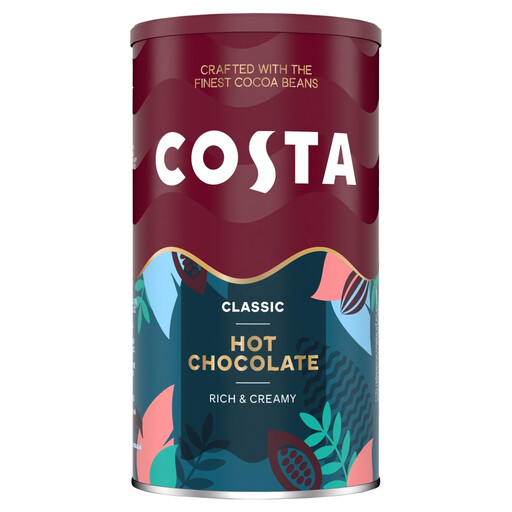
Costa Hot Chocolate 300g
For planning several cups, the listing describes approximately 15 servings from this 300g pack. Its preparation calls for hot milk or a plant-based alternative, so allow for heating the liquid and check the current pack’s ingredients and allergen information before serving.
Joybuy
 No image available
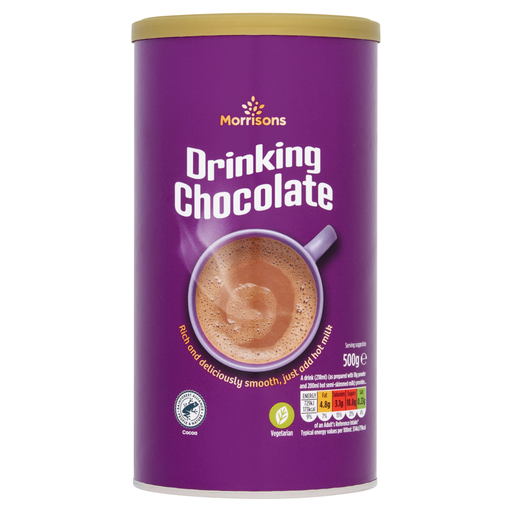
Morrisons Drinking Chocolate 500g
This 500g drinking-chocolate pack is a larger shared format for milk-based drinks. The product description calls for hot milk; use the pack’s serving directions to work out how much you need for your group.
Joybuy
 No image available
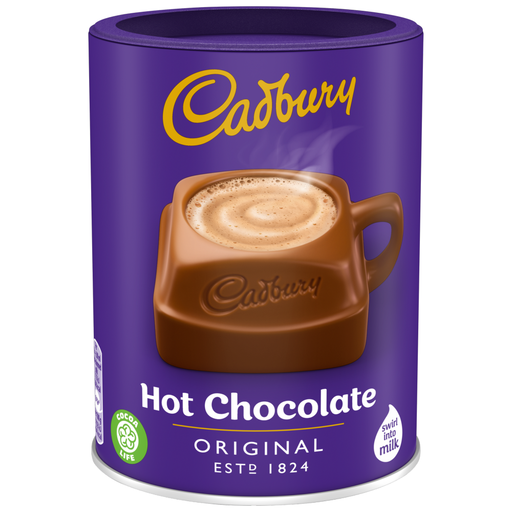
Cadbury’s Drinking Chocolate 250 g
This smaller drinking-chocolate pack is described for stirring into hot milk. Check its serving directions when planning cups, and note the stated “may contain milk” warning when considering guests’ allergies.
Joybuy
 No image available
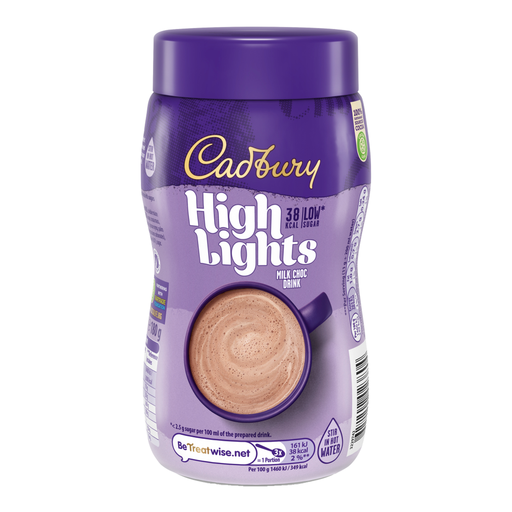
Cadbury Highlights Milk Chocolate Drink 180g
The product description gives a hot-water method, which may suit a gathering where heating milk is inconvenient. Its ingredient information includes milk despite that preparation method; check the current label for allergies and the pack directions for the number of cups.
Joybuy
Frequently asked questions
Is a large chocolate bar the same as a large pack of drinking chocolate?
No. Cadbury and Galaxy sell 360g milk-chocolate bars as confectionery, while Cadbury’s 500g Drinking Chocolate has directions for stirring three teaspoons into hot milk. M&S notes that chocolate pieces can be melted into a drink, but a bar’s weight does not establish an equivalent recipe or cup yield.
Do I need milk to make hot chocolate for friends?
That depends on the product. Cadbury’s 500g Drinking Chocolate and M&S Belgian Milk Hot Chocolate Flakes are described for use with hot milk, while M&S describes mixes in its wider range that can use warm milk or water. Read the instructions on the pack you choose before planning how to prepare several cups.
How should I check allergies before serving hot chocolate?
Ask guests about allergies and read the current physical pack before serving. Galaxy’s 360g bar lists milk and soya ingredients, Cadbury Drinking Chocolate says it may contain milk, and M&S marks its Belgian Milk Hot Chocolate Flakes unsuitable for people with nut or peanut allergy. Keep the packaging available for guests to inspect.
Does total sugar on the label equal free sugars?
Not necessarily. The NHS explains that total sugars on food labels include sugars naturally present in milk, whereas those sugars do not count as free sugars. Compare like-for-like label figures and portions without calling a product’s total-sugars value its exact free-sugars amount.
What should I check before buying for a planned gathering?
Check the exact pack’s serving instructions, required liquid and allergen label, then confirm availability and your delivery or collection arrangements close to the gathering. Pack weight alone will not tell you how many cups different hot-chocolate formats make.


