Older adults who want an occasional drink
If limiting the sugar or energy added by a hot chocolate matters, compare labels for the drink as prepared. A water-made instant mix and a powder prepared with milk do not have the same serving basis.


For an older adult eating adequately, compare sugar and energy per prepared mug: a water-made low-calorie mix may suit an occasional drink, while a milk-made drinking chocolate may fit a plan to increase intake when appetite is poor. Neither choice replaces individual dietary advice, and anyone prescribed thickened fluids should follow their speech and language therapist’s instructions rather than assume an ordinary hot chocolate is suitable.
If limiting the sugar or energy added by a hot chocolate matters, compare labels for the drink as prepared. A water-made instant mix and a powder prepared with milk do not have the same serving basis.
East Suffolk and North Essex NHS Foundation Trust advises energy-, protein- and micronutrient-dense foods when poor appetite makes it difficult to eat enough. A milk-made drink may have a place in an individual food-first plan; a low-calorie mix should not be the automatic choice.
For someone assessed by a speech and language therapist, the advised drink thickness comes before a choice of flavour or powder. Oxford University Hospitals NHS Foundation Trust describes thickener recommendations as following an individual swallow assessment.
Start with the purpose of the drink, then compare nutrition on the same prepared-mug basis. Keep any allergy, dietary or swallowing instructions in view when checking the pack.
| Priority | What to check | Your needs |
|---|---|---|
| Sugar and energy | Check sugars and kcal per prepared mug, the amount of powder used and whether the figures include milk. Sainsbury’s lists 4.6 g sugars and 41 kcal for its low-calorie mix made with water; its listing for Cadbury Original gives 23 g sugars and 168 kcal for a milk-made serving. These are different preparations and serving sizes. | I want an occasional hot chocolate without overlooking what the finished drink contributes. |
| Intake when appetite is poor | Check protein and energy for the finished drink, including the milk used. Sainsbury’s lists 7.9 g protein for its prepared Cadbury Original serving, compared with 1.6 g for its water-made low-calorie instant mug. Follow an individual nutrition plan where one applies. | If eating enough is difficult, I need to know whether the drink fits the person’s plan for additional intake rather than choosing by a “light” label. |
| Ingredients and allergens | Read the current pack’s ingredients and allergen statements, including those for milk and any relevant soya, nut or peanut warnings. Check sweetener information where it matters to an individual dietary plan. | An allergy or prescribed diet makes the exact product and its current label important to me. |
| Prescribed drink thickness | Use the thickener and International Dysphagia Diet Standardisation Initiative (IDDSI) level advised after a swallowing assessment. Do not judge the required thickness by the drink’s appearance. | If thickened fluids have been prescribed, I need preparation instructions that match the speech and language therapist’s advice. |
Water-made low-calorie examples listed by Tesco and Sainsbury’s provide around 1.0–1.8 g protein per mug. For someone struggling to eat enough, East Suffolk and North Essex NHS Foundation Trust instead emphasises energy- and protein-dense choices.
Establish whether the aim is an occasional lower-energy drink or additional dietary intake. Seek advice from the care team or dietitian where weight loss or malnutrition risk is a concern.
Galaxy Instant uses a 25 g portion with water in Sainsbury’s listing, while its Cadbury Original drinking-chocolate serving includes milk. Powder quantities and preparation change what ends up in the mug.
Compare sugars, kcal and protein for the drink as it will actually be made, noting the serving size and whether milk is included in the stated values.
A swallowing recommendation is individual. Oxford University Hospitals NHS Foundation Trust explains that a speech and language therapist recommends thickener following a swallow assessment.
Follow the advised thickener and IDDSI level; ask the treating team how to prepare a particular drink rather than improvising its thickness.
Allergen statements differ between products. For example, Marks & Spencer states that its Belgian Milk Hot Chocolate Flakes are not suitable for people with a nut or peanut allergy and that product information can change.
Check the current physical pack before serving, particularly when milk, soya, nuts or peanuts are a concern.
These examples show why the product and preparation method matter more than the brand name alone; figures apply to the specified serving, not every product in a range.
Cadbury Original Drinking Chocolate is prepared with milk, while Highlights is an instant option prepared with water.
Galaxy Instant Hot Chocolate is a conventional water-made instant drink.
Options Belgian Choc is sold as an instant drink in jar and sachet formats.
Tesco has an own-label instant hot chocolate with water-based preparation.
Sainsbury’s Low Calorie Instant Fairtrade Hot Chocolate is prepared with water.
M&S lists both a low-calorie instant hot chocolate and Belgian Milk Hot Chocolate Flakes intended for hot milk.
These options include drinking chocolate for milk preparation and instant drinks for water preparation. Compare each product’s current pack for the prepared-mug figures and instructions that matter to the person drinking it.
 No image available
Consider this when preparing a drink with milk is part of the plan. Check the pack’s prepared-serving sugars, energy and protein against that plan; do not assume a milk-made drink is the lower-sugar option.
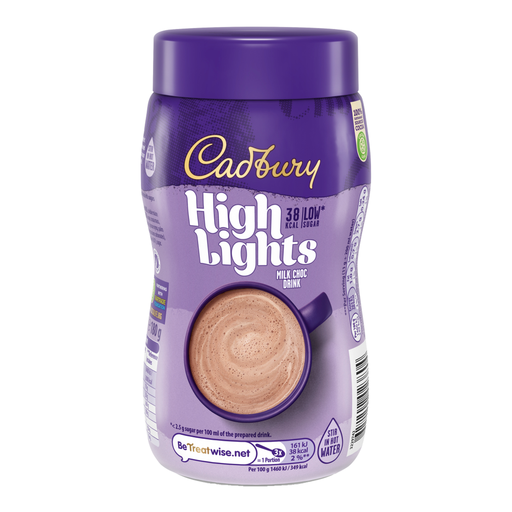 No image available
A water-made instant option for an occasional drink when comparing sugar and energy per mug. Check this 180g pack’s own serving instructions and allergen label; figures for a different pack size should not be assumed to apply.
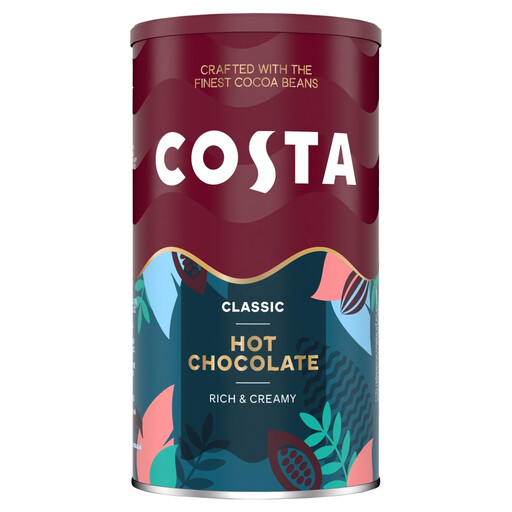 No image available
For a drink prepared with milk or a plant-based alternative, the chosen liquid affects the finished mug. Compare nutrition for the preparation you intend to use rather than treating powder figures as finished-drink values.
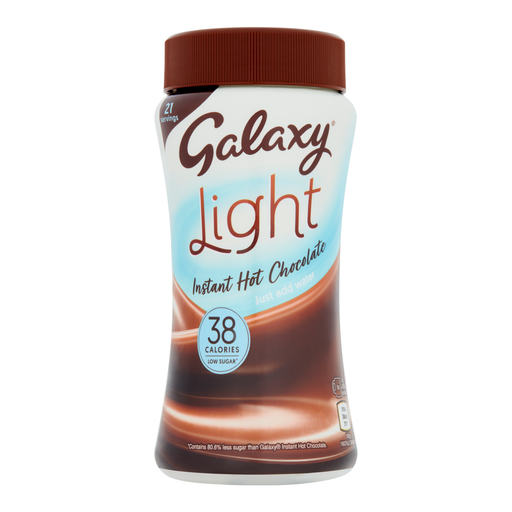 No image available
A water-preparation option to assess by its own recipe and finished-mug nutrition. The word “Light” does not establish its sugar or protein content, and figures for standard Galaxy Instant are not figures for this product. Check the current allergen label.
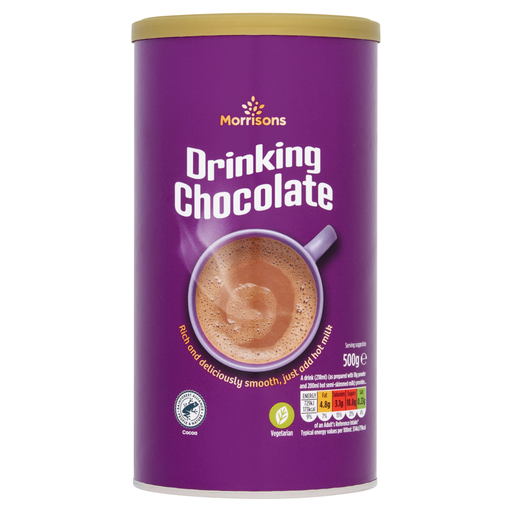 No image available
Consider this for hot-milk preparation. Before comparing its energy, sugars or protein with another drink, check the serving size and whether the label’s values include the milk used.
No. It may suit an occasional drink for someone eating adequately, but the goal changes if appetite is poor or weight loss is a concern. East Suffolk and North Essex NHS Foundation Trust advises energy-, protein- and micronutrient-dense choices when it is difficult to eat enough; discuss an individual nutrition plan with the care team where needed.
Follow the particular product’s instructions and compare the resulting mug with the person’s dietary needs. Sainsbury’s lists 41 kcal and 1.6 g protein for its low-calorie instant product made with water, while its prepared serving of Cadbury Original made with milk lists 168 kcal, 7.9 g protein and 23 g sugars. Those figures apply to different products and preparations.
Use only the thickener and IDDSI level advised for that person after a swallowing assessment. Oxford University Hospitals NHS Foundation Trust explains that a speech and language therapist recommends thickener following assessment; an ordinary hot chocolate should not be assumed to meet a prescribed thickness.
Read the current pack’s ingredients and allergen statements for the exact product before serving it. Statements differ: Marks & Spencer, for example, labels its Belgian Milk Hot Chocolate Flakes unsuitable for people with a nut or peanut allergy and notes that product information can change.