Households making hot chocolate regularly
Look at the pack weight and stated servings together. Check whether making each mug also calls for milk.


Choose a jar that everyone who will share it can use: check the ingredients and whether it is made with hot water or hot milk first. Then compare pack sizes alongside stated serving sizes, since a larger jar does not necessarily make more mugs. A milk-made drinking chocolate fits a household that routinely prepares drinks with hot milk; an instant jar fits one that needs hot-water preparation.
The preparation method and the people sharing the jar matter as much as its size.
Look at the pack weight and stated servings together. Check whether making each mug also calls for milk.
An instant jar with hot-water instructions lets family members make a drink without heating milk. Check the directions for the exact product rather than assuming every hot chocolate is instant.
When a jar will be shared, check the current label for ingredients, allergens and precautionary statements relevant to everyone using it. A gluten-free or vegan label does not answer every other ingredient question.
Start with a preparation method and ingredient list that work for the household, then assess how the stated servings fit repeated use.
| Priority | What to check | Your needs |
|---|---|---|
| Jar yield | Compare pack weight, stated servings and the amount of powder specified for each mug. Serving sizes differ between products. | Will this jar cover the number of mugs we expect to make, or will individual portions use more powder than the label suggests? |
| Preparation | Read whether the instructions call for hot water or hot milk, and check the stated amount of liquid. | Some of us need to make a drink with hot water; otherwise, we need to have milk ready for each mug. |
| Nutrition labels | Check whether sugars are stated per 100g, per portion of powder or per prepared mug. Compare the serving size and preparation basis alongside the figure. | For drinks we make often, I want to understand the label for the mug we actually prepare, not compare figures measured on different bases. |
| Ingredients | Read the current jar’s ingredient list, allergen information and precautionary statements. Check dietary labels for the exact variant. | Everyone sharing the jar needs an option that fits their ingredient requirements; a vegan label alone does not settle a milk-allergy question. |
Pack weight alone does not tell you how much powder the instructions use per serving. Sainsbury’s lists approximately 12 servings for its 350g Instant Fairtrade jar, while its listing for Cadbury Instant 300g states 14 servings.
Read the serving guidance on each jar and consider the portions people in your household usually make.
A gluten-free claim does not establish that a product is milk-free. Sainsbury’s listing also describes Options Vegan 200g as suitable for vegans while warning that it may contain milk.
Check the exact current pack’s ingredients and precautionary statements before choosing a jar for someone with an allergy.
A figure for powder alone cannot be read as a figure for a prepared mug. Products can also specify different quantities of powder and liquid.
Check the label’s per-serving basis and preparation directions before comparing figures or deciding how much powder to use.
These examples show why the preparation instructions and exact variant matter; they do not describe every product in a brand’s range.
Sainsbury’s lists a 500g Original Drinking Hot Chocolate made with hot milk and a 300g Instant jar made with hot water.
Sainsbury’s describes the 370g Galaxy Instant jar as a hot-water drink containing milk chocolate, sugars and sweetener.
The listed range includes a 220g Belgian instant drink labelled gluten-free and a separate 200g product labelled suitable for vegans.
Its listed 350g Instant Fairtrade Hot Chocolate is made with hot water and contains approximately 12 stated servings.
Tesco Groceries’ hot-chocolate listing includes a 500g Cadbury product and a 220g Options jar.
Marks & Spencer describes a 300g Drinking Chocolate made with hot milk and a separate 250g Fairtrade Instant Hot Chocolate.
These options include drinking chocolate for hot-milk preparation and an instant jar for hot-water preparation. Check serving guidance and the current label when choosing for several people.
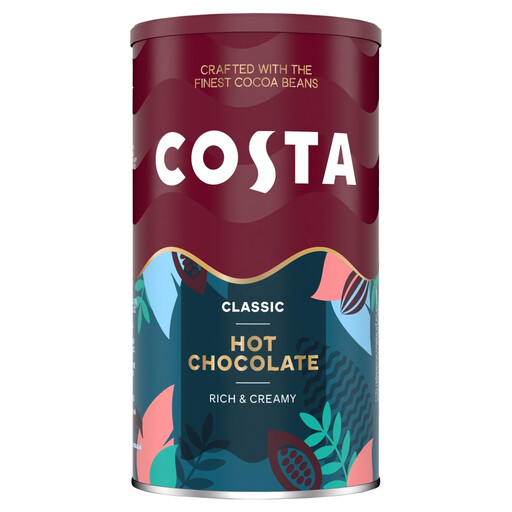 Image unavailable
Consider this 300g option if the household prepares its hot chocolate with milk or a preferred plant-based alternative. Check the current pack’s preparation and serving guidance for the mugs you make.
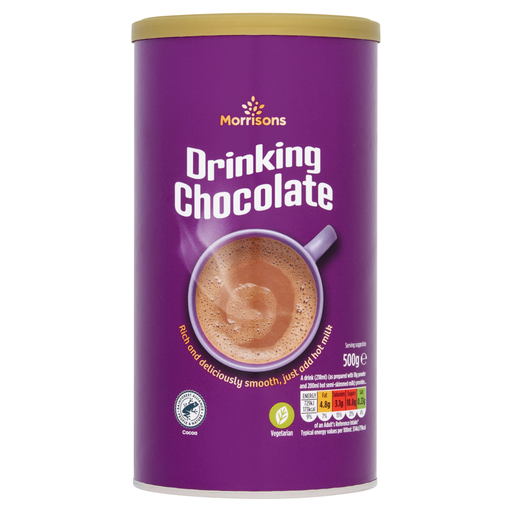 Image unavailable
This 500g drinking chocolate fits a household that makes drinks with hot milk. Use its serving instructions to judge how the pack size fits your routine.
 Image unavailable
This 500g drinking chocolate is an option when hot milk is part of the household’s usual preparation. Check the current jar’s serving directions and milk-related statements before sharing it.
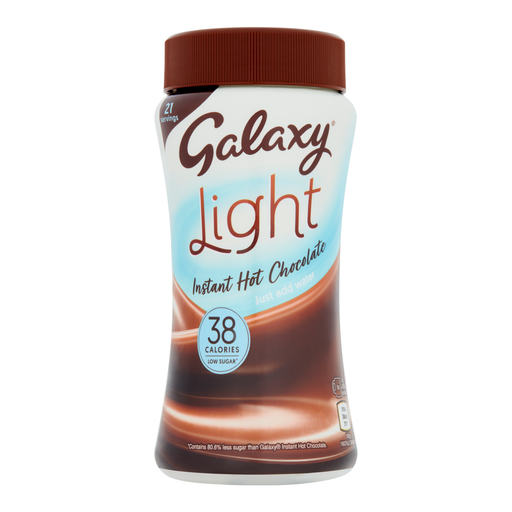 Image unavailable
This 210g instant option suits hot-water preparation. Check its serving directions for household use and read the current label if barley, milk or soya is a concern.
Choose drinking chocolate if making each drink with hot milk suits the household; the listed Cadbury Original 500g product uses hot milk. If people need hot-water preparation, check an instant jar’s directions instead: the listed Cadbury Instant, Options Belgian and Sainsbury’s Instant products give hot-water instructions.
No. The stated serving size affects the number of mugs: Sainsbury’s lists approximately 12 servings for its 350g Instant Fairtrade jar, while its Cadbury Instant 300g listing states 14. Check how much powder each product calls for and how much your household uses.
No. Sainsbury’s describes Options Vegan 200g as suitable for vegans but says it may contain milk. Check the current pack’s ingredients and precautionary statements for the person who will drink it.
Check the stated serving size and whether the figure describes powder or a prepared drink. The listed Options Belgian figure of 5.7g sugars relates to an 11g portion made with 200ml water; a figure measured on another basis is not directly comparable without accounting for that difference.