Organisers serving hot drinks
Choose a method volunteers can follow consistently. Keep the current ingredient information available at the stall and agree how milk-containing drinks will be prepared and handed over.


Choose drinking chocolate made with hot milk if the stall can supply and identify the added milk; choose an instant mix made with hot water if simpler preparation matters more. Water preparation does not mean dairy-free: check the exact pack’s ingredients and allergen declaration, then plan how helpers will serve the drinks under the school’s allergy arrangements.
The useful jar format depends on how the stall will prepare drinks, how many portions it needs and how it will communicate ingredients.
Choose a method volunteers can follow consistently. Keep the current ingredient information available at the stall and agree how milk-containing drinks will be prepared and handed over.
A larger drinking-chocolate pack may suit repeated servings if the stall can also provide hot milk. Work out portions from the pack instructions rather than pack weight alone, and include the added milk in ingredient information.
An instant mix can remove separate milk preparation from the serving process. It may still contain milk ingredients, so check the powder’s own declaration before deciding what information helpers need to give.
Start with the stall’s preparation method and allergy arrangements. Then compare the stated portions and, if it matters for the event, nutrition figures on the same serving basis.
Choose when: The stall can provide hot milk and identify it as an added ingredient in every drink made this way.
Allow for: Milk supply, storage and handling alongside the powder.
Choose when: Volunteers need to make drinks without preparing milk separately.
Remember: A water-prepared powder can still contain milk-derived ingredients.
| Priority | What to check | Your needs |
|---|---|---|
| Allergens and service | Read the exact pack’s ingredient and allergen declaration. Keep that information accessible to helpers; use separate utensils and space if offering food intended for people with particular allergies. | I need helpers to know what is in the drink and what was added during preparation. Separate handling matters if the stall also offers allergy-friendly bakes. |
| Preparation | Check whether the instructions call for hot milk or hot water, the powder quantity per drink and the equipment needed to serve it consistently. | If hot water is easier to manage, I still need to check the instant powder for milk ingredients. If using drinking chocolate, I need a plan for the added milk. |
| Portion planning | Compare pack weight with the stated powder quantity and servings where given. Check the drink volume in the instructions before estimating how many cups a jar will make. | I want enough mix for the expected number of drinks without assuming that two jars of the same weight make the same number of portions. |
| Nutrition per serving | Use the stated serving size and preparation method when reading nutrition figures. Ocado lists 38 kcal and 6.1g sugars per serving for M&S Instant Low Calorie Hot Chocolate; its ingredients include milk-derived components. | If we offer a lower-calorie option, I want its serving information to be clear. That choice does not replace the separate allergen check. |
Sainsbury's lists several milk-derived ingredients in Cadbury Instant Hot Chocolate, although it is mixed with hot water. The water-prepared M&S low-calorie product also lists milk ingredients.
Read the declaration on the exact pack bought for the sale, record the ingredients for helpers and follow the school’s allergy arrangements.
Drinking chocolate made with hot milk needs a separate milk supply. Pack weight by itself does not tell volunteers how much milk or powder to use in each cup.
Follow the stated preparation method when estimating portions, and check that the stall has the milk, cups, stirring equipment and helpers it needs.
Supplying and handling milk adds work to a hot-milk serving method.
Different variants can have different ingredients. A range listing or a vegan label alone cannot establish suitability for a child with a particular allergy.
Check the individual flavour’s physical pack and keep its ingredient information at the stall.
Shared surfaces, utensils and helpers can compromise the separation of food offered for people with particular allergies, even when its ingredients have been checked.
Anaphylaxis UK advises keeping allergy-friendly bakes in a separate area and using different serving utensils. Plan those arrangements before the sale opens.
Compare the exact variant, not just the brand: preparation instructions and ingredient declarations can differ across a range.
Cadbury has both drinking chocolate prepared with hot milk and an instant jar prepared with hot water among the products considered here.
Tesco lists instant Galaxy variants including Light, Frothy and a vegan-labelled hot chocolate.
Tesco lists 220g flavoured jars, including Belgian Choc, Belgian Mint Choc, White Choc and Salted Caramel.
Marks & Spencer lists drinking chocolate, instant hot chocolate and a low-calorie instant variant.
These options cover hot-water instant drinks and drinking chocolate for a milk-prepared stall. Choose between them by preparation method, pack size and the ingredient information on the exact product bought; the product list does not settle the school’s allergy arrangements.
 No image available
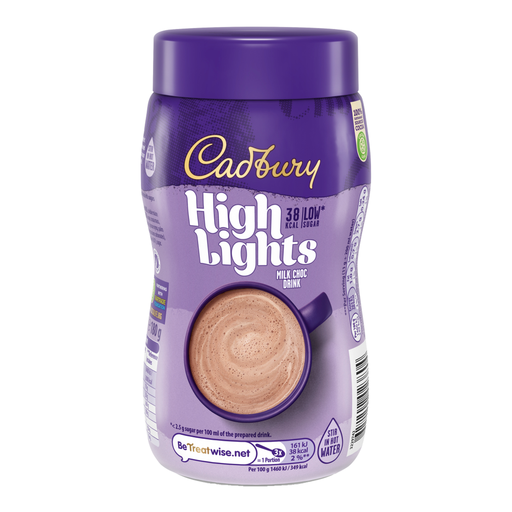
Consider this 180g drink mix if the stall plans to prepare drinks with hot water. Milk is identified in the product information, so check the current pack declaration and serving instructions before offering it.
 No image available
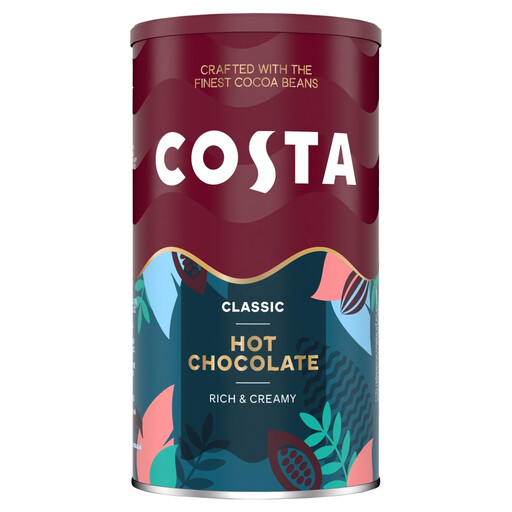
For a stall considering a milk-prepared drink or a plant-based alternative, check the preparation directions for this 300g pack and identify whichever drink is actually added. Read its current allergen declaration rather than assuming an added plant-based drink settles the powder’s suitability.
 No image available
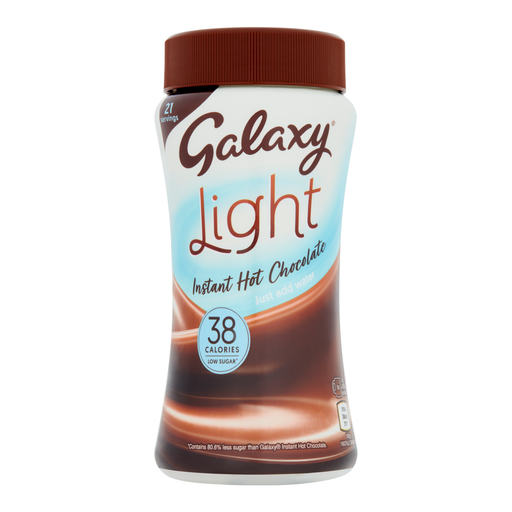
This 210g instant variant is an option for hot-water preparation. Its product information identifies milk, barley gluten and soya; check the current pack’s instructions and allergen declaration before planning service.
 No image available
The 500g tin suits a stall planning to make drinking chocolate with hot milk. Account for the added milk when recording ingredients and estimating portions; the product information also says the powder may contain milk. Check the current pack before serving.
 No image available
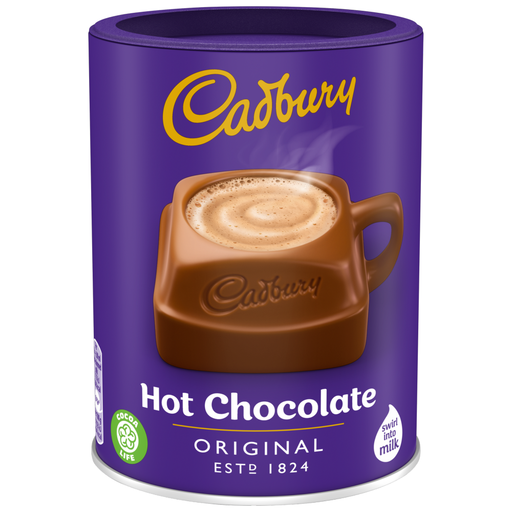
This 250 g tin offers the drinking-chocolate format in a smaller pack than the 500g Cadbury option shown here. Its preparation calls for hot milk and its product information says it may contain milk. Check the current instructions when planning portions and identifying ingredients.
No—not on that basis alone. Sainsbury's lists milk-derived ingredients in Cadbury Instant Hot Chocolate, and Ocado lists them in M&S Instant Low Calorie Hot Chocolate; both are prepared with hot water. Check the exact pack before serving either to someone who needs to avoid milk.
The stall must provide and handle the added milk, then include it when communicating the drink’s ingredients. Tesco’s instructions for Cadbury’s 500g drinking chocolate call for hot milk, whereas Sainsbury's instructions for the Cadbury instant jar call for hot water. Check the powder’s own declaration in either case.
Keep accurate ingredient information for each product and added drink ingredient available to the people serving and buying it. For England, Department for Education guidance says school caterers must show allergen-ingredient information for the food they serve. Anaphylaxis UK says allergy labelling at a school bake sale is not itself a legal requirement, but recommends providing as much allergen information as possible. Duties depend on how and where the event operates, so agree the arrangements with the school before serving or prepacking food.
Keep those bakes separate from other goods and use different serving utensils, as Anaphylaxis UK advises. Plan who will serve them and how surfaces and utensils will be kept separate; do not describe an item as suitable for a particular pupil without checking both its ingredients and its handling.
No. A vegan label does not establish suitability for every allergy or describe every cross-contact risk. Check the exact variant’s current ingredient and allergen declaration, then follow the school’s arrangements for the pupil concerned.