People checking protein per mug
If you are increasing protein intake, the useful figure is for the drink you actually make, not just 100g of dry powder.


Choose a hot-chocolate jar for the drink you want, rather than assuming it will supply much protein: Tesco Groceries lists 0.9g per water-prepared mug for Galaxy Light and 1.0g for Options Belgian Choc. Its listed Cadbury hot-milk serving contains 7.9g protein, but also 23g sugars and 168 kcal; the different recipes are not directly comparable. If increasing protein intake is the main aim, choose a separate food or drink for its stated protein content and assess the hot chocolate on its own prepared-serving label.
If you are increasing protein intake, the useful figure is for the drink you actually make, not just 100g of dry powder.
A lower-calorie hot chocolate may suit your drink preference without making a substantial contribution to protein intake. Check all three figures for the prepared serving.
Your choice of milk and the amount used affect the finished mug. A water-prepared nutrition panel does not describe that milk-prepared drink.
Start with the preparation instructions, then compare protein, sugars and calories on a clearly stated serving basis.
| Priority | What to check | Your needs |
|---|---|---|
| Protein per mug | Find protein per prepared serving and the powder amount used. Tesco Groceries lists 0.9g for Galaxy Light made with 10g powder and 200ml water, and 1.0g for Options Belgian Choc made with 11g powder and 200ml water. | If I am counting on the drink to contribute protein, I need the figure for my actual mug rather than a per-100g powder figure. |
| Preparation | Check whether the stated nutrition is for powder, a water-prepared drink or a milk-prepared drink. Note the liquid and serving size before comparing jars. | I make hot chocolate with milk, so a water-based figure will not describe the drink I prepare. |
| Sugars and calories | Read sugars and calories alongside protein for the same serving. Tesco Groceries lists 23g sugars and 168 kcal for its Cadbury hot-milk serving, compared with 15.9g sugars and 107 kcal for its differently prepared Tesco Instant Hot Chocolate serving; these are not like-for-like recipes. | Protein matters to me, but I also want to know how the whole mug fits my approach to sugars and calories. |
| Ingredients | Read the current pack for allergens and sweeteners. The Galaxy Light listing names milk, barley and soya; Twinings lists milk ingredients and aspartame in Options Belgian Choc, which it says contains a source of phenylalanine. | If I avoid an ingredient, I need to check this flavour and pack size rather than rely on a familiar brand name. |
Tesco Groceries lists 38 kcal and 0.9g protein for a water-prepared Galaxy Light serving, and 40 kcal and 1.0g protein for Options Belgian Choc. The calorie figure does not establish a protein benefit.
Check protein, sugars and calories for the same prepared serving. If protein is the main aim, assess a separately chosen food or drink by its stated protein content.
Water-prepared and milk-prepared recipes use different liquids and amounts, so their stated serving figures do not form a like-for-like comparison.
Check the powder quantity and liquid behind each figure. When adding milk, account for the particular milk and amount you use.
Tesco Groceries lists 7.9g protein for its prepared Cadbury hot-milk serving, alongside 23g sugars and 168 kcal.
Consider all three figures for the prepared mug rather than choosing on protein alone.
Relevant listings identify milk, barley or soya in particular products, and Options Belgian Choc contains aspartame according to Twinings. A different flavour or formulation needs its own check.
Read the ingredients and highlighted allergens on the current pack before use, especially if you have an allergy or avoid a specific ingredient.
These examples illustrate different recipes and label formats; figures for milk-prepared and water-prepared drinks should be read on their own serving bases.
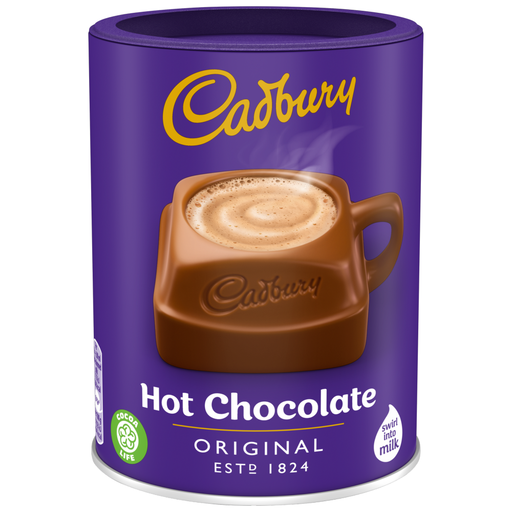
Tesco Groceries describes Cadbury Drinking Chocolate as a hot-milk preparation.
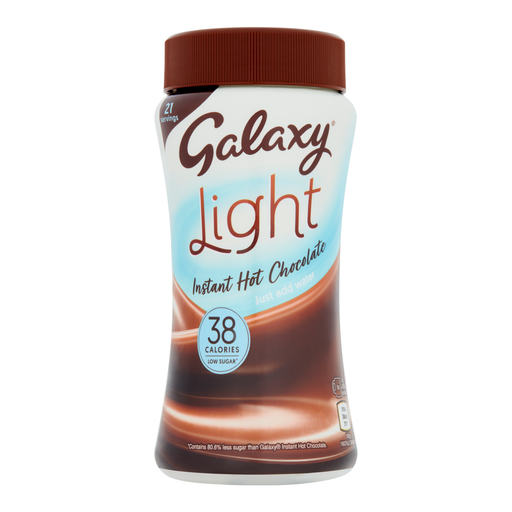
Galaxy Light is a water-prepared instant hot chocolate with a stated 10g-powder serving on the Tesco Groceries listing.
Options Belgian Choc is listed as an instant jar prepared with water.
Tesco Instant Hot Chocolate is listed as a just-add-water drink.
Marks & Spencer lists both Low Calorie Instant Hot Chocolate and Instant Hot Chocolate.
These jars and powders cover hot-milk and water-prepared drinks. Check each product’s own recipe and serving basis before using its nutrition figures to plan a mug.
 No image available
For a mug made with hot milk, check protein, sugars and calories together for the prepared serving. If milk is a concern, read the current pack’s allergy information.
 No image available
A water-prepared option to assess by the powder amount used per mug. Tesco Groceries lists 0.9g protein for 10g powder with 200ml hot water; check the current pack’s recipe before applying that figure to your drink. The listing names milk, barley and soya allergens.
 No image available
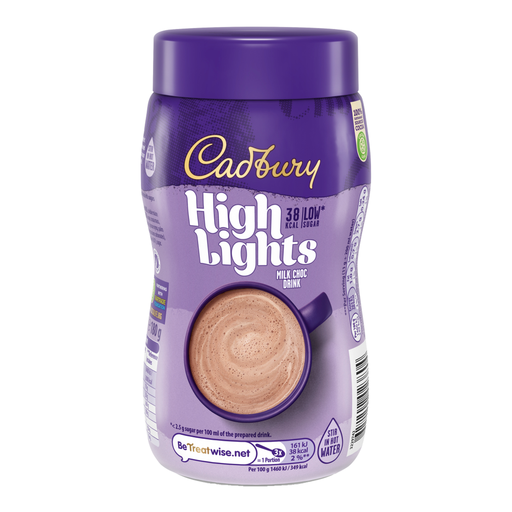
Can be mixed with hot water. Check the pack’s recipe and prepared-serving basis before comparing its protein, sugars or calories with another drink; check its milk allergen information if relevant.
 No image available
For preparation with milk or a plant-based alternative. A powder-serving figure alone will not describe the finished mug, so include the liquid and amount you use when assessing its nutrition.
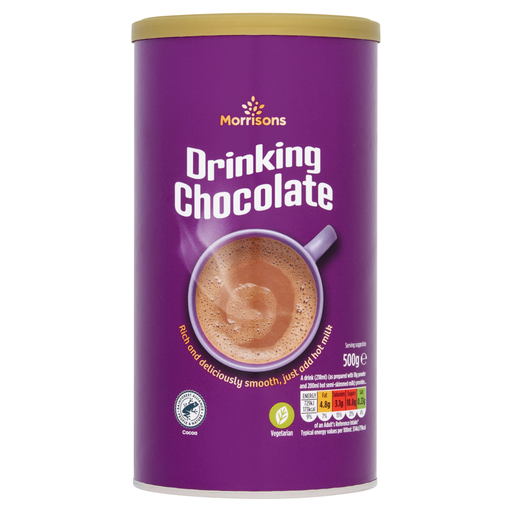 No image available
Described for preparation with hot milk. Check the pack’s serving size and whether its nutrition figures include the milk before comparing protein, sugars or calories with another jar.
Do not assume so from the jar type. Tesco Groceries lists 0.9g protein per water-prepared Galaxy Light serving, 1.0g for Options Belgian Choc and 3.2g for its differently sized Tesco Instant Hot Chocolate serving. Check the prepared-serving figure for the recipe you will use.
Use the prepared-mug figure to assess what you will drink, checking the stated powder amount and liquid. A per-100g powder figure describes the dry product, not a mug made with a smaller portion.
Milk changes the finished drink’s protein, sugars and calories, so a water-prepared panel cannot describe your milk-prepared mug. Tesco Groceries lists 7.9g protein, 23g sugars and 168 kcal for its stated Cadbury hot-milk serving; use the nutrition of your particular milk and quantity for a different recipe.
Read the current pack’s ingredients and highlighted allergens for the exact product. The Galaxy Light listing names milk, barley and soya; Twinings lists milk ingredients and aspartame in Options Belgian Choc and states that it contains a source of phenylalanine.
No single protein target suits everyone. Cambridge University Hospitals NHS Foundation Trust notes that protein needs change during life; guidance from Buckinghamshire, Oxfordshire and Berkshire West Integrated Care System advises people with renal disease or a prescribed protein restriction to consult their dietitian or doctor before following a high-protein diet.