Busy breakfast drinkers
If you make a mug before work or school, an add-water powder may fit your routine. Check the stated dose and prepared-serving nutrition if calories or sugars matter to you.


For a quick weekday hot chocolate, compare the recipe and nutrition for a prepared mug rather than assuming that “light” or “low calorie” means the flavour will taste mild. If you want to avoid sweeteners, check the ingredients of standard instant options too, but compare their serving figures separately. Check the current pack for milk and any other allergens before choosing a drink for dietary needs.
If you make a mug before work or school, an add-water powder may fit your routine. Check the stated dose and prepared-serving nutrition if calories or sugars matter to you.
Compare ingredients as well as sugars: a light or low-calorie drink may contain a sweetener, and its label cannot tell you exactly how mild it will taste to you.
Check the current pack for milk, cereals containing gluten, soya and sweeteners as relevant. Do not assume that a lighter or gluten-free hot chocolate is milk-free.
Start with how you will make the drink, then compare the prepared serving and ingredients; treat mildness as a taste preference rather than a label-defined measure.
| Priority | What to check | Your needs |
|---|---|---|
| Prepared mug | Compare the powder dose, liquid volume, calories and sugars for the stated serving. Different recipes do not describe the same-sized dose of powder. | I want to know what is in the mug I make at breakfast, not just what is listed per 100 g of powder. |
| Flavour and sweetness | Check the recipe and whether the ingredients include sweeteners. If taste is decisive, try a smaller pack before committing to a jar. | A drink labelled “light” might not have the cocoa intensity or sweetness I prefer. |
| Ingredients and allergens | Read the current pack’s ingredients and allergen declaration, particularly for milk, cereals containing gluten and soya. Recheck if you change variant or pack size. | I need a drink that fits my household’s ingredient requirements, rather than relying on a front-of-pack description. |
Calories and sugars describe nutrition, not how sweet or cocoa-rich a hot chocolate will taste to you.
Use those labels to screen nutrition, then follow the stated recipe and consider a smaller pack if flavour is your deciding factor.
A mug made with 10 g of powder is not the same serving as one made with 25 g. Adding milk also changes the finished drink.
Compare each product’s prepared-serving figures alongside its powder quantity and water or milk instructions.
A gluten-free or lighter description does not establish that a hot chocolate is milk-free. The ingredient details also vary between products.
Read the current physical pack before use, especially when switching products or buying after a recipe change.
Cadbury Highlights is an instant milk-chocolate drink sold in a 180 g jar.
Galaxy has Light and regular Instant hot chocolate options with different stated serving doses.
Options Belgian Choc offers a stated small-dose, water-based recipe.
Tesco Groceries lists both Lighter and standard own-label instant hot chocolate.
M&S offers standard and Low Calorie Instant Hot Chocolate.
These instant powders offer two options to consider if you want a quick weekday mug and are comparing lighter-style drinks. Neither product name establishes how mild the finished drink will taste.
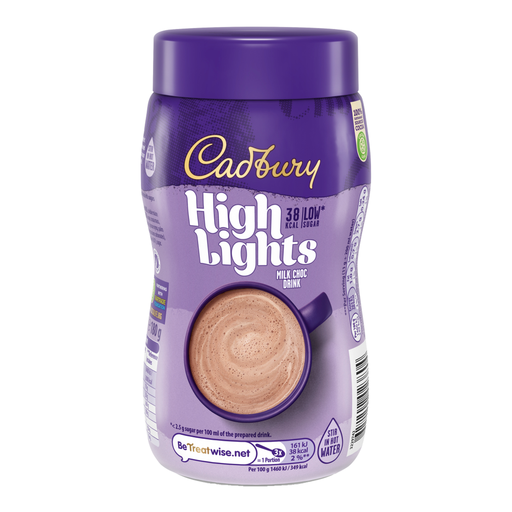 No image available
An add-water option for a weekday mug. Tesco Groceries lists less than 2.5 g sugars per 100 ml prepared; check the current pack’s powder dose before comparing a full serving. Contains milk-derived ingredients and sweeteners.
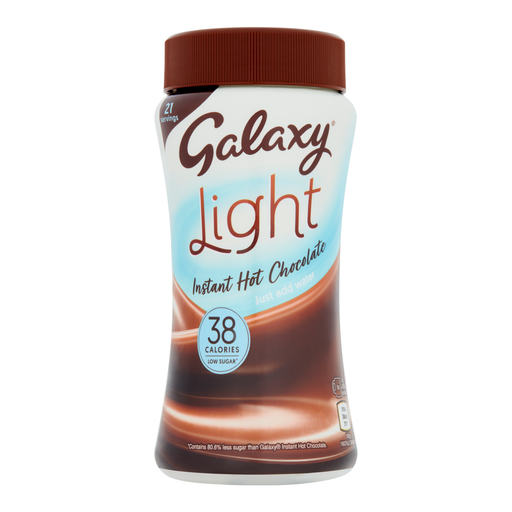 No image available
An add-water instant option. It lists sucralose and the allergens milk, barley and soya. Check the current pack’s powder dose and prepared-serving nutrition before comparing it with another mug.
No. The Cadbury Highlights, Galaxy Light and M&S Low Calorie products described here contain milk-derived ingredients. Check the current pack if milk affects your dietary suitability.
Start with the maker’s stated powder dose and water volume, then adjust to your taste. Options Belgian Choc specifies 11 g in 200 ml water and suggests a dash of milk for a creamier drink; adding milk changes the finished drink’s nutrition and allergen suitability.
Read the current ingredients and allergen declaration for the exact product. UK Food Standards Agency guidance identifies milk, cereals containing gluten and soya among the allergens businesses must declare when present as ingredients; Galaxy Light lists milk, barley and soya, while Options Belgian Choc lists milk.