Winter hot-chocolate drinkers comparing fat
If reducing fat matters to you, look at both total fat and saturates for the amount you intend to drink. A low-calorie description does not answer that question on its own.


For a lower-fat winter hot chocolate, compare total fat and saturates for the drink you will actually make, rather than choosing by a “light” or low-calorie label alone. Check whether the nutrition figures refer to powder or a prepared serving: powder quantity, water or milk, and extras can all change what ends up in the mug.
If reducing fat matters to you, look at both total fat and saturates for the amount you intend to drink. A low-calorie description does not answer that question on its own.
A water-made powder or single-serving sachet can make the stated preparation easier to follow. Check the powder quantity as well as the liquid before comparing it with another drink.
Lighter hot chocolates can still contain milk-derived ingredients. Check the current pack for any ingredients you need to avoid, including soya or barley where relevant.
Start with the prepared mug, then check the serving instructions and ingredients before comparing products.
| Priority | What to check | Your needs |
|---|---|---|
| Fat and saturates | Check total fat and saturates separately. Compare figures for the same amount of prepared drink where possible; a value per 100g of powder is a different basis. | I want a winter hot chocolate that fits my preference to reduce fat, so the figures for the mug matter more to me than “light” wording. |
| Calories and sugar | Read calories per stated serving and sugar on its stated basis. A low-calorie or low-sugar description does not establish the finished drink’s fat content. | A measured serving appeals to me, but I want to check calories, sugar, fat and saturates as separate figures. |
| Preparation | Check the specified powder quantity and whether the directions call for water or milk. Account separately for milk, toppings or a larger serving. | For a quick mug, I would choose an instant powder made with water; if I use milk instead, I need to assess the drink I actually make. |
| Ingredients | Read the current ingredient and allergen statement for the exact variant. The Food Standards Agency says allergens in pre-packed food and drink must be emphasised in the ingredients list. | If milk, soya or barley matters to me, I need to check the pack even when the drink is described as lighter or suitable for vegetarians. |
Calories, total fat and saturates are different measures. Nutrition panels may also use different bases, including dry powder and a prepared portion.
Check both fat figures and the stated serving before making a like-for-like comparison. The NHS gives low-fat thresholds for foods but notes that different criteria apply to drinks.
Nutrition stated for a powder prepared with water does not describe the same drink after milk, cream or toppings are added.
Follow the stated preparation when comparing labels, or account for the amount and type of milk and extras you use.
According to ASDA Groceries, Galaxy Light lists milk, soya and barley; Marks & Spencer lists milk-derived ingredients in its Low Calorie Instant Hot Chocolate.
Read the current pack’s ingredients and allergen statement for the exact product and flavour before use.
These ranges offer different formats; a brand name alone does not establish the fat content of a particular mug.
Marks & Spencer lists Low Calorie Instant Hot Chocolate alongside drinking chocolate and chocolate flakes.
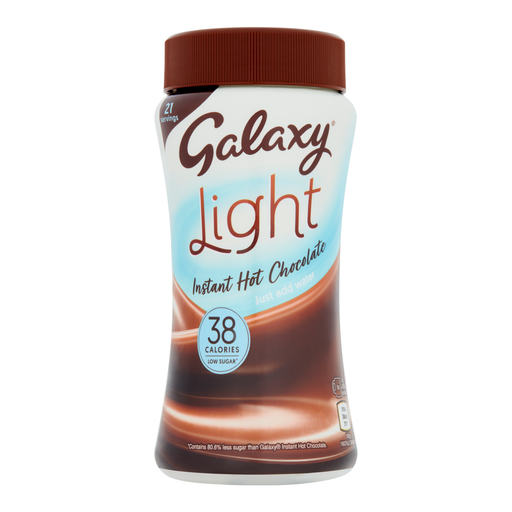
Galaxy Light is an instant hot chocolate with a stated water-made preparation.
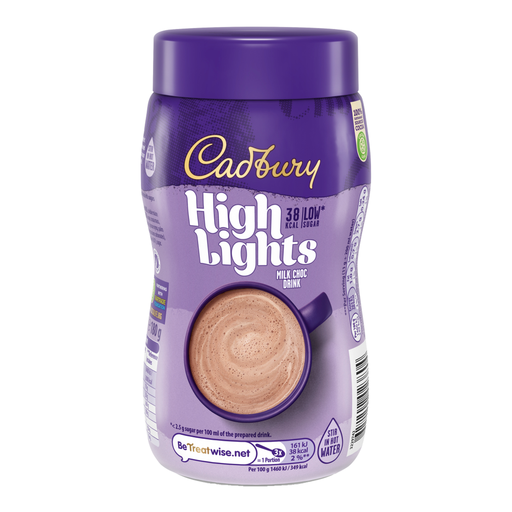
Cadbury Highlights is an instant milk-chocolate-flavour drink; Cadbury Drinking Chocolate is prepared with hot milk.
Options offers instant hot chocolate in Belgian chocolate and flavoured variants.
Tesco groups its own Lighter Hot Chocolate with branded products in a reduced-sugar and low-calorie hot-chocolate category.
These two instant hot chocolates suit a water-made winter mug. Compare their stated serving and current nutrition panels if reducing fat is the deciding factor.
 No image available
An instant option for a mug made with hot water. Check the pack’s powder quantity before using published serving figures: ASDA Groceries’ figures for Galaxy Light refer to 10g powder with 200ml water, while the preparation described for this listing uses 20g powder with 200ml water. Check the current ingredient list if milk, soya or barley matters to you.
 No image available
An instant hot-water option if you also want to check sugar in the prepared drink. Tesco describes Cadbury Highlights as low sugar, at less than 2.5g per 100ml when prepared as directed; that does not establish its fat content. Check the current pack for prepared-drink fat and saturates, and for milk-derived ingredients.
No. Calories, total fat and saturates are separate figures. Compare the fat and saturates for equivalent prepared amounts, using each product’s stated directions.
Not directly. The NHS describes low fat for foods as 3g or less per 100g and low saturated fat as 1.5g or less per 100g, but notes that drinks use different criteria. Check whether the hot-chocolate figure refers to dry powder or the prepared drink.
Yes. A figure stated for powder made with water does not include milk added instead. Check the milk’s nutrition label and the amount you use if you want to assess the finished mug.
Read the current pack’s ingredients list for the exact variant. The Food Standards Agency says allergens in pre-packed food and drink must be emphasised there; a lighter-drink description does not rule out milk or other allergens.