Carers wanting a measured occasional drink
A single-serve sachet or stick makes the powder quantity clear. Check how much water or milk the instructions call for, particularly if the child expects a familiar preparation.


For a hot drink alongside a fussy eater’s meal, choose a clearly labelled hot-chocolate sachet, stick or powder rather than buying a pyramid bag on the search term alone. Check the preparation method, sugars per stated prepared serving and current ingredients; a chocolate drink should not be used as a reward for eating or in place of a meal.
A single-serve sachet or stick makes the powder quantity clear. Check how much water or milk the instructions call for, particularly if the child expects a familiar preparation.
Compare the figures for each stated prepared serving, not the size of the packet or a word such as “lighter” on the front. Serving quantities and ingredients differ between products.
Read the current pack for milk, soya, other relevant allergens and sweeteners before making the drink for someone with an ingredient restriction.
Start by confirming that the product makes hot chocolate, then compare its preparation instructions and label for the serving you intend to make.
| Priority | What to check | Your needs |
|---|---|---|
| Product format | Check that the pack says hot chocolate and explains whether to stir powder into water or milk. Do not assume a pyramid-bag listing contains hot chocolate. | I want to know what drink I am buying and how to prepare it, rather than choosing on packaging terminology. |
| Serving and sugars | Read sugars for the stated prepared serving alongside its powder and liquid quantities. Keep different serving sizes in view when comparing figures. | A measured portion matters to me, and I want the label figure to reflect the drink I will actually make. |
| Ingredients | Check the current ingredients and allergen declaration for milk, soya and any other relevant ingredient. Look for sweeteners separately from the sugars figure. | If someone in the household avoids an ingredient, I need to check the specific product and pack before serving it. |
| Role at mealtimes | Decide whether the drink is simply an occasional accompaniment. NHS fussy-eating advice says not to force a child to eat or use food as a reward. | I want to keep the meal calm without making a chocolate drink a bargaining tool or a replacement for food. |
A listing using that term may not give you the hot-chocolate preparation, nutrition and ingredient information needed for this decision.
Confirm the product name and preparation instructions before buying. If you want a measured portion, also consider a clearly labelled instant sachet or stick.
A tub’s total weight does not tell you the sugars in one prepared mug. Tesco Groceries lists different portions for its Galaxy 25g serving and Cadbury 28g stickpack.
Use each product’s stated prepared-serving figure and follow its corresponding powder and liquid instructions.
A sugars figure does not answer an allergy or sweetener question. Tesco Groceries lists sucralose in Tesco Lighter Hot Chocolate, while Twinings lists milk and aspartame in Options Belgian Choc sachets.
Read the current ingredients and allergen declaration for the person who will drink it.
Using the drink to secure another mouthful conflicts with NHS advice not to force food or use food as a reward for a fussy eater.
Keep any hot chocolate separate from bargaining over the meal, and offer food without pressure.
These examples show why the exact product and serving matter more than the brand name; they do not describe every product in each range.
Tesco Groceries lists a 28g instant hot-chocolate stickpack prepared with water.
Tesco Groceries lists Galaxy instant hot chocolate in a 370g tub, with nutrition information for a 25g portion prepared using 200ml hot water.
Twinings lists Options Belgian Choc as an instant sachet.
Tesco Lighter Hot Chocolate is an own-label instant powder with a stated prepared-serving measure.
Marks & Spencer lists a 250g instant hot chocolate in a tub, rather than a pyramid bag.
These two tins are options for shoppers choosing a conventional hot-chocolate drink instead of a pyramid-bag format. Check each pack’s preparation and ingredients for the person you are serving.
 No image available
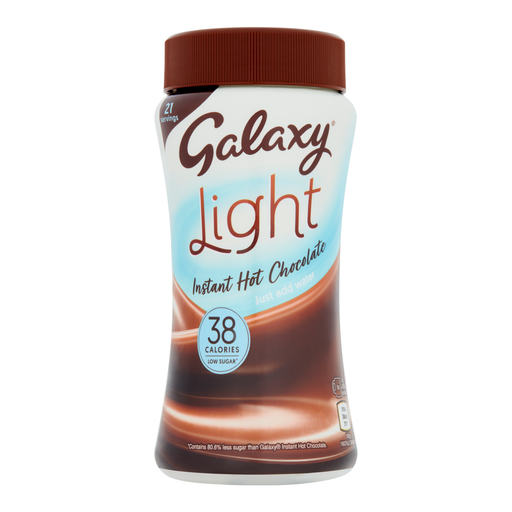
This instant hot chocolate is a tin of powder rather than a pyramid bag. For a measured drink alongside a meal, follow the pack’s powder and water instructions. Check its current ingredients for milk, soya, barley and sucralose, and use the prepared-serving nutrition figure when comparing sugars.
 No image available
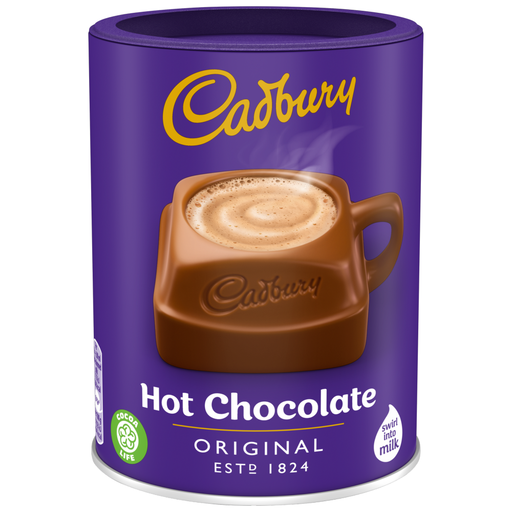
This drinking chocolate is a tin intended for mixing with hot milk, not a pyramid bag. Check the current pack’s milk warning and preparation instructions. When comparing sugars with a hot-water product, use figures for the drinks as prepared rather than comparing packet weights.
Choose only a product whose label confirms that it makes hot chocolate and explains how to prepare it. If the pyramid-bag listing does not make that clear, a labelled sachet, stick or powder tub gives you a clearer basis for checking the drink and its ingredients.
For the specific products listed by their retailers, Tesco Lighter has 4.0g sugars per 211ml prepared serving; Twinings lists 5.7g per serving for Options Belgian Choc; and Tesco Groceries lists 16g for a Galaxy 25g portion prepared with 200ml water and 17g for a Cadbury 28g stickpack. These are different products and serving sizes, not figures for every product under those brands.
No: treat it as an occasional drink, not a substitute for food or an incentive to eat. NHS fussy-eating advice says not to force a child to eat or use food as a reward.
Check the current pack for the individual’s relevant allergens and other ingredients. The listed examples include products containing milk or soya, while Twinings lists aspartame in Options Belgian Choc; formulations can change.
If a child coughs or chokes while eating or drinking, or has unexplained weight loss, seek appropriate professional advice rather than trying a different hot-chocolate format. Dorset HealthCare University NHS Foundation Trust identifies these as possible signs of eating, drinking or swallowing difficulties.