Hosts serving mixed tastes
If you do not know everyone’s preference, a plain chocolate is a starting point. Make one mug at the labelled strength to judge its flavour before preparing a batch.


For a book club with mixed tastes, start with a plain hot chocolate and make a test mug at the pack’s stated strength before preparing drinks for everyone. M&S describes its Instant Hot Chocolate as having a “hint of sweetness”; Cadbury Drinking Chocolate calls for hot milk, while Options Belgian is prepared with water but contains sweeteners, so its lower labelled sugar figure does not establish a less sweet taste. Check the current pack for allergens before serving guests.
The preparation method, flavour and ingredient list matter differently depending on whom you are serving.
If you do not know everyone’s preference, a plain chocolate is a starting point. Make one mug at the labelled strength to judge its flavour before preparing a batch.
A water-prepared instant mix avoids heating milk for every mug. If you prefer a drinking chocolate made with hot milk, allow for that preparation step.
Check each current pack against guests’ allergies or intolerances. Milk and other allergens can be present in the powder even when you prepare it with water or a milk alternative.
Choose a flavour and preparation method for the group first, then compare labels on the same serving basis and check ingredients for each guest.
| Priority | What to check | Your needs |
|---|---|---|
| Flavour | Start with a plain variety if added flavours might divide the group. M&S describes its Instant Hot Chocolate as having a “hint of sweetness”, but the description cannot predict every guest’s taste. Try a mug at the pack’s stated strength. | I would rather test a straightforward chocolate drink than commit the whole group to a dark or flavoured variety. |
| Preparation | Sainsbury’s lists three teaspoons with hot milk for Cadbury Drinking Chocolate. Its Options Belgian listing specifies 11g powder in 200ml hot water; follow the instructions for the product you choose rather than transferring quantities between mixes. | Water preparation would make individual mugs simpler during the meeting; if I can heat milk, a drinking chocolate is another option. |
| Labelled serving | Compare the liquid, powder quantity and serving size as well as the figures. Sainsbury’s lists 40 kcal and 5.7g sugars for Options Belgian made with 11g powder in 200ml water, and 23g total sugars for Cadbury’s stated 224g prepared serving. These are different recipes, not a like-for-like taste comparison. | If I am comparing sugar or energy figures, I want to know what each labelled serving contains. A lower sugar figure would not tell me whether guests will find it less sweet. |
| Allergens | Read the current ingredients and allergen statements. The listed Options and M&S instant mixes contain milk ingredients; Cadbury Drinking Chocolate carries a “MAY CONTAIN MILK” statement. Check the particular pack before serving. | A guest who must avoid an ingredient needs a suitable product, not just a change from milk to water in the mug. |
Options Belgian lists sweeteners as well as its labelled sugar figure. Neither sugar content nor a “light” name establishes how sweet or cocoa-forward a prepared drink will taste.
Make a test mug using the chosen pack’s instructions before preparing drinks for the group.
A per-100g powder figure and a value for a drink made with water or milk describe different quantities. They cannot be read as equivalent servings.
Check the stated powder measure, liquid and prepared serving before comparing label figures.
Allergens can already be present in the mix. Joybuy’s Galaxy Light listing, for example, identifies barley, milk and soya.
Ask about relevant allergies, read the current pack and use a separately checked product when needed.
Product formulations and labels can change, which matters when a guest needs to avoid a particular ingredient.
Read the pack you will actually serve, especially its ingredients and allergen information.
These brand references describe particular products and preparation routes, not a guarantee that every drink in a range will taste mild.
Its standard Instant Hot Chocolate is the plain instant option M&S describes as having a “hint of sweetness”.
Cadbury Drinking Chocolate 500g is a plain drinking-chocolate route prepared with hot milk.
Options Instant Belgian Hot Chocolate Drink is a water-prepared option with a stated 11g-powder, 200ml-water recipe.
Galaxy Light Instant Hot Chocolate is a water-prepared option according to its Joybuy product page.
Its Drinking Chocolate 300g is a hot-milk preparation route for hosts who want to trial the strength of a cocoa powder mix.
These options cover hot-milk drinking chocolates and a water-prepared instant mix for a book-club test mug. Their order does not rank them by perceived mildness.
 No image available
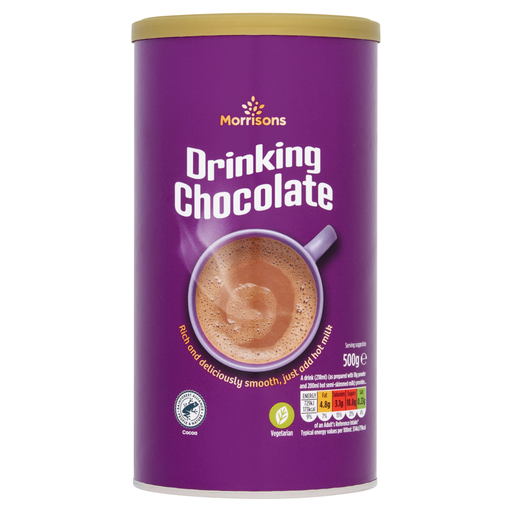
Consider this plain drinking chocolate if you can prepare hot milk for the group. The stated method uses three teaspoons with hot milk; make one mug before preparing more. The product carries a “MAY CONTAIN MILK” statement, so check the current pack for guests with allergies.
 No image available
This is another drinking-chocolate option to trial if hot-milk preparation suits the meeting. Check the pack for the powder measure and allergens, then taste a mug before making a batch; its product description does not establish a mild flavour.
 No image available
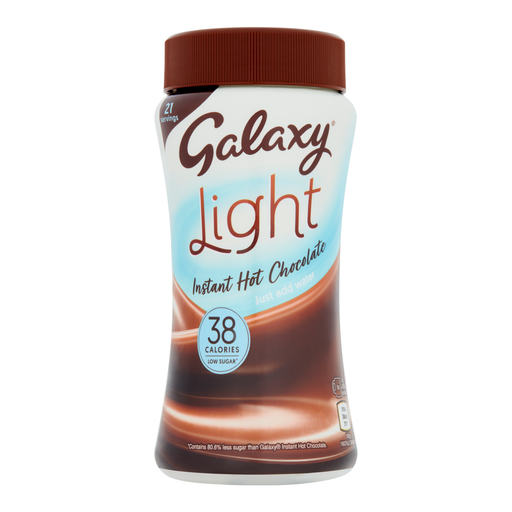
This instant mix is an option when preparing mugs with water suits the meeting. Test its flavour rather than assuming “Light” means mild. The listing identifies barley, milk and soya allergens; check the current pack before serving.
Start with a plain variety and test one mug at the pack’s stated strength. M&S describes its Instant Hot Chocolate as having a “hint of sweetness”, but flavour descriptions cannot tell you how every guest will perceive the drink.
Follow the chosen product’s instructions: Cadbury Drinking Chocolate calls for three teaspoons with hot milk, while Options Belgian specifies 11g powder in 200ml hot water. Water preparation may simplify individual mugs; do not assume the recipes are interchangeable.
No. Sainsbury’s lists 5.7g sugars for the stated water-prepared serving of Options Belgian, but its ingredients also include acesulfame K and sucralose. Make a test mug if perceived sweetness is the deciding factor.
Read the current pack’s ingredients and allergen statements for the exact product, and check what the guest needs to avoid. Changing the preparation liquid cannot remove allergens already in the powder: the listed Galaxy Light product, for example, identifies barley, milk and soya.
No. The NHS explains that a label’s total-sugars figure includes sugars naturally present in milk, which are not counted as free sugars. When comparing prepared drinks, read the serving and preparation method alongside the total-sugars figure rather than treating it as a free-sugars value.