If “strong” means a dark-chocolate flavour, start with a product that declares its formulation: M&S Collection 72% Dark Drinking Chocolate contains dark chocolate with at least 72% cocoa solids. That figure describes the chocolate ingredient, not the finished drink, and cocoa-solids and cocoa-powder percentages are not a like-for-like taste ranking. A standard hot-milk powder or quick instant mix may suit the lunch routine better; check preparation directions, ingredients and allergen statements on the current pack before serving.
Who is this for?
The useful starting point is whether the household wants a dark-chocolate flavour, a quicker cup or particular ingredients to avoid.
Households looking for a dark-chocolate cup
If “strong” means a pronounced dark-cocoa flavour, look for a declared formulation rather than relying on words such as “rich”. M&S Collection’s 72% Dark Drinking Chocolate declares at least 72% cocoa solids in its dark chocolate ingredient.
Carers making a quick lunch-time mug
An instant mix may suit a short lunch break when hot-water preparation is preferable to heating milk. Check the instructions for the exact product: a convenient method does not establish how strong the finished drink will taste.
Households checking ingredients and allergens
Read the current pack even if the product is dark chocolate or described as vegetarian. Marks & Spencer labels its 72% dark product unsuitable for people with milk or soya allergy; the Cadbury Drinking Chocolate listing at Tesco says it may contain milk.
What matters when choosing?
Decide what “strong” means for the drinker, then compare the preparation method and the exact pack’s ingredients.
| Priority | What to check | Your needs |
|---|
| Cocoa flavour |
Check whether a figure describes cocoa solids in a chocolate ingredient or cocoa powder in the mix. Marks & Spencer declares at least 72% cocoa solids in the dark chocolate used for its 72% Dark Drinking Chocolate, while its standard Drinking Chocolate lists 41% cocoa powder. The figures do not predict a like-for-like taste result. |
I’m after a distinctly dark-chocolate cup rather than choosing by a flavour word on the front of the pack. |
| Preparation |
Check the amount of powder and whether the directions call for hot milk or water. Tesco’s Cadbury Drinking Chocolate listing specifies three teaspoons with hot milk; the Options Belgian Chocolate instant product is prepared with hot water. |
At lunch, I may prefer a quick single mug, or I may be happy to heat milk for a drinking chocolate. |
| Sugar and sweeteners |
Compare the current ingredients and nutrition panel using the stated serving and preparation method. Check sweetener declarations rather than assuming an instant or lower-calorie mix is suitable for every child. |
If I’m serving a child aged 4 or younger, I need to account for NHS guidance to avoid food and drink with sugar or sweeteners for that age group. |
| Allergens |
Read the exact pack’s ingredients, allergen emphasis and any “may contain” or suitability statement. Marks & Spencer’s 72% dark product warns about milk and soya allergy; the reviewed Options Belgian Chocolate product contains milk. |
Someone in the household may need an allergen check, regardless of whether the drink is dark, standard or instant. |
Common buying mistakes
-
Taking flavour words as a measure of strength
“Belgian”, “frothy” and similar descriptions do not measure cocoa content or predict the taste of a prepared mug across different recipes.
Check what any declared percentage measures, then consider whether the product is dark drinking chocolate, a standard powder or an instant mix.
-
Assuming an instant or lower-calorie mix suits every child
Some such mixes contain sweeteners. The NHS advises avoiding food and drink with sugar or sweeteners for children aged 4 years or younger.
Check the current ingredients and the intended serving, particularly when making a drink for that age group.
-
Skipping the allergy statement on a dark product
Marks & Spencer’s 72% dark drinking chocolate is labelled unsuitable for people with milk or soya allergy. Tesco’s Cadbury Drinking Chocolate listing says it may contain milk.
Read the ingredients and precautionary wording on the exact pack rather than judging suitability from the product name.
-
Comparing powder nutrition as though it were the finished drink
A powder prepared with milk produces a different finished drink from one prepared with water; the type and amount of liquid matter to a serving comparison.
Use each pack’s powder quantity and liquid instructions when comparing servings or nutrition information.
Relevant brands and ranges
These product and retailer examples help distinguish formats; a brand name alone does not establish the flavour of every product in its range.
M&S Collection
Marks & Spencer publishes formulation details for the drinking chocolates considered here.
- Its 72% Dark Drinking Chocolate declares dark chocolate containing at least 72% cocoa solids. Its standard Drinking Chocolate lists 41% cocoa powder, and its Instant Hot Chocolate lists 20% cocoa powder.
- These figures describe different ingredients and recipes, not a comparable taste test. The 72% dark product is labelled unsuitable for people with milk or soya allergy.
Cadbury
Tesco’s Cadbury Drinking Chocolate listing describes a hot-milk preparation using three teaspoons of powder.
- The listed ingredients begin with sugar and cocoa powder, giving shoppers a starting point for checking the recipe.
- The reviewed listing does not give a cocoa percentage and says the product may contain milk; it cannot establish an extra-dark flavour or allergy suitability.
Options
Options Belgian Chocolate is an instant, hot-water choice rather than a dark drinking-chocolate format.
- The reviewed 220g listing declares 21% fat-reduced cocoa powder and 7% Belgian chocolate.
- The reviewed product contains milk and carries a phenylalanine statement. Its declared ingredients do not establish an extra-bold taste.
Galaxy
Tesco lists Galaxy Light Instant Hot Chocolate, Galaxy Frothy Hot Chocolate Drink and Galaxy Vegan Instant Hot Chocolate.
- The named products offer different formats to examine when comparing preparation and ingredients.
- “Light”, “Frothy” and “Vegan” do not, on their own, establish cocoa strength or suitability for a particular allergy.
Tesco
Tesco’s hot-chocolate category lists products from several brands, including Cadbury, Galaxy and Options.
- The category provides a place to compare named formats and inspect their individual product information.
- Category placement does not determine flavour strength or whether an individual product meets an ingredient requirement.
Joybuy hot chocolate options for lunch
These Joybuy options cover quick-mix drinks and drinking chocolates for a school-holiday lunch. Compare each current pack’s preparation method and ingredients if dark-chocolate flavour is the deciding factor.
 No image available
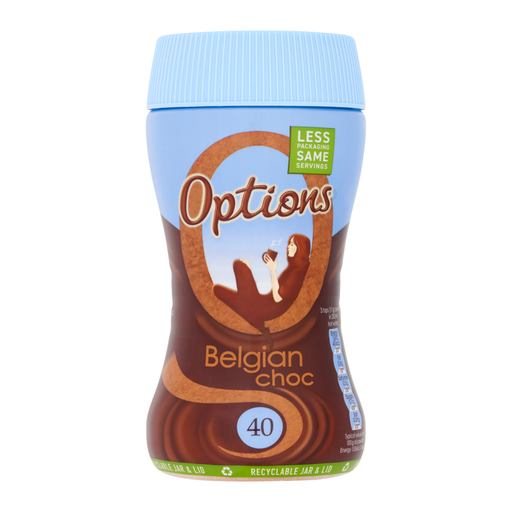
Options Belgian Chocolate 220 g
Consider this for a quick lunch-time mug. Check the current pack’s preparation directions and its milk, sweetener and phenylalanine statements before serving; the name does not establish a dark-chocolate taste.
 No image available
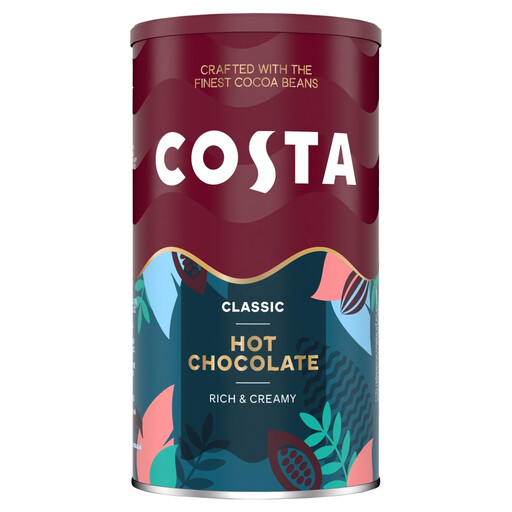
Costa Hot Chocolate 300g
For a drinking-chocolate option at lunch, check the pack’s mixing directions and any declared cocoa-powder figure. A formulation figure alone cannot establish how dark the prepared drink will taste.
 No image available
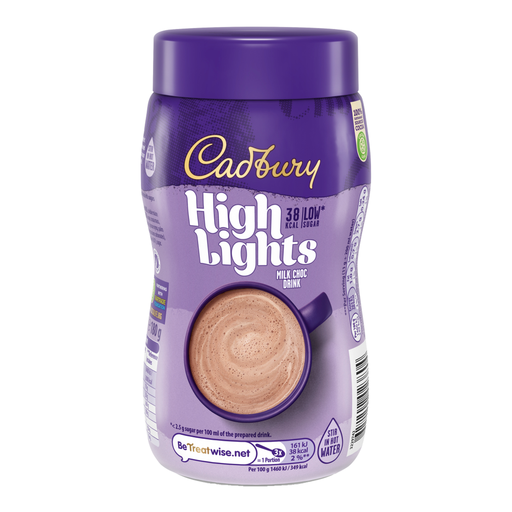
Cadbury Highlights Milk Chocolate Drink 180g
Consider this when quick preparation matters at lunch. Check the current pack for its mixing method, milk ingredients and sweeteners, especially if the drink is for a child aged 4 or younger.
 No image available
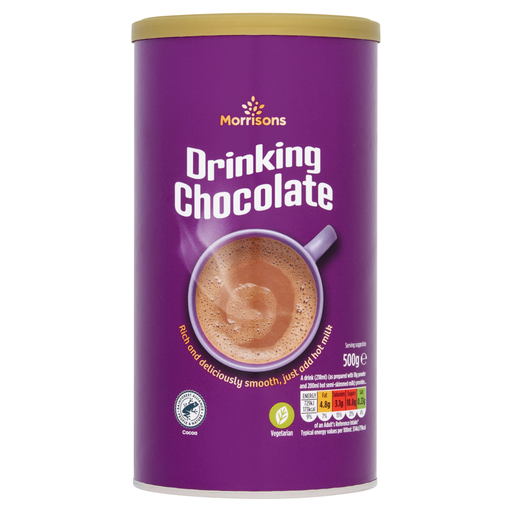
Morrisons Drinking Chocolate 500g
For a drinking-chocolate lunch cup, follow the pack’s preparation directions and check its cocoa declaration and allergen information. Judge any claim of strong flavour against the prepared drink, not a percentage alone.
 No image available
Cadbury Drinking Chocolate 500g
This is a drinking-chocolate option for a hot-milk lunch cup. Follow the current 500g pack’s directions, check its milk precaution if relevant, and look for a declared cocoa figure if comparing formulations.
Hot chocolate questions answered
How can I choose a stronger-tasting hot chocolate?
Start by deciding whether you want a dark-chocolate flavour, then check the product’s declared formulation and preparation directions. Marks & Spencer says its 72% Dark Drinking Chocolate contains dark chocolate with at least 72% cocoa solids; its standard Drinking Chocolate lists 41% cocoa powder. Those figures describe different ingredients and are not a comparable taste test.
Is dark drinking chocolate the right choice for every lunch?
No. A dark drinking chocolate suits someone seeking that particular flavour, while an instant mix may better fit a lunch where quick preparation matters. Check each product’s ingredients and directions rather than assuming either format will suit every drinker.
Is a lower-calorie hot chocolate suitable for a young child?
Do not assume so from the product description. Some lower-calorie mixes contain sweeteners, and the NHS advises avoiding food and drink with sugar or sweeteners for children aged 4 years or younger. Check the current ingredients for the exact product and the age of the child being served.
What should I check if someone has a milk or soya allergy?
Read the current pack’s ingredients and any “may contain” or suitability statement for the exact product. Marks & Spencer labels its 72% dark drinking chocolate unsuitable for people with milk or soya allergy, while Tesco’s Cadbury Drinking Chocolate listing says it may contain milk. A dark product name does not resolve either question.


