What should you compare?
Start with the drink as you will prepare it, then weigh its nutrition, flavour and ingredients against your lunch plans.
| Priority |
What to check |
Your needs |
| Prepared serving |
Check the powder quantity, serving size and whether the stated values include water or milk. Tesco lists Options Belgian Choc at 11 g in 200 ml water, while its Cadbury Drinking Chocolate instructions use three teaspoons with hot milk. |
I want to compare the drink I will actually make, especially if I plan to use milk rather than the water specified for another product. |
| Calories and sugars |
Compare calories and sugars for equivalent prepared servings, and check saturated fat separately. Marks & Spencer states 38 kcal per serving for its Low Calorie Instant Hot Chocolate; Tesco lists 40 kcal and 5.7 g sugars for its stated water-prepared Options Belgian Choc sachet. |
A measured portion helps me judge what one lunch drink contributes without assuming that a lower-calorie label also means sugar-free. |
| Darker flavour |
Look for a relevant product description or declared cocoa content. Marks & Spencer states that its Belgian Dark Hot Chocolate Flakes contain at least 70% cocoa solids; check that product’s sugars, saturated fat and intended portion separately. |
For me, a stronger cocoa character may matter more than choosing the lowest-calorie drink, but I do not want to treat cocoa percentage as a nutrition rating. |
| Ingredients and allergens |
Read the current ingredient list, allergen statement and preparation instructions for the exact variant. Check milk ingredients and sweeteners where relevant; do not assume another flavour in the same range has the same formulation. |
If I avoid an ingredient, the current pack needs to suit me before flavour or serving size becomes the deciding factor. |
| Nutrition labels |
Where a traffic-light label is provided, use it alongside the nutrition panel and check whether figures refer to powder or a prepared drink. The Food Standards Agency’s label guidance explains how the display helps compare calories, fat, sugars and salt. |
I use labels to make a shelf comparison, then check the serving basis. In the Food Standards Agency and Ipsos Northern Ireland’s 2024 survey of 611 consumers, 49% said they actively used traffic-light labelling when shopping for food; that figure is not specific to hot chocolate. |
Joybuy hot chocolate options
These Options 220 g products offer instant hot chocolate flavours to consider for lunch. Their names do not establish a darker or less-sweet taste; compare each variant’s current serving instructions, nutrition and ingredients against that preference.
 No image available
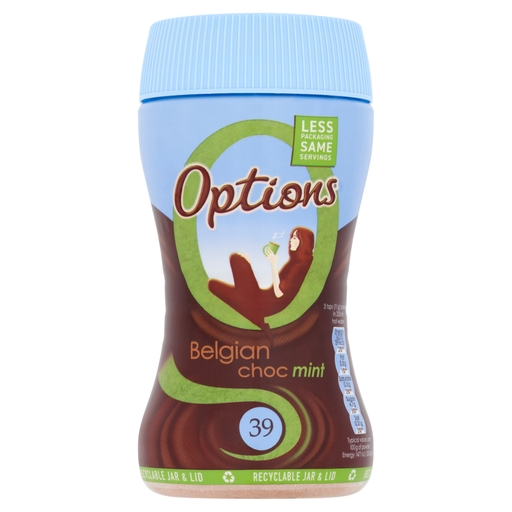
Options Belgian Choc Mint 220g
The mint variant offers a distinct flavour choice for a lunch drink, but mint does not establish the darker cocoa taste you may be seeking. Check the current pack’s prepared-serving values and ingredients before comparing it with another hot chocolate.
View on Joybuy
 No image available
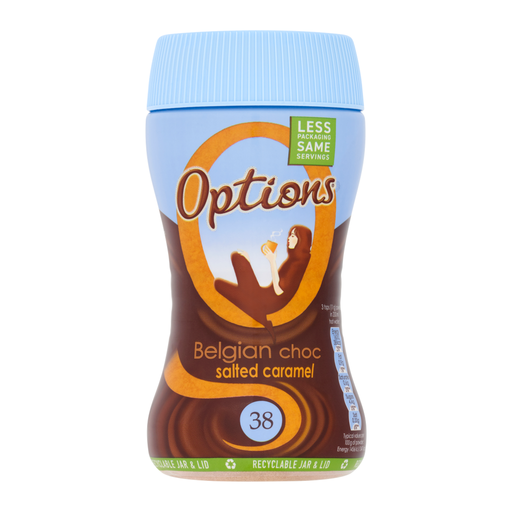
Options Belgian Choc Salted Caramel 220g
Choose this variant if salted caramel appeals, rather than assuming its name indicates a darker chocolate flavour. For a lunch comparison, check the prepared-serving nutrition and whether you will make it with the liquid specified on the pack.
View on Joybuy
 No image available
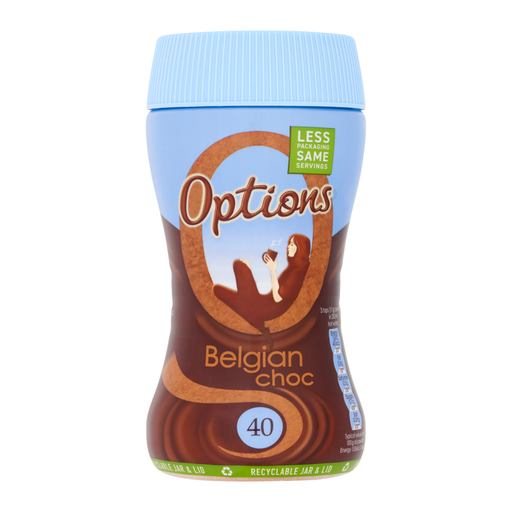
Options Belgian Chocolate 220 g
This Belgian Chocolate variant is an option to assess if you would rather avoid the named mint and salted-caramel flavours; its name alone does not establish a darker taste. Check the pack’s serving quantity and preparation basis before comparing its nutrition with another drink.
View on Joybuy
Frequently asked questions
Is 70% cocoa hot chocolate automatically a lighter lunch choice?
No. Marks & Spencer states that its Belgian Dark Hot Chocolate Flakes contain at least 70% cocoa solids, but that figure does not tell you whether your prepared portion is lower in calories, sugars or saturated fat. Check those values and the preparation instructions separately.
Should I compare the powder or the prepared drink?
Compare equivalent prepared servings. Tesco lists Options Belgian Choc using 11 g of powder in 200 ml water, while its Cadbury Drinking Chocolate instructions use three teaspoons with hot milk. Check the liquid and quantity before comparing their nutrition figures.
Does low calorie mean sugar-free or sweetener-free?
No. A calorie description does not establish either ingredient claim. Read the current nutrition panel and ingredient list for the exact hot chocolate you plan to buy.
What should I do if I have a milk, nut or peanut allergy?
Check the current physical pack for the exact product before buying or consuming it. Marks & Spencer identifies its Belgian Dark Hot Chocolate Flakes as unsuitable for people with milk, nut or peanut allergies; do not assume that a different product or flavour has the same allergen information.
Can traffic-light labels help me compare hot chocolates?
Yes, where provided, they offer a quick view of nutrition information. The Food Standards Agency advises using them to compare figures such as calories, fat, sugars and salt; for hot chocolate, also check the portion size and whether the figures describe powder or the prepared drink.


