Hosts sharing milk across the breakfast table
If the same four-pint bottle is for cereal, tea and coffee, decide how much milk you also want to use for hot chocolate. A powder with hot-water instructions offers another preparation route.


Choose a drinking chocolate made with hot milk if you intend to use some of the four-pint bottle for breakfast mugs. If that milk is needed for cereal, tea or coffee, choose an instant powder with hot-water instructions; for a guest seeking a vegan recipe, check the current pack separately, because a vegan label does not establish milk-allergy suitability. Four pints describes the milk in your shop, not the size of the hot-chocolate pack.
The useful distinction is how each breakfast mug will be made and who will drink it.
If the same four-pint bottle is for cereal, tea and coffee, decide how much milk you also want to use for hot chocolate. A powder with hot-water instructions offers another preparation route.
Check the powder dose and liquid specified for one mug before planning how many guests a pack will serve. Sainsbury’s lists Galaxy Instant at 25g with 200ml hot water and standard Options Belgian Hot Chocolate at 11g with 200ml hot water.
Read the current ingredients and allergen wording for the exact variant you intend to serve. Sainsbury’s lists Options Vegan as suitable for vegans but also says it may contain traces of milk.
Decide whether the drink will use breakfast milk, then check the preparation and label for each guest’s mug.
Choose when: You plan to use some breakfast milk for the drink; Sainsbury’s directs Cadbury Original to be mixed with hot milk.
Trade-off: Each mug draws on milk that might also be needed for cereal, tea or coffee.
Choose when: You want to keep the four-pint bottle for other breakfast uses; Sainsbury’s gives hot-water methods for Galaxy Instant and standard Options.
Trade-off: A hot-water method does not mean a dairy-free recipe, so check ingredients for the exact product.
Choose when: A guest wants a vegan recipe; Sainsbury’s labels Options Vegan suitable for vegans.
Trade-off: The Options Vegan listing also warns of possible milk traces and identifies a source of phenylalanine.
| Priority | What to check | Your needs |
|---|---|---|
| Preparation liquid | Read whether the exact powder calls for hot milk or hot water. Check whether adding milk is optional or part of the stated method. | I want enough of the four-pint bottle left for the other foods and drinks on the table. |
| Serving basis | Compare sugars using the stated powder dose and liquid. Sainsbury’s lists 16g sugars for Galaxy Instant made with 25g powder and 200ml hot water, and 5.7g for standard Options made with 11g and 200ml hot water. | For guests comparing drinks as served, I would check the specified mug recipe rather than treat different powder doses as the same portion. |
| Dietary information | Read the exact variant’s ingredients, allergen statement and precautionary wording. Sainsbury’s says Options Vegan may contain traces of milk and contains a source of phenylalanine. | If a guest needs to avoid milk or phenylalanine-containing ingredients, a front-of-pack recipe description alone is not enough for my serving decision. |
| Number of mugs | Check the stated powder amount per mug and any pack serving count. Sainsbury’s lists 14 servings for its 370g Galaxy Instant jar when prepared according to its stated serving. | Before breakfast, I need to know whether one pack covers the mugs I intend to make, without assuming pack weight tells me the yield. |
Four pints refers to the milk being bought for breakfast; the hot chocolates discussed here are powders sold by weight. The milk quantity alone cannot tell you how many mugs a powder will make.
Count the mugs you expect to serve, then check the powder’s dose and preparation liquid.
Sainsbury’s gives a hot-milk method for Cadbury Original, but hot-water methods for Galaxy Instant and standard Options. That difference matters when the milk bottle has several uses at breakfast.
Choose a preparation method before allocating the milk between drinks, cereal and other uses.
Milk used for hot chocolate is no longer available for the other breakfast mugs and bowls.
Sainsbury’s labels Options Vegan suitable for vegans while warning that it may contain traces of milk. It also lists a source of phenylalanine.
Check the current pack against each guest’s dietary requirements rather than relying on the recipe name.
Powder doses differ: Sainsbury’s states 25g for a Galaxy Instant serving and 11g for a standard Options serving, each with 200ml hot water.
Use the stated dose and serving count, where given, to plan quantities; check prepared-serving information separately when comparing sugars.
These examples show different preparation routes; a brand name alone does not establish the method or dietary suitability of every variant.
Cadbury Original Drinking Hot Chocolate 500g is a hot-milk option for a breakfast where milk is allocated to the drink.
Galaxy Instant Hot Chocolate Jar 370g has a hot-water method for individual mugs.
Standard Belgian Hot Chocolate and Options Vegan are distinct instant recipes, not interchangeable dietary choices.
Sainsbury’s lists an own-label Instant Hot Chocolate Drink 400g alongside branded powders.
Tesco’s hot-chocolate range lists its own-label instant product alongside Cadbury, Galaxy and Options variants.
These powders offer milk-based and hot-water preparation options for the continental-breakfast scenario. Check the directions and current label for the particular variant before planning mugs or serving guests.
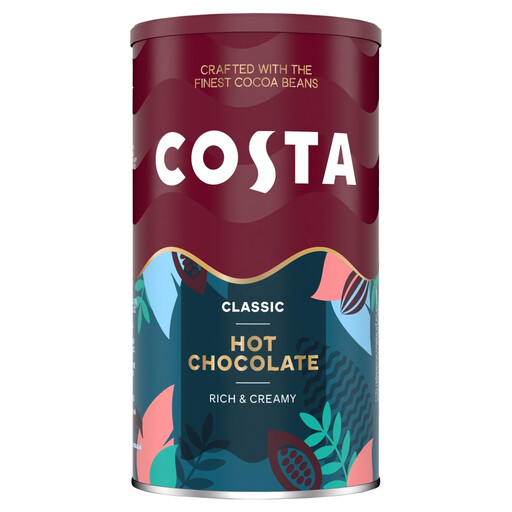 No image available
Consider this 300g powder if you plan to make breakfast mugs with milk or a plant-based alternative. Check the pack’s preparation and allergen information for the people you are serving.
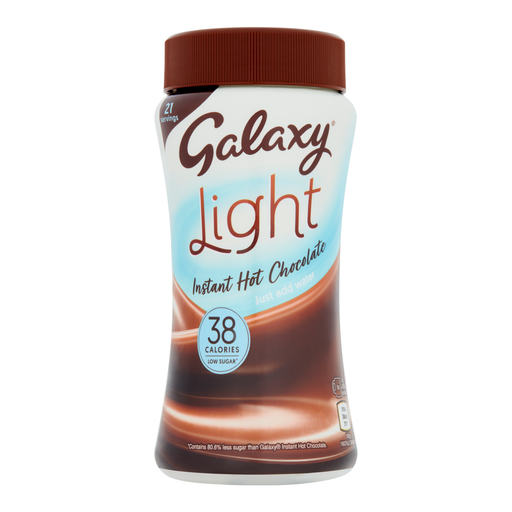 No image available
This instant variant is an option when you intend to make mugs with hot water and keep breakfast milk for other uses. Its listed ingredients include milk, soya and barley gluten; check the current pack for guests avoiding them. Do not use the serving figures for the separate Galaxy Instant 370g jar to plan mugs from this pack.
 No image available
This 500g drinking chocolate fits a breakfast plan that allocates hot milk to the mugs. Check the current pack’s measure and allergen statement before serving, and account for the milk those mugs will use.
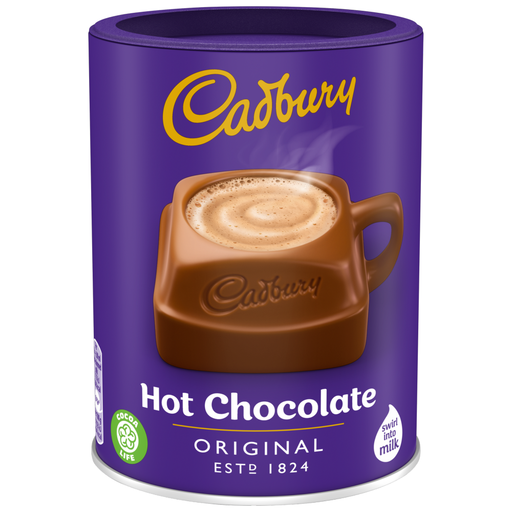 No image available
This 250 g pack is another hot-milk drinking-chocolate option when milk is intended for the breakfast mugs. Check the current pack for the mug directions and allergen wording before deciding how much milk and powder to prepare.
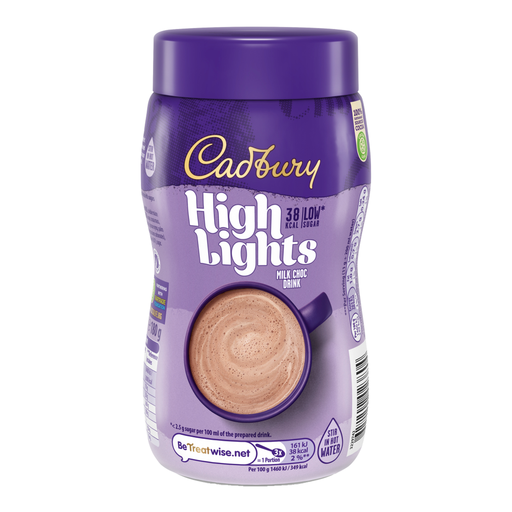 No image available
The hot-water method makes this 180g drink an option when breakfast milk is reserved for other uses. Its listed ingredients include whey and skimmed milk powder, so it is not a dairy-free choice. Check the pack’s mug measure before planning servings or comparing prepared-drink sugars.
Here, four pints describes the milk being bought for the continental breakfast. Choose the chocolate powder by its pack size and mug instructions, then decide whether those mugs will use some of that milk or hot water.
A powder prepared with hot water does not use milk for that stated method. Sainsbury’s gives hot-water instructions for Galaxy Instant and standard Options, whereas Cadbury Original’s stated method uses hot milk. Check the exact variant rather than applying one product’s directions to another.
No. Sainsbury’s labels Options Vegan suitable for vegans but says it may contain traces of milk. Read the current pack’s ingredients and precautionary allergen wording for the person you are serving; UK Food Standards Agency guidance distinguishes such “may contain” wording from a recipe’s ingredient list.
Compare the stated prepared servings, including their different powder doses. Sainsbury’s lists 16g sugars for Galaxy Instant made with 25g powder and 200ml hot water, 5.7g for standard Options made with 11g and 200ml hot water, and 2g for Options Vegan made with 11g and 200ml hot water. Those figures belong to those named variants, not to other packs in the same brands’ ranges.
Read the physical pack before making or serving the drink, particularly for ingredients, allergens and preparation. Product recipes and labels can change, so use the information on the pack you have rather than assuming an online description applies to it.