Weekend breakfast hosts
If you are making a sit-down breakfast and plan to warm milk, a traditional drinking chocolate fits that preparation routine.


Choose a drinking chocolate made with hot milk if heating milk is part of your breakfast plans. If you want to make one mug with hot water, look at an instant powder instead. Whichever you choose, compare nutrition for the serving as prepared and check the exact pack for milk ingredients and sweeteners.
The useful distinction for a Full English breakfast shop is whether you plan to heat milk or make the drink with hot water.
If you are making a sit-down breakfast and plan to warm milk, a traditional drinking chocolate fits that preparation routine.
If heating milk would add a step, an instant powder with hot-water instructions lets you make a mug while preparing breakfast.
If you want to compare energy and sugars alongside the meal, check the stated serving size and preparation liquid, as well as the ingredient list.
Start with how you will make the drink, then compare labels on the basis of the mug you intend to serve.
| Priority | What to check | Your needs |
|---|---|---|
| Preparation | Read whether the directions call for hot milk or hot water. Tesco Groceries says Cadbury Drinking Chocolate is stirred into hot milk; Twinings directs shoppers to add hot water to Options Belgian Choc. | I am happy to warm milk for breakfast, or I would rather make a mug using hot water. |
| Serving nutrition | Check the powder quantity, added liquid and nutrition per prepared serving. The NHS notes that labels give nutrition per 100 g or 100 ml and sometimes per portion; those figures answer different comparison questions. | Before adding a sweet drink to breakfast, I want to know what is in the mug I will actually make. |
| Ingredients | Read the current ingredients, allergen and precautionary statements. Check the full list for sweeteners rather than relying on terms such as ‘instant’ or ‘low calorie’. | Milk, soya or particular sweeteners may affect which tub I can choose or serve to someone else. |
A powder made with milk and one made with water produce drinks with different added ingredients. Comparing their powder figures alone will not describe the mugs you serve.
Check each product’s serving quantity and preparation liquid before comparing its prepared-serving energy and sugars.
Preparation instructions describe what you add to the powder, not everything already in it. This matters when serving someone who needs to avoid milk.
Read the exact pack’s ingredients, allergen statement and precautionary wording before buying or serving it.
An energy description does not establish whether a drink contains sugars or sweeteners.
Check both the sugars figure for the stated serving and the full ingredient list.
These references illustrate preparation and label checks; they do not imply that every product from a brand is prepared the same way.
Tesco Groceries directs shoppers to make its listed Cadbury Drinking Chocolate with three teaspoons of powder and hot milk.
Twinings gives hot-water instructions for its Options Belgian Choc jar, using three teaspoons (11 g) of powder.
Sainsbury's directs shoppers to prepare its 300 g Drinking Chocolate with 18 g powder and 200 ml warm semi-skimmed milk.
M&S has instant hot chocolate options, including a product named Instant Low Calorie Hot Chocolate.
Tesco Groceries is a retailer reference for the preparation instructions on its listed Cadbury Drinking Chocolate.
These tubs include instant options for a hot-water mug and drinking chocolates for shoppers planning to use milk. Check each variant’s directions and label rather than applying figures from another flavour or product.
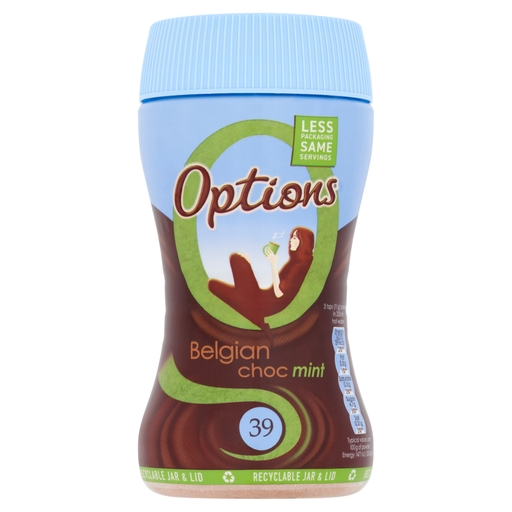 Image unavailable
Consider this mint variant if you want an instant mug made with hot water rather than heated milk.
It contains milk and aspartame and carries a phenylalanine statement; check the current pack if any of these matter to you.
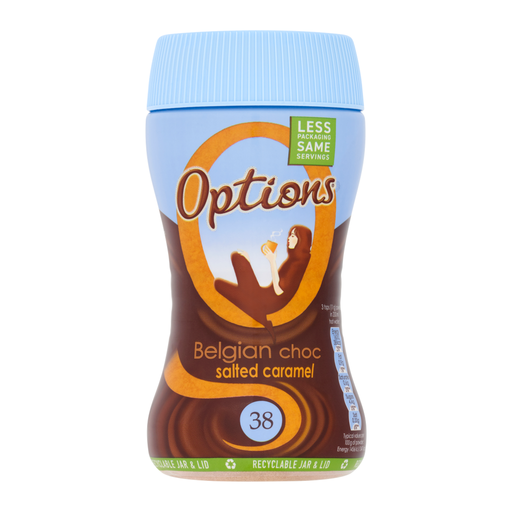 Image unavailable
This salted caramel variant is an instant option when a hot-water mug suits your breakfast routine.
It contains milk, acesulfame K and sucralose. If comparing sugars per mug, use the serving and preparation information on the current pack.
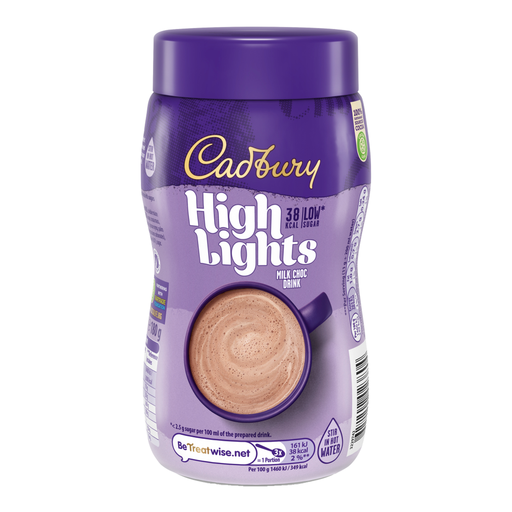 Image unavailable
This Cadbury Highlights variant fits a breakfast routine in which you are heating milk for the drink.
The product carries a ‘may contain milk’ statement. For a prepared-mug nutrition comparison, check the serving and liquid specified on its own pack rather than using figures for a different Cadbury drinking chocolate.
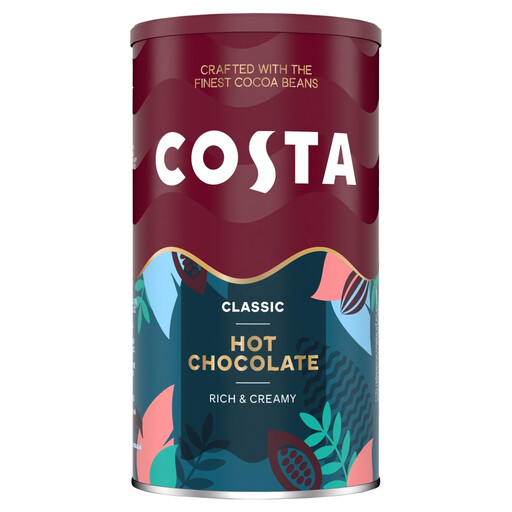 Image unavailable
Consider this powder if you plan to prepare a breakfast drink with milk or a plant-based alternative.
The liquid you use affects the finished mug, so compare prepared-drink nutrition using your chosen liquid rather than powder figures alone.
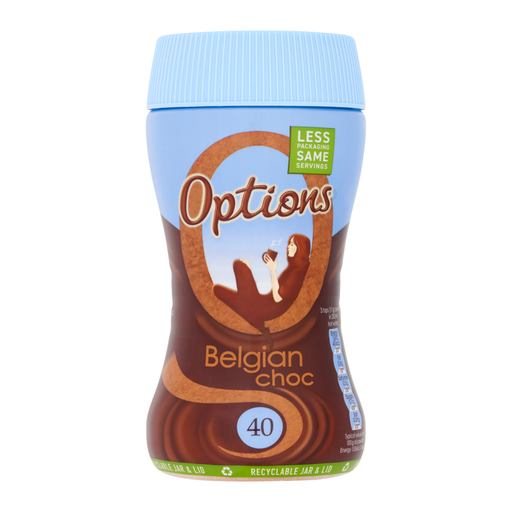 Image unavailable
This Options tub is a hot-water option if you do not plan to heat milk with breakfast.
It contains milk and aspartame and carries a phenylalanine statement. Follow this pack’s serving directions when comparing its prepared drink with another product.
Choose a hot-milk drinking chocolate if you are already warming milk; choose a hot-water instant powder if you want to make a mug without that step. Check the directions on the particular tub, as preparation differs between products and variants.
Use the stated prepared serving to compare the mugs you intend to drink, checking both the powder quantity and the added liquid. Per-100 g figures describe a different basis; the NHS notes that labels provide nutrition per 100 g or 100 ml and sometimes per portion.
Not necessarily: the Joybuy-listed Options Belgian Choc Mint, Salted Caramel and Belgian Chocolate variants each identify milk in their product information. If you need to avoid milk, check the ingredients and allergen wording on the exact pack before buying or serving it.
No. An energy description alone does not establish either point. Read the sugars figure for the stated serving and check the ingredient list for sweeteners on the product you are considering.