Organisers serving a shared hot drink
You need a preparation method volunteers can follow, enough finished drink for the planned cups and ingredient information that remains available at the serving table.


If six UK pints means prepared hot chocolate, plan for roughly 3.41 litres: 17 full 200 ml servings fall just short, so you would need at least 18 on that serving basis. Choose between an instant mix, milk-prepared drinking chocolate and flakes according to how you will serve the drinks, then check the pack’s portions and allergens against the school’s arrangements.
You need a preparation method volunteers can follow, enough finished drink for the planned cups and ingredient information that remains available at the serving table.
You need to check the powder itself, not just whether it is mixed with water. Relevant instant mixes contain milk ingredients, so the delivered pack and the school’s allergy arrangements matter.
You need to compare portions and preparation liquid across instant powder, drinking chocolate and flakes. Pack weight alone does not tell you how much prepared drink you can serve.
Confirm whether six pints refers to finished drink or to milk for preparation. Then work from the intended cup size and the instructions for the particular pack.
Choose when: Hot-water preparation suits the serving setup. ASDA lists Options Belgian Chocolate 220 g at 11 g powder per 200 ml hot water.
Allow for: That Options product contains milk despite its water-based preparation; check the ingredients of the exact flavour you buy.
Choose when: You intend to supply and heat milk. Sainsbury’s lists approximately 16 servings for its 300 g drinking chocolate when made with 200 ml semi-skimmed milk per serving.
Allow for: Those 16 servings amount to about 3.2 litres on the stated liquid basis, short of six UK pints; Sainsbury’s also marks the product unsuitable for people with milk or soya allergy.
Choose when: The drink style matters to your event plan and you can follow the selected product’s preparation instructions.
Allow for: Tesco lists 11 portions for Galaxy Frothy Hot Chocolate 275 g. M&S Belgian Milk Hot Chocolate Flakes contain milk and soya and are marked unsuitable for people with nut or peanut allergy.
| Priority | What to check | Your needs |
|---|---|---|
| Allergens | Read the delivered pack for milk, soya and other relevant allergen information. Check how drinks, utensils and ingredient details will be kept identifiable at the sale. | I need to tell families what is in each drink and avoid mixing up serving equipment. Anaphylaxis UK’s bake-sale guidance recommends clear allergen information and separation of allergy-friendly items. |
| Finished volume | Confirm what “six pints” means and the planned cup size. Compare the pack’s stated portions, powder amount and preparation liquid rather than pack weight alone. | Will one pack cover the cups I plan to serve? Six UK pints is about 3.41 litres, so 17 portions of 200 ml would not quite reach that finished-drink volume. |
| Preparation | Check whether the chosen product calls for hot water or hot milk, and how much liquid each portion uses. Plan how that liquid will be prepared and served. | Hot-water service may suit our setup, or we may be equipped to prepare a milk-based drink. Either way, I still need to check the powder’s ingredients. |
ASDA lists milk in Options Belgian Chocolate, while Tesco lists milk-derived ingredients in Cadbury Instant Hot Chocolate. The liquid used for preparation does not establish whether the powder contains milk.
Read the delivered pack before making the drinks and follow the school’s arrangements for known allergens.
A pack’s weight does not show its finished volume without a portion size and preparation method. Tesco lists 11 portions for Galaxy Frothy Hot Chocolate 275 g, whereas Sainsbury’s lists approximately 16 for its 300 g drinking chocolate.
Set the intended cup size, then calculate the number of cups using the instructions on the pack you will serve.
M&S Belgian Milk Hot Chocolate Flakes contain milk and soya and are marked unsuitable for people with nut or peanut allergy.
Check the current pack against the school’s allergy needs. If an allergy-friendly drink is also served, follow the school’s arrangements for separate preparation and utensils.
These brand examples show why preparation directions and allergens need checking product by product; they are not interchangeable six-pint packs.
Cadbury has drinking-chocolate and instant formats, including a 2 kg drinking-chocolate pack and a 300 g instant powder listed by Tesco.
Galaxy Frothy Hot Chocolate comes in a 275 g pack with a declared portion size.
Options Belgian Chocolate 220 g is an instant powder that ASDA instructs shoppers to make with hot water.
Tesco lists an own-brand 300 g instant hot chocolate prepared with hot water.
Sainsbury’s 300 g drinking chocolate has an approximate serving count based on preparation with semi-skimmed milk.
M&S offers instant hot chocolate and chocolate-flake formats with different ingredient considerations.
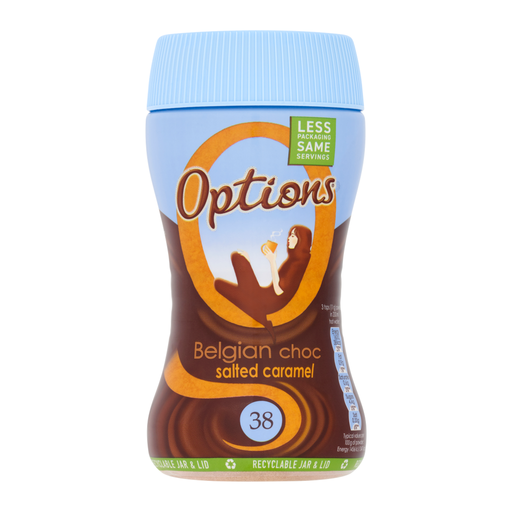
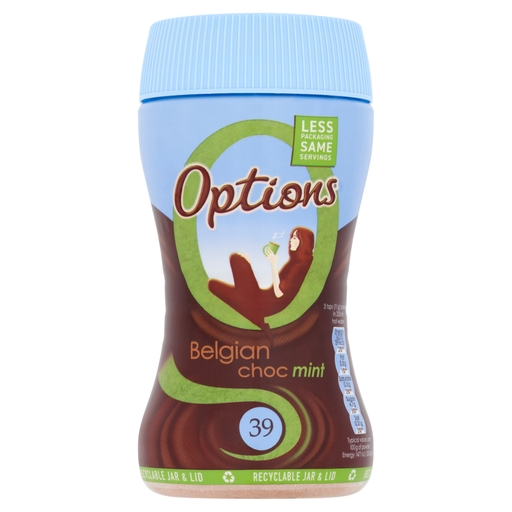
These Options flavours are instant hot chocolate choices for a hot-water serving plan. Check each flavour’s pack instructions to establish how many drinks to prepare, and keep its allergen information with the drinks.
 No image available
For a hot-water serving plan, use the preparation directions on this flavour’s pack to work out the number of cups. It contains milk, so check the delivered label and the school’s allergy arrangements before serving.
 No image available
For a hot-water serving plan, check this flavour’s preparation directions against the intended cup size. It contains milk and a source of phenylalanine; keep the delivered pack’s ingredient information available when serving.
Six UK pints is approximately 3.41 litres. That is slightly more than 17 full 200 ml servings, so plan for at least 18 if 200 ml is your intended serving size; check the required amount again if the cups differ.
Not necessarily. ASDA lists milk in Options Belgian Chocolate, and Tesco lists milk-derived ingredients in its own-brand instant hot chocolate. Read the delivered pack for the exact product and flavour before serving it.
Follow the school’s allergy arrangements and keep the ingredients of each drink identifiable. The Department for Education’s school allergy guide says schools must publish a policy for reducing contact with known allergens; Anaphylaxis UK’s bake-sale guidance recommends clear allergen information, separate areas for allergy-friendly items and attention to utensils and surfaces.
Not on its stated serving basis. Sainsbury’s lists approximately 16 servings made with 200 ml semi-skimmed milk each, or about 3.2 litres on that liquid basis; six UK pints is approximately 3.41 litres. Check the pack directions and your intended cup size before setting a quantity.