For a convenient organic hot chocolate, check the finished product’s organic certification and allergen information, then compare sugars in dry mixes on the same per-100g basis. A sweeter sachet may suit a quick drink, while a higher-cacao mix or cocoa powder gives you more control over preparation; if you are breastfeeding, include chocolate alongside other caffeine sources when considering the NHS advice to try not to exceed 300mg a day.
Who needs which checks?
Breastfeeding parents choosing a regular hot drink
Chocolate contributes to caffeine intake alongside drinks such as tea and coffee. The NHS advises people who consume caffeine while breastfeeding to try not to have more than 300mg a day in total, so a regular hot chocolate is worth including in that calculation.
New parents comparing sweetness
Compare the sugar listed for the dry product and consider what you will add when preparing it. The NHS advises adults to have no more than 30g of free sugars a day; sugars naturally present in milk appear in total sugars but do not count as free sugars.
Households checking ingredients and allergens
Read the exact mix’s ingredients and cross-contact wording as well as the label on the milk or plant drink used to prepare it. For example, Cacao Brew lists oat milk powder in some mixes and warns that its products are made alongside other allergens.
What to check before buying
Start with the finished product’s organic claim and ingredients, then compare dry-mix nutrition and the preparation each option requires.
| Priority | What to check | Your needs |
|---|
| Organic claim |
Check the claim for the finished hot chocolate and its organic control-body information on the pack or product details. UK guidance from the Department for Environment, Food and Rural Affairs says products labelled organic must meet organic production rules and that the product and suppliers must be certified by an approved organic control body. |
I want the finished drink mix to qualify as organic, rather than relying on an organic ingredient or a broad brand description. |
| Sugar and flavour |
Compare sugars per 100g of dry product and read the ingredients for added sugars. Cacao Brew lists 13g sugars per 100g for its 81% cacao mix and 48g per 100g for its 38% sachet; these are not figures for prepared drinks. |
A sweeter sachet might suit an occasional quick drink, but I may prefer a less sweet mix if I make hot chocolate regularly. |
| Caffeine |
Check the intended portion and ask the manufacturer for caffeine per serving if you need a precise figure. The NHS says chocolate contains caffeine and advises trying not to exceed 300mg of caffeine a day while breastfeeding. |
If I am breastfeeding, I need to consider hot chocolate together with the tea, coffee and other caffeine sources I have that day. |
| Allergens |
Read the exact variant’s ingredients and cross-contact statement, then check the preparation liquid separately. Cacao Brew lists oat milk powder in its 38% and 81% products and warns that they are made alongside other allergens. |
A plant-based preparation matters to me, but it does not answer whether the powder suits my household’s allergen requirements. |
| Preparation |
Check the portion and mixing directions, including the amount and type of liquid required. Compare nutrition on the same dry-product basis before considering the finished drink. |
Some days I want a portionable sachet; on others, I would rather measure cocoa and choose the sweetness myself. |
Common buying mistakes
-
Equating an organic ingredient with a certified finished product
An ingredient described as organic does not, by itself, establish the status of the finished hot chocolate. UK organic labelling rules, published by the Department for Environment, Food and Rural Affairs, require the product and suppliers to be certified by an approved organic control body.
Check the exact product’s organic claim and control-body details on its pack or full product information.
-
Comparing dry powder with a prepared serving
Sugars per 100g of powder and sugars in a finished mug measure different things. The liquid changes the finished drink’s total sugars; as the NHS explains, sugars naturally present in milk count towards total sugars but not free sugars.
Compare powders per 100g first, then consider the portion and liquid you will actually use.
-
Assuming hot chocolate is caffeine-free
The NHS identifies chocolate as a caffeine source and advises those consuming caffeine while breastfeeding to try not to have more than 300mg a day in total.
Include hot chocolate alongside other caffeine sources, and ask the manufacturer for a per-serving figure if you need to calculate its contribution.
-
Using plant milk as an allergen check
The preparation liquid does not change the powder’s ingredients or cross-contact warning. Cacao Brew’s 38% and 81% mixes contain oat milk powder and are made alongside other allergens.
Check the exact powder and your chosen liquid separately against the household’s requirements.
Organic hot chocolate brand references
These brands provide different starting points for checking ingredients and product claims; a brand description does not establish certification for every individual product.
Cacao Brew
Cacao Brew describes 38%, 81% and 100% cacao hot-chocolate products on its UK product pages.
- Its product information allows a dry-product sugar comparison: the 38% sachet lists 48g sugars per 100g, while the 81% mix lists 13g per 100g.
- The brand warns that products are made alongside other allergens. Check the exact variant’s ingredients and organic certification details before buying.
Before Chocolate
Its Original Hot Chocolate page describes a whole-cacao drink made with 51% organic cacao, unrefined muscovado sugar and organic agave syrup.
- The brand identifies three ingredients and describes them as vegan and free from the main 14 allergens.
- Check the finished product’s organic certification and its full label before treating the ingredient description as confirmation of certified organic status or allergen suitability.
Montezuma's
Montezuma's describes organic hot chocolate in its drinking-chocolate collection.
- The collection offers a starting point for identifying a drinking-chocolate product to inspect more closely.
- Check the exact product’s ingredients, nutrition and organic certification before comparing it with a named mix.
A Joybuy cocoa powder option
This cocoa powder is an option for preparing hot chocolate when you want to choose how to make and sweeten the drink. Check its exact label for the organic claim, ingredients and preparation directions.
 No image available
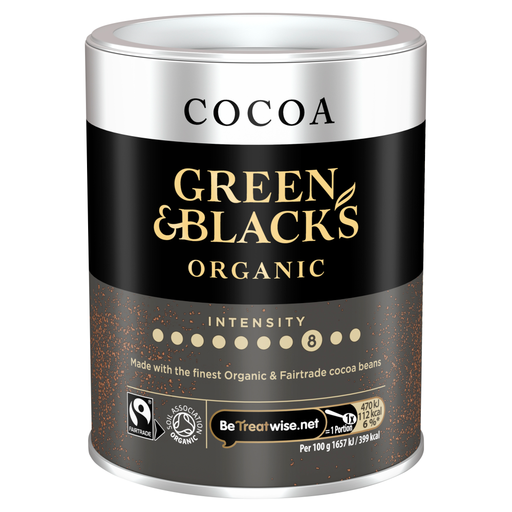
g&B Organic Cocoa 125g
A 125g cocoa powder listed for making hot chocolate, rather than a portioned sachet. Check how you want to prepare and sweeten it. Its allergen wording says it may contain milk; if breastfeeding, ask the manufacturer for caffeine per serving when a precise daily total matters.
View on Joybuy
Questions about choosing hot chocolate
How can I check an organic hot chocolate claim in the UK?
Check the finished product’s organic claim and control-body information on its pack or complete product details. Under UK guidance from the Department for Environment, Food and Rural Affairs, products labelled organic must meet organic production rules, and the product and suppliers must be certified by an approved organic control body; one organic ingredient or a description such as “natural” is not equivalent.
What should I consider about hot chocolate while breastfeeding?
Include it when considering your total daily caffeine intake: the NHS says chocolate contains caffeine and advises trying not to have more than 300mg of caffeine a day while breastfeeding. If you need to calculate a particular hot chocolate’s contribution, ask its manufacturer for caffeine per serving and consider your other caffeine sources too.
Does a prepared drink’s total sugar figure show its free sugars?
Not necessarily. The NHS explains that sugars naturally present in milk appear in total sugars but do not count as free sugars. Read the dry mix’s ingredients and nutrition panel, then consider the milk or plant drink and any sweetener used to prepare your mug.
Does a vegan hot chocolate automatically suit someone with an allergy?
No. Vegan ingredients do not establish the absence of allergen cross-contact. Cacao Brew says its 38% and 81% products are made alongside other allergens, so check the exact product’s ingredient and allergen wording rather than relying on how you prepare the drink.


