Night workers choosing an organic hot drink
If hot chocolate is part of a break, the organic claim is one check. The sugars in the prepared mug and its timing before daytime sleep are separate considerations.


Choose an organic hot chocolate for a night-shift break by the drink you will actually make, not the organic label alone: check prepared-drink sugars, allergens and dietary claims, and how close the break is to planned sleep. Green & Black's has a supermarket listing with nutrition for a milk-prepared serving; Booja-Booja states that its hot chocolate is dairy-free and vegan; Chocolate Tree flakes can be mixed with dairy or plant milk. Those differences do not make any one option suitable for every worker.
If hot chocolate is part of a break, the organic claim is one check. The sugars in the prepared mug and its timing before daytime sleep are separate considerations.
Look for both dietary claims on the exact product, then check its allergen warning and what you will mix it with at work.
Organic flakes and higher-cacao drinking chocolate offer different ways to prepare a mug. The milk you add and the exact pouch or product label still matter.
Start with the exact product's organic claim, then check the serving you intend to make, dietary requirements and the timing of your break.
| Priority | What to check | Your needs |
|---|---|---|
| Organic status | Check the organic designation on the exact product. Look for its certifier or organic symbol where shown; ethical-sourcing and vegan claims are different claims. | I want the hot chocolate I buy, rather than just its brand or cocoa-sourcing message, to be identified as organic. Soil Association Certification says food sold as organic in the UK must meet organic-regulation requirements. |
| Sugars and serving | Check whether nutrition is given per 100g of powder or per prepared serving. Note the stated recipe and any sugars contributed by what you add. | For my break, I want to know what is in the finished mug. Sainsbury's lists 23g sugars for a Green & Black's serving made with 250ml semi-skimmed milk; Booja-Booja lists 62g sugars per 100g of its product. Those are different measurement bases, not a like-for-like serving comparison. |
| Break and sleep timing | Consider when you plan to sleep after the shift. Check the portion and any product-specific caffeine information rather than assuming a chocolate drink is caffeine-free. | A hot drink may fit my break, but I would think differently about one close to planned sleep. University Hospital Southampton NHS Foundation Trust includes chocolate among caffeine-containing items and says caffeine can take up to six hours to wear off. |
| Diet and allergens | Read the exact product's dietary claims, ingredients and allergen warning. Check whether the preparation calls for dairy milk or allows a plant alternative. | If I need a dairy-free or vegan mug, the powder and what I add both matter. Booja-Booja labels its hot chocolate dairy-free and vegan but warns against it for people with several specified tree-nut allergies; Chocolate Tree says its flakes can be melted into dairy or plant milk. |
Organic status does not tell you the sugars in a prepared drink. Sainsbury's lists 23g sugars for its Green & Black's serving made with 250ml semi-skimmed milk, while Booja-Booja lists 62g per 100g of product.
Use the nutrition panel and preparation directions together. If the break calls for something more substantial, plan food separately rather than treating the drink as a complete meal.
Booja-Booja describes its hot chocolate as vegan and dairy-free, but its product page warns that it is unsuitable for people with almond, hazelnut, pecan, cashew or pistachio allergy.
Check the current ingredients and allergen statement for the exact product, as well as any milk or alternative you will add.
University Hospital Southampton NHS Foundation Trust includes chocolate among caffeine-containing items and says caffeine can take up to six hours to wear off.
Consider the timing and portion of a chocolate drink if your break falls close to planned daytime sleep.
The Requirements for School Food Regulations 2014 in England exclude hot chocolate from their definition of confectionery. That exclusion does not settle every other school-food requirement or establish a UK-wide rule for all school menus.
For school catering, check the current requirements for the relevant UK nation, the exact drink and how it will be served. The Department for Education's school-food guidance concerns state-funded schools in England.
These references describe particular products or ranges, not every hot chocolate sold under each brand.
Sainsbury's lists an organic hot chocolate with nutrition for a serving prepared using semi-skimmed milk.
The brand identifies its hot chocolate as organic, dairy-free and vegan.
Chocolate Tree describes hot-chocolate flakes made from organic agroforestry cacao.
Cacao Brew presents organic Peruvian-cacao drinking chocolate, including an 81% Peru option.
This organic cocoa is an option for making hot chocolate during a night-shift break. What you mix with it determines the finished drink, so check the preparation and ingredients you plan to use.
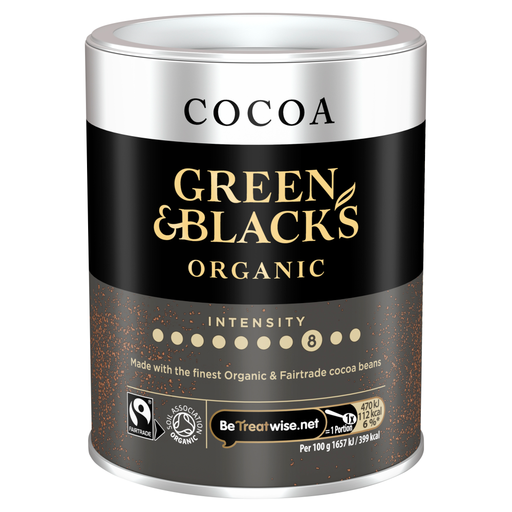 No image available
An organic cocoa base for a hot chocolate. Check the pack's preparation directions and the ingredients you will add when considering the finished drink; check its current milk-allergen statement if milk avoidance matters.
Look for an organic designation on the exact product and its certifier or organic symbol where shown. Soil Association Certification says food sold as organic in the UK must meet organic-regulation requirements; vegan or ethical-sourcing claims alone do not establish organic status.
No. Read the nutrition information alongside the serving recipe and what you intend to add. Sainsbury's lists 23g sugars for a Green & Black's serving made with 250ml semi-skimmed milk, whereas Booja-Booja lists 62g per 100g of its product; the two figures describe different bases.
Consider when you drink the hot chocolate and how much you make rather than assuming it contains no caffeine. University Hospital Southampton NHS Foundation Trust includes chocolate among caffeine-containing items and says caffeine can take up to six hours to wear off.
Yes, if the exact product makes those claims: Booja-Booja identifies its hot chocolate as organic, dairy-free and vegan. Its product page also warns that it is unsuitable for people with almond, hazelnut, pecan, cashew or pistachio allergy. Check the ingredients and allergen statement, plus anything you add to the mug.
No UK-wide automatic conclusion follows from the England rule cited here. The Requirements for School Food Regulations 2014 exclude hot chocolate from the definition of confectionery, but other school-food requirements may still apply. For a state-funded school in England, assess the exact drink and menu against current Department for Education guidance; check the applicable rules separately in other UK nations.