Who is the drink for?
The reason for serving hot chocolate matters more than an age-related label on a product.
Someone with a poor appetite who enjoys milky drinks
A hot-milk drink can sit alongside meals and snacks, but should not replace them. NHS advice notes that warm milky drinks can add nutrients and calories; it also advises avoiding too many drinks just before meals when appetite is poor. Unintentional weight loss calls for clinical advice, not a change of cocoa powder alone.
Someone who wants a straightforward everyday drink
A water-made instant powder may be easier to prepare when the aim is an enjoyable hot drink rather than nutritional support. Check the exact product’s directions, serving information and allergens before making it a routine choice.
Someone with an individual dietary or swallowing plan
Diabetes, food allergies and prescribed drink consistency can change which product and preparation method are appropriate. Milton Keynes University Hospital advises that thickened drinks follow a speech and language therapist’s assessment and instructions; an ordinary hot-chocolate recipe does not establish the required consistency.
What should you check before choosing?
Start with why the drink is being offered, then compare the finished serving rather than treating all powders as equivalent.
Made with hot milk
Consider when: The person enjoys milky drinks and milk fits their dietary and swallowing guidance.
Trade-off: Milk adds to the finished drink, but the powder’s sugars, allergens and preparation still need checking.
Instant, made with water
Consider when: Simple preparation is the main aim and the drink is not being relied on for nutritional support.
Trade-off: Water does not add the energy or protein that milk would; the powder may still contain milk ingredients.
Lighter hot chocolate
Consider when: Reducing sugar or calories fits the person’s established dietary goal.
Trade-off: A lighter drink may work against an aim of increasing intake when appetite is poor; check the actual serving.
| Priority | What to check | Your needs |
|---|
| Prepared drink |
Follow the milk or water directions. Compare energy and protein per prepared serving on a consistent basis, including the milk actually used. |
If I’m offering a drink alongside food because appetite is poor, I want to know what the finished mug contributes without letting it displace a meal. |
| Sugars and allergens |
Read sugars per stated serving, ingredients and allergen information on the current pack. Check how the serving is prepared. |
A reduced-sugar choice needs to fit the person’s dietary plan; milk or soya ingredients also matter if those foods must be avoided. |
| Swallowing |
If thickened fluids are prescribed, follow the person’s speech and language therapist’s specified consistency and preparation method. |
I cannot judge a drink’s swallowing suitability by how creamy it looks. The prepared drink must follow the individual instructions. |
| Routine preparation |
Check the amount of powder, required liquid and serving directions for the exact product. |
When ease matters most, I want a drink the person or carer can make consistently, without assuming convenience makes it suitable for nutritional support. |
Brand and range references
These examples illustrate different preparation formats; check the exact product rather than assuming a whole brand has the same ingredients or nutrition.
Cadbury
Tesco Groceries directs shoppers to mix Cadbury Drinking Chocolate with hot milk.
- Relevant to someone who enjoys a warm, milk-prepared drink.
- Check the current powder label and the milk used against the person’s dietary and allergy requirements; it is not a medical nutrition product.
Galaxy
Oakhouse Foods lists Galaxy Instant Hot Chocolate as a water-made option.
- Its stated serving information gives a basis for checking what that instant drink contributes.
- The listed serving contains 99 kcal, 1.3 g protein and 16 g sugars; the ingredients include milk and soya.
Options
Options products appear in Tesco Groceries’ reduced-sugar and low-calorie hot-chocolate category.
- Worth examining when a lighter drink fits an individual dietary goal.
- Category placement does not establish that any particular variant suits someone with poor appetite; compare its own label and serving directions.
Tesco
Tesco Groceries lists a Lighter Hot Chocolate alongside other hot-chocolate formats.
- The named formats allow a choice based on the intended type of drink.
- Check each product’s current nutrition, ingredients and preparation instructions rather than assuming the range shares one profile.
M&S
Marks & Spencer describes its Drinking Chocolate 300g as prepared with hot milk.
- A milk-prepared format for someone who enjoys that kind of drink.
- Marks & Spencer states that this product is not suitable for people with a milk allergy; read the current pack before serving.
Joybuy hot-chocolate options
These options include drinks intended for milk or another chosen liquid, plus a water-prepared lighter drink. Choose by preparation method and the person’s dietary guidance, not by the order of the cards.
 No image available
Cadbury Drinking Chocolate 500g
For a hot-milk drink when milk fits the person’s needs. The Joybuy listing gives 168 kcal, 7.9 g protein and 23 g sugars per stated 224 g serving; check the current pack’s preparation and allergy information, and do not rely on the drink alone if weight loss is a concern.
View on Joybuy
 No image available
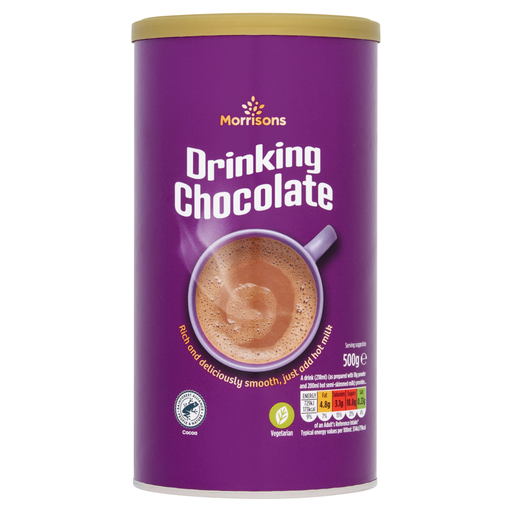
Morrisons Drinking Chocolate 500g
A drinking-chocolate option for someone who enjoys a warm milky drink. Check the pack’s serving size and whether its nutrition figures describe powder or the prepared drink before comparing it with another product; also check dietary and allergy suitability.
View on Joybuy
 No image available
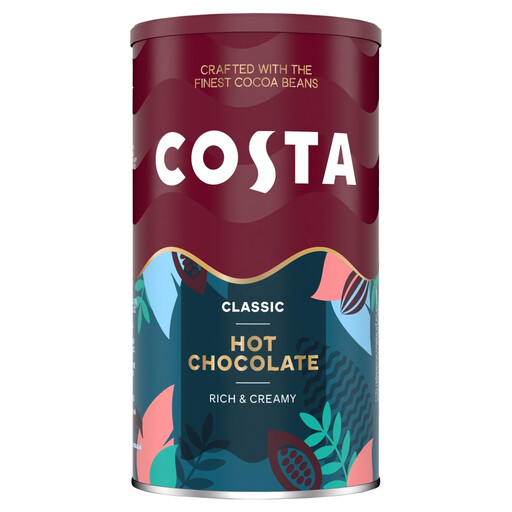
Costa Hot Chocolate 300g
Its directions allow preparation with milk or a plant-based alternative, subject to the person’s dietary requirements. The stated nutrition for a 20 g powder portion does not describe the finished drink: include the chosen liquid when assessing a serving, and check the current allergen information.
View on Joybuy
 No image available
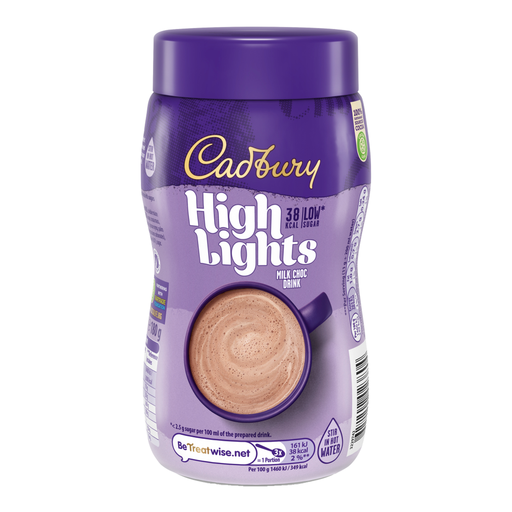
Cadbury Highlights Milk Chocolate Drink 180g
A water-prepared option to consider when a lighter drink fits an established dietary goal, rather than an aim to increase intake. Confirm the current pack’s prepared-serving figures and portion size; the listed ingredients include milk, soya and barley.
View on Joybuy
Common questions
Can hot chocolate help someone with a poor appetite?
It can be an enjoyable drink alongside food, particularly if the person likes milk-prepared drinks, but it is not a stand-alone response to malnutrition. NHS guidance discusses fortified foods, snacks and calorie-rich drinks; seek clinical advice if weight loss is unintentional or malnutrition is a concern, and avoid offering too many drinks just before meals.
Is a lighter hot chocolate the right choice for an older adult?
Only when reducing sugar or calories fits that person’s dietary goal. If appetite is poor or maintaining intake is the priority, do not assume a lighter label is preferable; check the finished serving and any individual care guidance.
Can someone prescribed thickened fluids have ordinary hot chocolate?
Do not assume ordinary preparation is suitable. Milton Keynes University Hospital advises following the consistency recommended after assessment by a speech and language therapist; use that person’s prescribed thickener and preparation method for any hot drink.
Are milk-made and water-made hot chocolates nutritionally equivalent?
No: the liquid used changes the finished drink. Tesco Groceries directs shoppers to make Cadbury Drinking Chocolate with hot milk, while Oakhouse Foods lists serving figures for a water-made Galaxy instant drink. Compare nutrition on the stated preparation basis, including the milk actually used.
Which allergens should I check?
Check the current pack against the person’s own restrictions rather than assuming a water-made drink is milk-free. The Oakhouse Foods Galaxy Instant listing includes milk and soya ingredients, and Marks & Spencer states that its Drinking Chocolate 300g is not suitable for people with a milk allergy.


