What should you check before buying?
Choose the preparation liquid first, then use the labelled powder-to-liquid ratio to work out how much to buy for the batch.
| Priority |
What to check |
Your needs |
| Batch yield |
Look for grams of powder and millilitres of liquid per serving; multiply that ratio to reach about 3.41 litres. Tesco Groceries lists Galaxy Drinking Chocolate at 18 g powder per 200 ml hot semi-skimmed milk: approximately 307 g powder makes six UK pints at that ratio, within its 450 g tub. |
I need to know whether the pack covers the whole batch, rather than judging by the size of the tub. |
| Preparation liquid |
Check whether the instructions call for hot milk or hot water, and whether you can heat and hold the required liquid. Sainsbury’s lists Clipper Instant Hot Chocolate at 28 g per 200 ml hot water; six UK pints would take about 477 g powder at that ratio, more than one 350 g tub. |
If heating several litres of milk is awkward, I would look for a mix specifically prepared with hot water. |
| Ingredients |
Read the exact pack’s ingredient and allergen statements, including any precautionary wording. The Sainsbury’s listing for Clipper names skimmed milk powder and milk permeate powder despite its hot-water instructions. |
When serving other people, I need to check the particular product and flavour rather than assume a water-made drink is dairy-free. |
| Serving nutrition |
Check whether the nutrition figures describe powder alone or a serving prepared with the specified liquid. Compare like with like, particularly if you are considering a different milk or a lighter-labelled option. |
I want the figures to describe the drink I intend to serve, not just the dry mix. |
| Storage directions |
Follow the pack directions for storing the powder and check any preparation or storage instructions relevant to the finished drink. GOV.UK distinguishes a best-before date, which concerns quality, from a use-by date, which concerns safety. |
If I prepare the drink ahead of serving, I cannot use the dry powder’s best-before date as a storage time for the mixed batch. |
Brand and format references
These examples show why the preparation instructions on a particular product matter more than the brand name when planning a large batch.
Cadbury
Sainsbury’s lists Cadbury Original Drinking Hot Chocolate as a 500 g powder prepared with hot milk.
- Its listed method uses three teaspoons swirled into hot milk.
- That spoon-based instruction does not give a precise powder weight for scaling a six-pint batch; the listing also says “MAY CONTAIN MILK”.
Galaxy
Tesco Groceries lists a measurable milk-made recipe for Galaxy Drinking Chocolate.
- Its stated 18 g powder and 200 ml hot semi-skimmed milk per portion, with 25 portions per 450 g tub, provides a basis for calculating a batch.
- That calculation applies to the listed product and preparation ratio, not to every Galaxy variant or a different serving strength.
Clipper
Sainsbury’s lists Clipper Fairtrade Instant Hot Chocolate in a 350 g tub with hot-water preparation.
- The listed 28 g powder per 200 ml water gives a measurable starting point for a large batch.
- One 350 g tub is short of the roughly 477 g required for six UK pints at that ratio. Its ingredients include skimmed milk powder and milk permeate powder.
Options
Tesco Groceries lists Options hot chocolate in 220 g jars and sachet formats.
- The formats offer a way to consider individual servings or different flavours.
- Check the selected flavour’s preparation ratio, ingredients and pack quantity before planning a six-pint batch.
M&S
Marks & Spencer lists drinking chocolate, instant mixes, cocoa, flakes and other hot-chocolate formats.
- The range lets shoppers compare preparation styles, including instant and drinking chocolate.
- Calculate batch yield from the chosen product’s own directions; a category listing does not establish one ratio for the whole range.
Joybuy hot chocolate options
These options include an instant hot-water mix and drinking chocolates for milk-based preparation. For a six-pint batch, check each pack’s directions before deciding how many tins to buy.
 No image available
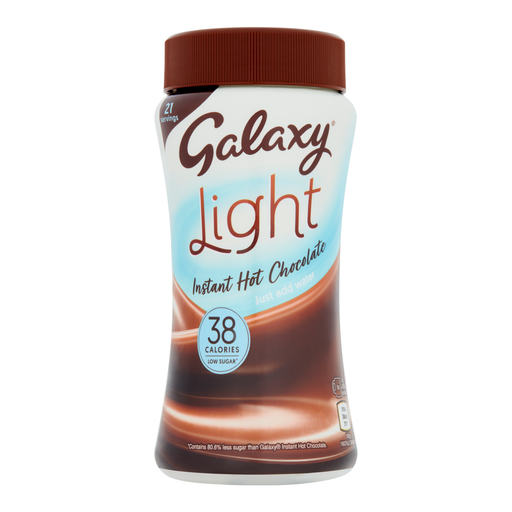
Galaxy Light Instant Hot Chocolate 210g
Consider this instant mix if you are preparing the batch with hot water. At the product’s stated preparation ratio, one 210 g tin does not cover six UK pints, so check the directions when planning the number of tins. Water preparation does not remove the need to check the current ingredient and allergen statement.
View on Joybuy
 No image available
Cadbury Drinking Chocolate 500g
This 500 g drinking chocolate is an option when you can prepare the batch with hot milk. Its spoon-based directions do not establish a precise powder quantity for six pints, so check the pack before deciding whether one tin will cover your recipe. Check the current allergen statement before serving.
View on Joybuy
 No image available
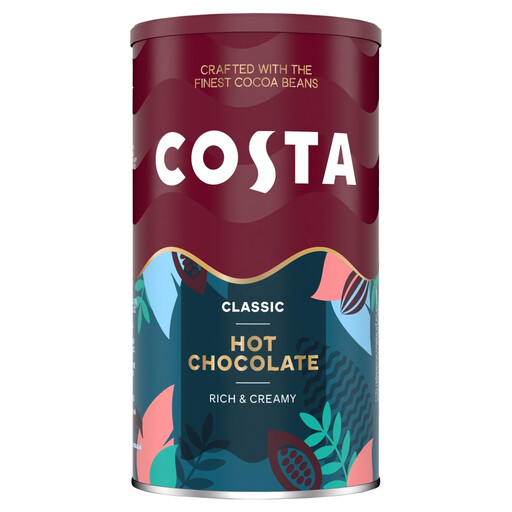
Costa Hot Chocolate 300g
If you plan to make this hot chocolate with milk or a plant-based alternative, check the directions for the liquid quantity per serving before scaling up. The 300 g pack weight by itself does not establish whether one tin will make six pints; nutrition for the finished drink also depends on the liquid used.
View on Joybuy
 No image available
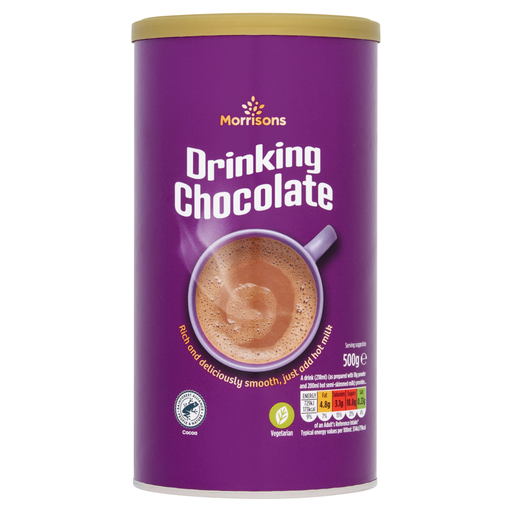
Morrisons Drinking Chocolate 500g
This 500 g drinking chocolate is another milk-made option, so plan how you will heat the milk for a shared batch. Check the pack’s serving and preparation directions to calculate the powder needed for six pints; do not assume the pack weight establishes the finished volume. Read its current allergen statement before serving.
View on Joybuy
Six-pint batch questions
Is a six-pint hot chocolate batch the same as buying a six-pint bottle?
No: use six pints as the volume you intend to prepare, then select a product whose directions you can scale. Under the UK pint definition in the Product Regulation and Metrology Act 2025, that volume is about 3.41 litres. Tub size describes powder weight, not finished-drink volume.
How much Galaxy Drinking Chocolate makes six UK pints?
For the Galaxy Drinking Chocolate listed by Tesco Groceries, the stated ratio is 18 g powder to 200 ml hot semi-skimmed milk. Scaling that ratio to about 3.41 litres takes approximately 307 g powder, so its 450 g tub covers the batch at the stated strength. Check the directions if buying a different Galaxy product.
Can I make the batch with hot water instead of milk?
Yes, if you choose a mix with hot-water preparation instructions. Sainsbury’s lists Clipper Instant Hot Chocolate at 28 g powder per 200 ml hot water, which works out to roughly 477 g powder for six UK pints—more than one 350 g tub. Its ingredients include milk-derived powders, so hot-water preparation does not make it dairy-free.
Does the powder’s best-before date apply once the drink is mixed?
No. The dry product’s date is not a storage period for hot chocolate after milk or water has been added. Follow the powder’s storage directions and any relevant instructions for the prepared drink; GOV.UK explains that a best-before date concerns quality under the stated storage conditions.
What should I read on the pack before serving a group?
Check the current ingredient and allergen statement, the preparation ratio, serving size and storage directions on the exact pack you will use. In particular, do not infer ingredients from the preparation liquid: the Sainsbury’s listing for water-made Clipper includes milk-derived ingredients, while its Cadbury drinking-chocolate listing carries a “MAY CONTAIN MILK” statement.


