Who might choose each type?
The useful distinction is whether the drink is contributing to a snack or is simply a warm drink after exercise.
People wanting a warm snack after training
University College London Hospitals describes carbohydrate-and-protein snacks as an option before and after exercise. If you want your hot chocolate to contribute both, compare the nutrition for a serving made with milk, including the milk, rather than judging the powder alone.
People who prefer hot-water preparation
A water-made drink avoids preparing it with milk, but it may contribute little protein. Tesco lists 1.3 g protein for its reviewed Galaxy serving; ASDA lists 1 g for its reviewed Options serving. Consider what else is in your snack or meal if protein matters to your choice.
People following an individual exercise plan
If you manage diabetes or use insulin, a hot-chocolate label cannot determine what you need around exercise. Cambridge University Hospitals advises monitoring glucose before, during and after activity to understand individual responses; follow the guidance from your own diabetes team.
What should you check before buying?
Start with the mug you will actually make: powder quantity and choice of liquid determine which prepared-serving figures are relevant.
| Priority | What to check | Your needs |
|---|
| Carbohydrate and protein |
Compare both values per prepared serving, including the stated liquid. One Stop lists 24 g carbohydrate and 7.9 g protein for Cadbury made with 200 ml semi-skimmed milk; Tesco lists 18 g and 1.3 g for Galaxy made with water. |
I want my warm drink to contribute to a carbohydrate-and-protein snack, not just accompany one. University College London Hospitals describes this combination as relevant to snacks around exercise. |
| Preparation |
Check the powder amount, liquid and quantity in the serving directions. If you change the liquid, use nutrition figures that reflect what goes into your mug. |
Water is convenient for me, or I would rather make drinking chocolate with milk. Those choices cannot be compared as though the powder alone made the finished drink. |
| Serving size and sugars |
Read energy and sugars for the stated serving alongside its preparation basis. One Stop lists 23 g sugars for Cadbury with semi-skimmed milk; Tesco lists 16 g for Galaxy with water. ASDA lists 40 kcal for its reviewed 11 g Options serving made with water. |
Sometimes I want a smaller hot drink rather than a drink that contributes much to my post-workout snack. I need to check the portion and the rest of what I am eating. |
| Dietary compatibility |
Read the current jar’s ingredients, allergen statements and warnings. Tesco lists milk and soya for the reviewed Galaxy product; ASDA lists milk and a phenylalanine warning for the reviewed Options product. |
If an ingredient or warning matters to me, a familiar brand name or a different product in its range is not enough to establish that this jar is suitable. |
Brand references for these drink types
These examples describe particular products and serving instructions, not every hot chocolate sold under each brand.
Cadbury
The referenced Drinking Chocolate serving is made with 18 g powder and 200 ml semi-skimmed milk, according to One Stop’s product information.
- That prepared serving lists 24 g carbohydrate and 7.9 g protein; the figures include the milk.
- It also lists 23 g sugars, and the powder may contain milk.
Galaxy
Tesco’s reviewed 370 g Instant Hot Chocolate jar gives a serving of 25 g powder with 200 ml hot water.
- The stated water-made serving contains 18 g carbohydrate.
- It contains 1.3 g protein and 16 g sugars per serving; the product lists milk and soya.
Options
ASDA’s reviewed Belgian Hot Chocolate serving uses 11 g powder with 200 ml hot water.
- That small serving lists 40 kcal, 6.5 g carbohydrate and 1 g protein.
- The reviewed product contains milk and carries a warning that it contains a source of phenylalanine.
Hot chocolate options on Joybuy
These jars include drinking chocolate for making with milk and a water-prepared hot chocolate. Check the preparation and serving information on the jar you choose before comparing their nutrition.
 No image available
Cadbury Drinking Chocolate 500 g
A choice to examine if you want a milk-prepared drink to contribute to your post-workout snack. One Stop’s information for the referenced 500 g product lists 24 g carbohydrate, 7.9 g protein and 23 g sugars for 18 g powder made with 200 ml semi-skimmed milk; those are finished-drink figures, not powder-only values. The powder may contain milk, so check the current jar if that matters to you.
View on Joybuy
 No image available
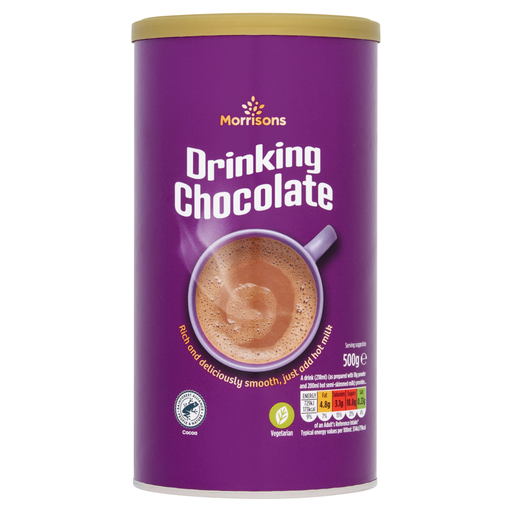
Morrisons Drinking Chocolate 500 g
Consider this drinking chocolate if you plan to make a warm drink with milk. Before comparing it with another jar’s prepared-serving figures, check how much powder and which liquid the nutrition panel counts.
View on Joybuy
 No image available
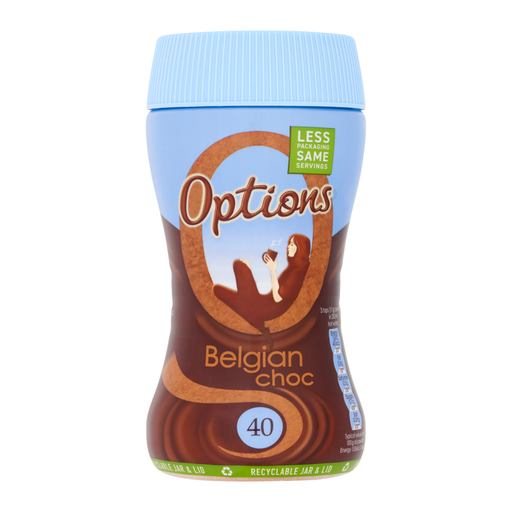
Options Belgian Chocolate 220 g
An option to consider when you want hot chocolate made with water rather than a milk-prepared snack. Check this jar’s serving instructions and nutrition panel before deciding what the finished mug contributes; if dietary restrictions apply, read its current ingredients and warnings too.
View on Joybuy
 No image available
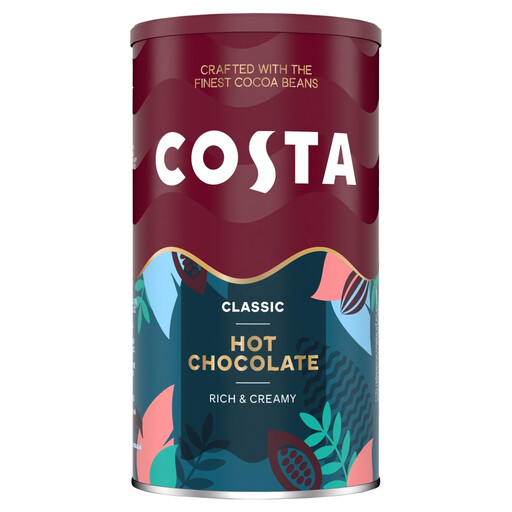
Costa Hot Chocolate 300 g
Consider this powder if you want to make hot chocolate with milk or a plant-based alternative. Check the powder portion and the nutrition of your chosen liquid before using finished-drink figures to compare it with other jars; different liquids change what goes into the mug.
View on Joybuy
Questions about post-workout hot chocolate
Can hot chocolate be my entire post-workout snack?
Do not assume a water-made hot chocolate supplies much protein: Tesco lists 1.3 g for its reviewed Galaxy serving and ASDA lists 1 g for its reviewed Options serving. University College London Hospitals describes carbohydrate-and-protein snacks as relevant around exercise, so consider the drink alongside the rest of your snack or meal.
Should I make drinking chocolate with milk or water?
Choose according to the drink you want and the nutrition you intend it to contribute. One Stop lists 7.9 g protein and 24 g carbohydrate for its Cadbury serving made with 200 ml semi-skimmed milk; those figures do not describe the powder made with water or a different milk.
What if I only want a small hot drink?
A smaller water-made serving may fit that preference without serving the same role as a larger snack. ASDA lists 40 kcal, 6.5 g carbohydrate and 1 g protein for its reviewed 11 g Options Belgian Hot Chocolate serving made with 200 ml water; check the instructions on the pack you buy.
What should I check for a milk or soya allergy?
Read the current product’s ingredients and allergen statements rather than relying on its brand or flavour. Tesco lists milk and soya for the reviewed Galaxy product, ASDA lists milk for the reviewed Options product, and One Stop states that the referenced Cadbury powder may contain milk.
Does diabetes change how I choose a post-workout drink?
Use your individual diabetes guidance rather than choosing hot chocolate from general post-workout advice. Cambridge University Hospitals advises monitoring glucose before, during and after exercise to understand how activity affects you; the carbohydrate on a drink label is only one part of that decision.


