Who is this choice for?
For a new-parent household, the useful distinction is between keeping powder for repeat use and making each drink with a preparation method that fits the day.
Parents stocking a shared cupboard
A larger dry pack may suit repeated use, but pack weight does not tell you how much prepared drink it makes. Tesco lists a 2kg Cadbury drinking chocolate; use the current serving directions and liquid quantity to plan batches.
Parents short on preparation time
If heating milk is inconvenient, check for instructions that use hot water. Sainsbury’s directions for its Galaxy Instant Hot Chocolate 370g jar use hot water, while Tesco’s directions for Cadbury Drinking Chocolate use hot milk.
Breastfeeding or allergy-aware households
Check the exact pack’s ingredients and allergen wording. The NHS notes that chocolate contains caffeine, which a breastfeeding parent may need to consider alongside other sources during the day.
What should you check before buying?
Start with the amount of prepared drink you want, then check whether the product’s liquid, serving directions and label suit your household.
| Priority | What to check | Your needs |
|---|
| Prepared quantity |
Legislation.gov.uk defines a UK pint as 0.56826125 litres, making six pints about 3.41 litres. Check powder per serving and liquid per mug before calculating a pack’s yield. |
I want enough for several drinks, rather than assuming a tub’s weight represents six pints. |
| Preparation |
Check whether the directions call for hot milk or hot water, and how much powder they specify. Tesco’s Cadbury 2kg drinking chocolate uses hot milk; Sainsbury’s Galaxy 370g instant jar uses hot water. |
On a busy evening, I need a method that fits what I can prepare without an extra step. |
| Ingredients and nutrition |
Compare the exact products’ ingredient lists and nutrition panels on the same stated basis, such as per 100g of powder or per prepared serving. Check whether the serving includes milk. |
I want to understand what goes into each mug, rather than judging its contents from a brand name or a lighter-sounding label. |
| Allergens and caffeine |
Read the current allergen statement, including any “may contain” wording. The Food Standards Agency explains that such wording indicates possible unintended allergen presence; the NHS notes that chocolate contains caffeine. |
If someone in my household has an allergy, I need information for this pack. If I am breastfeeding, I also want to consider caffeine from chocolate alongside other sources. |
| Hot-drink routine |
Choose a place to prepare and set down hot drinks out of children’s reach. Healthier Together advises never holding a baby and a hot drink at the same time. |
With a baby or toddler nearby, I need somewhere safe to leave a mug while it cools. |
Which brand ranges are relevant?
These retailer-listed ranges illustrate different pack and preparation choices; a brand name alone does not establish yield, ingredients or suitability for a particular household.
Cadbury
Tesco lists Cadbury Drinking Chocolate in a 2kg tub with directions to mix it with hot milk.
- The large dry pack offers a format to consider for repeat cupboard use.
- The Tesco directions do not establish a six-pint prepared yield; check serving quantities on the pack.
Galaxy
Sainsbury’s lists a Galaxy Instant Hot Chocolate 370g jar with hot-water preparation directions.
- Its stated method avoids heating milk for preparation.
- Check the exact jar’s ingredients, nutrition and serving volume rather than assuming they match a milk-prepared drinking chocolate.
Options
Options appears among the hot-chocolate powders in Sainsbury’s category listing.
- Individual variants provide another pack and flavour choice to examine.
- Check the chosen variant’s preparation, ingredients and serving information rather than applying one label across the range.
Sainsbury’s
Sainsbury’s lists own-brand hot-chocolate powders alongside other brands.
- Its category gives shoppers further product labels to compare for pack size and preparation.
- An own-brand listing does not by itself establish finished yield or allergy suitability.
M&S
M&S lists drinking chocolate alongside other hot-chocolate options in its food range.
- The range offers different product formats to compare by their individual labels.
- M&S says its drinking chocolate is not suitable for people with a milk allergy and advises reading the current label.
Joybuy hot-chocolate options
These powders offer water-prepared options and a drinking chocolate for a hot-milk routine. Compare each pack’s serving instructions with your planned drink volume; pack weight alone does not establish a six-pint yield.
 No image available
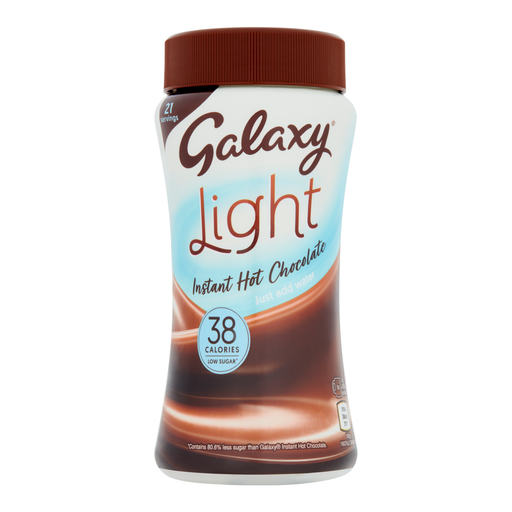
Galaxy Light Instant Hot Chocolate 210g
Consider this water-prepared powder if you want to make a drink without heating milk. For a six-pint plan, check the pack’s powder measure and water volume per serving, as well as its current allergen statement.
View on Joybuy
 No image available
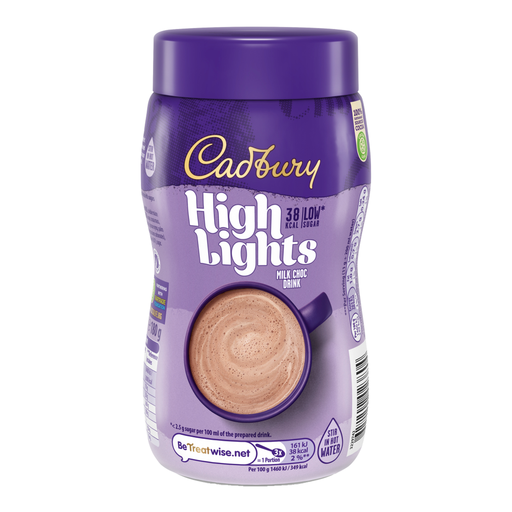
Cadbury Highlights Milk Chocolate Drink 180g
This water-prepared drink is another option for a routine that does not involve heating milk. Check the current serving directions to work out prepared volume, and read the milk allergen information where relevant.
View on Joybuy
 No image available
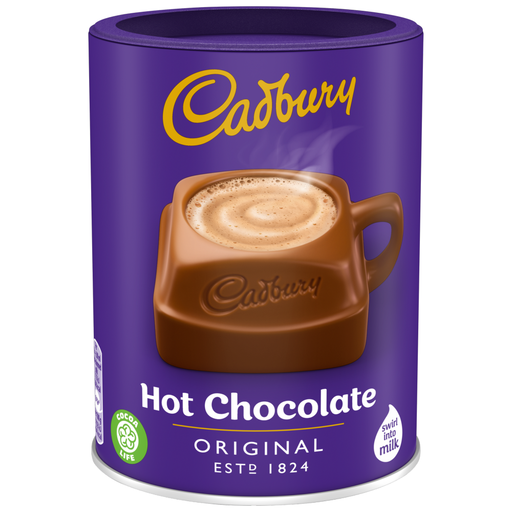
Cadbury’s Drinking Chocolate 250 g
Consider this 250 g powder if preparing drinking chocolate with hot milk fits your household routine. Check the pack’s powder measure, milk volume and current allergen statement before planning how many mugs it will make.
View on Joybuy
Common questions
How much prepared hot chocolate is six UK pints?
Six UK pints is about 3.41 litres. Legislation.gov.uk defines a pint as 0.56826125 litres; that conversion sets a prepared-drink target, not the yield of any particular powder pack.
Do I need a bottle labelled six pints?
You can plan for six pints of finished drink by checking a powder’s serving and liquid-volume directions. The Tesco, Sainsbury’s and M&S products discussed here are sold by dry pack weight, which cannot on its own tell you how many litres they make.
Can I use the same preparation method for every hot-chocolate powder?
Follow the directions for the specific product. Tesco describes preparing its Cadbury Drinking Chocolate with hot milk, while Sainsbury’s directs shoppers to add hot water to its Galaxy Instant Hot Chocolate 370g jar.
What should a breastfeeding parent check?
The NHS notes that chocolate contains caffeine. If caffeine is a consideration while breastfeeding, account for chocolate drinks alongside other sources such as tea and coffee; a product name does not tell you the caffeine amount in a prepared mug.
How should I check allergens and handle a hot drink around a baby?
Read the exact pack’s current ingredients, allergens and any “may contain” statement; the Food Standards Agency explains that precautionary wording indicates possible unintended allergen presence. Once prepared, keep the drink out of children’s reach. Healthier Together advises never holding a baby and a hot drink at the same time.


