What should you check before choosing?
Decide whether the drink must be hot, contribute protein, or primarily provide the chocolate flavour you want; those aims lead to different products and serving comparisons.
Drinking chocolate with milk
Choose when: You want a conventional warm mug and a modest protein contribution is enough.
Bear in mind: The milk contributes to the finished drink’s nutrition, so changing the milk changes the comparison.
Instant hot chocolate with water
Choose when: Straightforward hot-water preparation matters more than protein contribution.
Bear in mind: The Galaxy and Options servings described here each contain around 1g protein when made with water.
Chocolate protein drink
Choose when: The drink has a defined protein role in your eating plan.
Bear in mind: A shake, meal drink or powder is not necessarily hot chocolate; follow its stated preparation directions.
| Priority |
What to check |
Your needs |
| Protein per drink |
Compare protein per finished serving, including the stated milk or water. Check whether a figure describes powder alone, a prepared mug or a whole bottle. |
I want the drink to contribute a particular amount of protein, so I need the figure for the portion I will actually consume. |
| Chocolate profile |
Look for a stated cocoa or dark-chocolate description, then check preparation directions. Neither a cocoa percentage nor flavour wording tells you the protein content. |
A darker cocoa taste matters to me, but I do not want to mistake it for a protein claim. |
| Sugars and energy |
Read sugars and kcal alongside protein for the same serving size. Tesco lists 23g sugars for Cadbury’s prepared serving and 16g for Galaxy’s water-made serving; their preparation and serving bases differ. |
I am deciding where the drink fits among my meals or snacks, rather than choosing by the protein number alone. |
| Serving method |
Check whether the directions call for hot milk, hot water, cold mixing or serving ready to drink. Confirm directions before warming a product sold as a shake or meal drink. |
On some occasions I want a hot mug; on others, a ready-to-drink chocolate beverage would serve a different purpose. |
| Ingredients |
Check the current ingredient list for relevant allergens and sweeteners. Twinings states that Options Belgian Choc contains a source of phenylalanine; the Food Standards Agency advises that allergens in prepacked-food ingredient lists must be emphasised. |
I need to check ingredients against my own requirements, even when two drinks have similar chocolate descriptions. |
Brand and product-line references
These examples illustrate different drink formats and serving information; a brand name alone does not establish flavour intensity or protein content.
Cadbury
Cadbury Drinking Chocolate is a conventional option prepared with hot milk.
- Tesco directs three teaspoons into hot milk and lists 7.9g protein for a prepared serving.
- That Tesco-listed serving also contains 23g sugars; its protein figure depends on the stated preparation.
Galaxy
Galaxy Instant Hot Chocolate is an instant drink prepared with hot water.
- Tesco describes a serving made with 25g product and 200ml hot water.
- Tesco lists 1.3g protein and 16g sugars for that prepared serving.
Options
Options Belgian Choc is a water-made instant chocolate drink.
- Twinings lists 40 kcal and 1.0g protein for an 11g serving made with 200ml water.
- It contains milk ingredients and aspartame, with a stated source of phenylalanine.
Hotel Chocolat
Classic 70% Hot Chocolate Sachets provide a stated dark-chocolate option for the Velvetiser system.
- Hotel Chocolat describes these sachets as 70% dark hot chocolate.
- Use the current pack’s nutrition and ingredient information to assess protein, sugars and allergen suitability; 70% dark describes the chocolate, not its protein contribution.
Optimum Nutrition
Gold Standard 100% Whey Chocolate is a chocolate-flavoured protein powder, not conventional hot chocolate.
- Tesco lists 24g protein per 31g serving.
- The listed directions specify 180–240ml cold water. Check the ingredients for milk and soya if relevant.
Joybuy drink options
These options include ready-to-drink chocolate protein products and drinking chocolates prepared with milk. Compare them by the drink you intend to make or consume, rather than treating every item as a strong hot chocolate.
 No image available
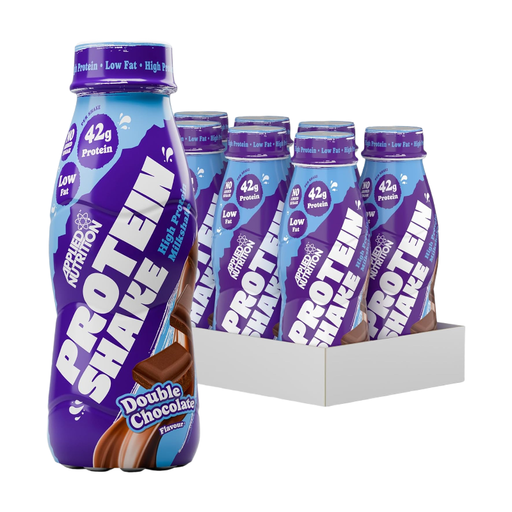
Applied Nutrition Protein Nutrition Shake Double Chocolate Flavour, 8 x 500ml
This ready-to-drink shake suits a chocolate-flavoured protein drink rather than a conventional hot chocolate. Its listing states 42g protein, 17g sugars and 240 kcal per 500ml bottle; it contains milk. Check the product directions before considering warming it, and use the sugars figure rather than assuming a no-added-sugar description means sugar-free.
View on Joybuy
 No image available
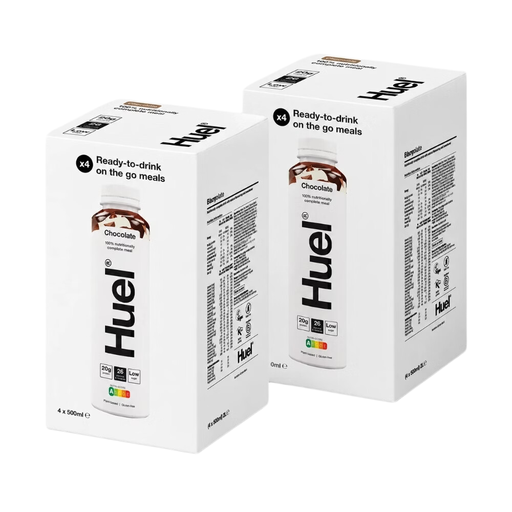
Huel Ready-to-Drink Complete Meal Chocolate, 4 x 500ml (2 Packs)
This is a ready-to-drink chocolate meal product, not hot chocolate. The listing states 20g plant-based protein, 1.5g sugars and 400 kcal per 500ml bottle, and describes serving it chilled or at room temperature. Check its directions before considering a hot preparation and its current allergen information if relevant.
View on Joybuy
 No image available
Cadbury Drinking Chocolate 500g
Choose this for a conventional warm drinking chocolate made with hot milk, rather than for a measured extra-dark flavour. Tesco directs three teaspoons into hot milk and lists 7.9g protein, 23g sugars and 168 kcal for a 224g prepared serving. The protein figure is for the milk-made drink, not the powder alone.
View on Joybuy
 No image available
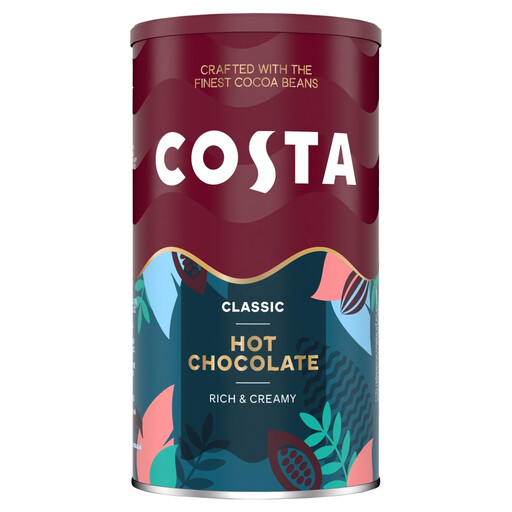
Costa Hot Chocolate 300g
This hot-chocolate powder is described for mixing with milk or a plant-based alternative. The listing states 36% cocoa and 1.7g protein per 20g powder serving; the protein in a finished mug will also depend on the liquid and amount used. Treat the cocoa figure as a chocolate-content cue, not a measured flavour-intensity or protein claim.
View on Joybuy
 No image available
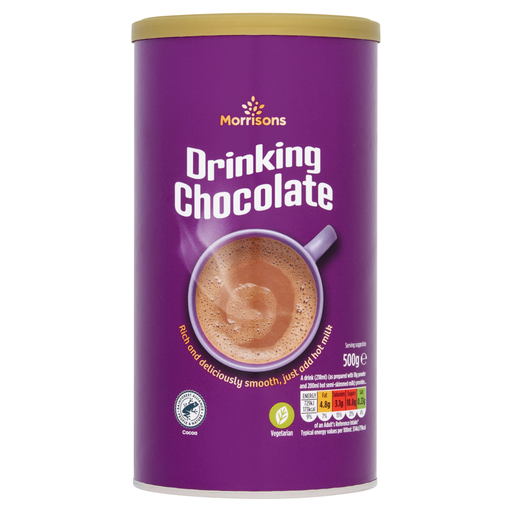
Morrisons Drinking Chocolate 500g
This is drinking chocolate with directions to add hot milk. Its listed protein, sugars and energy figures are labelled per serving, so check the current pack for the serving quantity and whether those figures include milk before comparing them with a finished mug made from another product.
View on Joybuy
Frequently asked questions
Does ordinary hot chocolate provide much protein?
The preparation makes a substantial difference to the figure you read. Tesco lists 1.3g protein for a water-made Galaxy Instant serving, and Twinings lists 1.0g for water-made Options Belgian Choc. Tesco lists 7.9g for a prepared Cadbury Drinking Chocolate serving made with milk; compare finished mugs rather than attributing that amount to the powder.
Can I choose a hot chocolate while planning my protein intake?
Yes, if its finished-serving nutrition fits the role you have planned for it. For milk-made drinking chocolate, account for the milk and the amount of powder you use. If the drink needs to supply substantially more protein, compare a purpose-made protein product—but follow its serving directions instead of assuming it can replace a hot mug.
Does darker hot chocolate contain more protein?
A dark-chocolate description does not establish a protein amount. Hotel Chocolat describes its Classic sachets as 70% dark; check the current pack’s protein figure for the serving you would make if protein contribution affects your choice.
Which ingredients should I check?
Read the current pack for allergens and sweeteners relevant to you. The Galaxy and Options products described here contain milk; Galaxy also lists soya, while Twinings states that Options Belgian Choc contains a source of phenylalanine. The Food Standards Agency advises that allergens must be emphasised in prepacked-food ingredient lists.
What if I follow a prescribed protein diet?
Use the protein target provided by your clinical team when assessing a drink. Royal Devon University Healthcare NHS Foundation Trust notes that people with kidney disease who are not receiving dialysis may need to avoid too much protein, while advice for people receiving dialysis can differ; a general product claim cannot account for that distinction.


