Shoppers with only a kettle
Check that the exact product can be prepared with hot water. An instant powder or single sachet can fit a short break when its instructions permit water; some drinking chocolates specify hot milk instead.


For a mid-morning hot chocolate made with hot water, look for an instant powder or sachet whose instructions explicitly permit water; do not assume a pyramid-shaped tea bag contains hot chocolate. If you can heat milk, drinking chocolate or flakes offer another preparation route. For pyramid bags, check the exact product listing for the contents and preparation method before buying.
Check that the exact product can be prepared with hot water. An instant powder or single sachet can fit a short break when its instructions permit water; some drinking chocolates specify hot milk instead.
Check that the pack says hot chocolate in pyramid bags, rather than tea in the same bag shape. The contents and preparation instructions matter more than the bag shape alone.
The Department for Education states that school-food standards are legally required for state-funded schools in England. Check the requirements for the setting and the exact drink rather than treating its format or an HFSS description as a complete decision.
Start with the equipment available during your break, then check the exact format and pack label.
| Priority | What to check | Your needs |
|---|---|---|
| Preparation | Read the exact instructions for water or milk. Check whether the product needs measuring, stirring or whisking. | If I only have a kettle during a short break, I need instructions that allow hot-water preparation. |
| Bag format | Confirm that the product is hot chocolate supplied in pyramid bags, not chocolate-flavoured tea. Check what each bag contains and how it is prepared. | I want the specified hot-chocolate format, not just a pyramid-shaped bag. |
| Serving format | Check whether the pack contains individual sachets or loose powder or flakes. Read the serving and preparation directions on the exact pack. | A single portion would suit my break if I do not want to measure from a larger pack. |
| Ingredients and allergens | Read the exact variant’s ingredients, emphasised allergens and any precautionary allergen statement. The Food Standards Agency explains that precautionary labelling can indicate unintended allergen presence. | When an ingredient or allergen matters to me, I need to check the current pack rather than rely on the brand or format. |
| School provision | For a state-funded school in England, check the applicable school-food standards and the exact drink. England’s Requirements for School Food Regulations 2014 exclude hot chocolate from their definition of confectionery, but that definition alone does not establish whether a particular drink meets all requirements. | If I am purchasing for a school, I need to assess the setting and product under the rules that apply there. |
A chocolate-flavoured tea and a hot-chocolate product have different contents and preparation instructions, even if both come in pyramid-shaped bags.
Check that the product page explicitly identifies hot chocolate in pyramid bags and explains how to make it.
Preparation varies by product. Whittard of Chelsea recommends hot milk or a preferred milk alternative for its Luxury Hot Chocolate powder.
If you only have hot water, choose a product whose own instructions permit it.
A milk-prepared drink also means having milk or an alternative available during the break.
England’s Requirements for School Food Regulations 2014 exclude hot chocolate from the definition of confectionery. That point does not decide whether a particular drink meets every requirement for a school setting.
Identify the UK nation, the service setting and the exact product, then check the applicable school-food standards and local policy before purchasing.
Ingredients and precautionary allergen information can differ between variants. The Food Standards Agency explains that precautionary labelling communicates possible unintended presence of regulated allergens.
Read the current label for the exact product before consuming or serving it to someone with an allergy or intolerance.
These Tesco Groceries listings illustrate formats to compare; they do not establish that any of these brands offers hot chocolate in pyramid bags.
Tesco Groceries lists Cadbury Hot Chocolate Cocoa Powder 500g and Cadbury Instant Hot Chocolate Powder 300g.
Tesco Groceries lists Galaxy Instant Hot Chocolate Drink 370g, Frothy Hot Chocolate Drink 275g and Vegan Instant Hot Chocolate 250g.
Tesco Groceries lists Options hot-chocolate jars in several flavours and a single sachet.
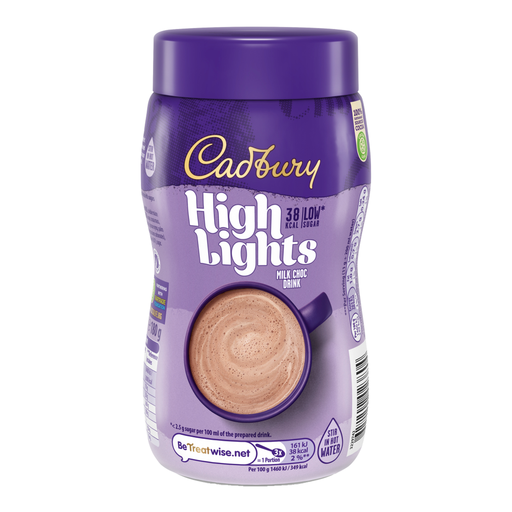
This powder is an option to consider when a mid-morning hot chocolate needs to be made with hot water. It is not a pyramid-bag product.
 No image available
The product description says to mix this loose powder with hot water, which may suit a break with kettle access. It is not pre-portioned or supplied in pyramid bags. Milk is listed as an allergen; check the current pack for ingredients, serving quantity and full preparation directions.
Check that the exact product listing says hot chocolate in pyramid bags and gives ingredients and preparation instructions. Bag shape alone cannot distinguish it from tea, including chocolate-flavoured tea.
Choose a powder or individual sachet whose own instructions specify hot-water preparation. Drinking-chocolate powders and flakes can have different directions: Whittard of Chelsea, for example, recommends hot milk or a preferred milk alternative for its Luxury Hot Chocolate powder.
An HFSS description alone does not settle that question. England’s Requirements for School Food Regulations 2014 exclude hot chocolate from their definition of confectionery, while the Department for Education says school-food standards are legally required for state-funded schools. Check the full requirements for the setting and the exact drink; do not apply this England-specific point across the UK.
Read the exact pack’s ingredients, emphasised allergens and any precautionary allergen statement, particularly when changing variants. The Food Standards Agency explains that precautionary labelling can indicate the potential unintended presence of a regulated allergen.