Parents packing for a half-term outing
A sachet is easy to carry, but it is useful at the destination only if there is a suitable place to make and serve a hot drink with adult help.


Choose individual sachets for a half-term outing only when an adult can provide a mug, hot water and help with preparation; the powder is not a ready-to-drink lunchbox snack. A tub makes more sense for repeated drinks where measuring and storage are practical. For either format, compare the exact product’s prepared-serving label and allergen information rather than judging it by pack size.
A sachet is easy to carry, but it is useful at the destination only if there is a suitable place to make and serve a hot drink with adult help.
Individual sachets avoid measuring each portion. A tub or tin is another option when you expect repeated servings and can follow its storage instructions after opening.
Check the setting’s rules for hot drinks, its allergy procedures and the standards that apply to food it provides. A parent-packed sachet and a drink served by the setting are different decisions.
Start with where the drink will be made. Then choose a portion format and compare the labels for the exact products under consideration.
| Priority | What to check | Your needs |
|---|---|---|
| Preparation | Check whether a mug, hot water and adult supervision will be available. Tesco Groceries’ Cadbury and Options sachet listings specify preparation with 200ml hot water. | I need a drink that can actually be made at the outing; a dry sachet cannot take the place of a ready-to-drink lunchbox item. |
| Portion format | Check whether portions are individually wrapped or must be measured from a container. For a tub or tin, also read the instructions for storage after opening. | For a few planned drinks away from home, I would rather carry the portions I need. For repeated drinks at home, I can keep and measure from a larger pack. |
| Prepared-mug label | Compare sugars and energy using each product’s stated prepared serving, not pack weight alone. Tesco Groceries lists 17g sugars for the cited Cadbury sachet made with water and 5.7g for the cited Options sachet; Sainsbury’s lists 4.6g per prepared mug for its Low Calorie tub. These are different products and portions. | I want to know what one mug contains before choosing between a sachet and a tub, rather than assuming that a smaller pack or a product name tells me. |
| Ingredients and allergens | Read the current pack’s ingredient and allergen statements for the exact product and flavour. Check sweeteners and any manufacturing warnings where they matter to the child or setting. | Before serving a group or packing for a child, I need to know whether the particular drink meets their ingredient and allergy requirements. |
Instant sachets still need a mug and hot water, so a child may have no way to use one during an outing.
Ask the venue whether hot drinks are permitted and who can prepare them. If there is no suitable supervised preparation point, save the sachets for another occasion.
The cited products have different recipes and serving sizes. Tesco Groceries lists 17g sugars for the Cadbury 28g sachet prepared with water and 5.7g for the Options 11g sachet; Sainsbury’s lists 4.6g per prepared mug for its Low Calorie tub.
Use the current label’s preparation instructions and per-serving nutrition panel when comparing drinks.
A tub or tin needs measuring and storage after opening. Ocado’s M&S Low Calorie listing instructs consumers to use the product within four weeks of opening.
Choose a format that fits the number of planned servings and the facilities available, and follow the pack’s storage instructions.
England’s Requirements for School Food Regulations 2014 exclude hot chocolate from their definition of confectionery. That distinction does not, by itself, establish whether a particular drink meets every rule applying to food provided at a school.
For a school or organised holiday setting, check its current food and allergy procedures before selecting a product to serve.
These examples show how formats and labels can differ; a brand name alone does not identify the portion or preparation method.
Tesco Groceries lists a 28g instant stickpack made with 200ml hot water.
The cited UK listings include individually wrapped instant sachets and a separate 370g jar.
Tesco Groceries lists an 11g Belgian Choc sachet prepared with 200ml hot water.
Sainsbury’s lists a 250g Low Calorie Instant Fairtrade Hot Chocolate tub containing approximately 22 servings.
The cited M&S instant hot-chocolate products are tins for measured preparation rather than individual sachets.
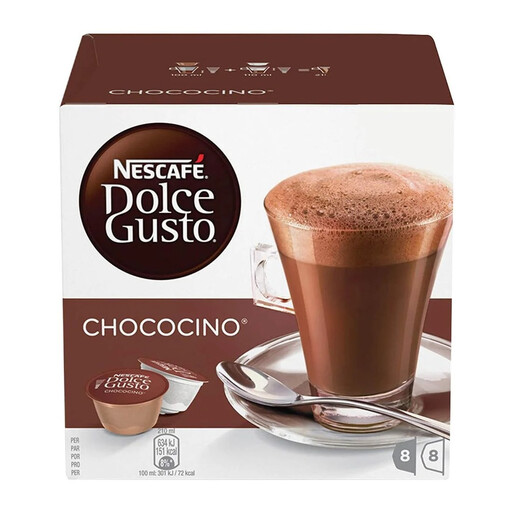
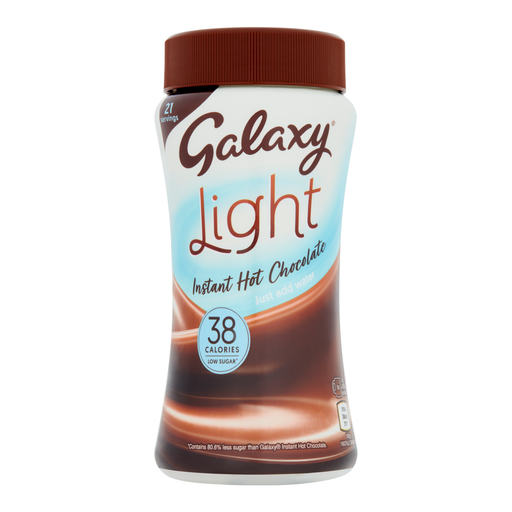
These options cover pods for a compatible machine and a larger container of instant hot chocolate for home preparation. Neither is a ready-to-drink lunchbox item.
 No image available
Consider this pod pack for drinks made at home if you have a suitable Dolce Gusto machine. Confirm compatibility with your machine before buying, and check the current pack for milk and soya allergens and prepared-serving nutrition.
 No image available
This larger container suits repeated preparation where you can measure powder and provide a mug and hot water. Check the current pack for its prepared-serving nutrition and for the listed milk, soya and barley allergen information.
You can pack a dry sachet, but it is not a ready-to-drink item. Check that the destination permits hot drinks and that an adult can provide a mug, hot water and help with preparation.
There is no blanket conclusion from the cited England school-food rules that every hot-chocolate multipack is prohibited. The Requirements for School Food Regulations 2014 exclude hot chocolate from the definition of confectionery, but a school must still assess the particular drink against the standards and procedures applying to food it provides. Check the setting’s current requirements before serving it.
Sainsbury’s lists 4.6g sugars per prepared mug for its cited Low Calorie tub, while Tesco Groceries lists 5.7g for the cited Options sachet and 17g for the cited Cadbury sachet prepared with water. These figures describe different recipes and portions, not every product from those brands; check the exact current pack.
Read the current pack’s ingredients and allergen statements for the exact product. The cited Cadbury, Options, Sainsbury’s and M&S product information identifies milk; Sainsbury’s also states that its cited Low Calorie product is unsuitable for customers with a soya allergy because of manufacturing methods.