Organisers preparing one shared batch
A stated amount of powder per serving helps you work out what to order for roughly 3.4 litres, rather than relying on a recipe expressed only in teaspoons.


For approximately six UK pints in one batch, choose a hot-chocolate mix with a stated serving ratio and a preparation liquid your venue can provide. Sainsbury’s lists Galaxy Instant Hot Chocolate 370g at 25g per 200ml hot water: 17 servings make 3.4 litres and require 425g powder, so one jar is not enough. Milk-prepared drinking chocolate needs a hot-milk service plan, while sachets offer individual portions but require each one to be opened and mixed.
A stated amount of powder per serving helps you work out what to order for roughly 3.4 litres, rather than relying on a recipe expressed only in teaspoons.
If hot water is available but heating milk is not part of the service, check that the chosen product’s directions explicitly call for water.
Keep the current ingredient and allergen details available to the service team, and manage cross-contact when preparing drinks and toppings. The Food Standards Agency and Food Standards Scotland both provide guidance on allergen information and management for food businesses.
Start with the prepared volume and the venue’s equipment, then compare serving directions with the way drinks will be made and served.
| Priority | What to check | Your needs |
|---|---|---|
| Batch quantity | Check powder per serving, liquid per serving and pack quantity. Nidirect gives 568ml for a UK pint, making six pints 3,408ml; seventeen 200ml servings make 3,400ml, just under that target. | I need to know how much to prepare before the break starts, with any extra drink planned separately rather than assuming the pack makes six pints. |
| Preparation equipment | Check whether the directions specify hot water, hot milk or a compatible machine. Tesco Groceries lists Cadbury Drinking Chocolate with hot milk; Sainsbury’s lists Galaxy Instant Hot Chocolate 370g with hot water. | If the venue has only hot-water equipment, I need a recipe that calls for water rather than a last-minute change to a milk recipe. |
| Allergen information | Check the current pack or supplier specification for the exact product being served. Keep that information accessible to staff and manage cross-contact during preparation, in line with Food Standards Agency and Food Standards Scotland guidance. | Attendees need accurate information about the drink they will receive, including any additions made at the serving point. |
| Serving format | Compare a measured batch with individually prepared portions. Tesco Groceries lists an Options 11g sachet for 200ml water, so seventeen sachets would provide seventeen such servings. | I may want self-service portions for a smaller flow of guests; for one shared batch, opening and mixing each sachet adds preparation steps. |
Six UK pints describes a prepared-drink volume, not the weight of a jar. Nidirect’s pint measure puts the target at 3,408ml, so a powder pack needs to be assessed against its own serving directions.
Calculate the required servings from the stated liquid volume, then check that the packs contain enough powder for those servings.
Tesco Groceries gives hot-milk directions for Cadbury Drinking Chocolate, while Sainsbury’s gives hot-water directions for Galaxy Instant Hot Chocolate 370g. Those preparation methods call for different service arrangements.
Confirm the venue’s heating and serving equipment before choosing the product; test a milk-based batch recipe in advance if that is the planned service.
The information given to attendees needs to correspond to the ingredients actually used, including any milk, toppings or other additions at service.
Check the current physical packs or supplier specifications, brief the serving team and keep utensils and topping stations organised to manage cross-contact. Food Standards Agency and Food Standards Scotland guidance addresses allergen information and management for food businesses.
Sainsbury’s describes Galaxy hot-chocolate pods as one drink per pod for a compatible Nescafé Dolce Gusto machine. Individual machine cycles are a different service process from stirring one batch.
Use the pod format when made-to-order cups and machine capacity are part of the plan; otherwise, calculate the batch from a product’s stated mixing directions.
These examples illustrate preparation formats; their directions and pack quantities apply to the named products, not every product from the same brand.
Sainsbury’s lists Galaxy Instant Hot Chocolate 370g with a recipe of 25g powder and 200ml hot water per serving.
Tesco Groceries lists Cadbury Drinking Chocolate in a 500g pack with directions to mix three teaspoons with hot milk.
Tesco Groceries lists an Options 11g sachet with directions for 200ml water.
Tesco Groceries gives directions for its 250g cocoa powder using 4g cocoa and 200ml hot semi-skimmed milk.
Marks & Spencer describes a range that includes traditional drinking chocolate and instant hot chocolate.
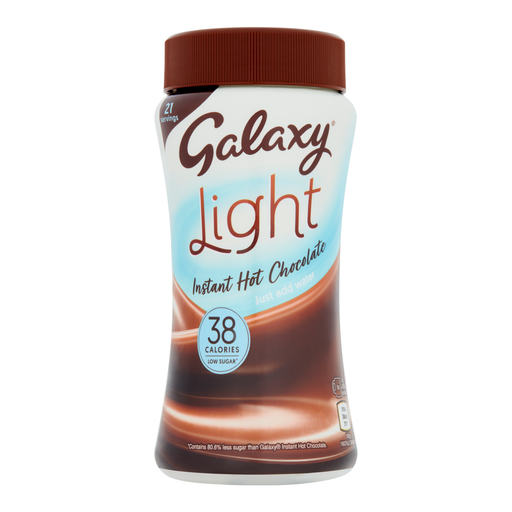
This instant hot-chocolate tin is a product to consider for conference service. Check its own pack directions before calculating quantities: the 370g Galaxy jar recipe discussed above must not be assumed to apply to this different product.
 No image available
For a shared conference batch, check the preparation liquid and powder-to-liquid ratio on this 210g tin before working out how many tins will cover roughly 3.4 litres. Check its current ingredient and allergen declaration for the drinks being served.
Six UK pints is 3,408ml, using nidirect’s measure of 568ml per pint. Seventeen 200ml servings make 3,400ml, eight millilitres short of that figure; plan any additional quantity needed for serving separately.
Two jars provide enough powder for seventeen servings at the directions listed by Sainsbury’s: 25g powder plus 200ml hot water per serving. Seventeen servings use 425g powder and make 3.4 litres; the stated 370g jar contains 14 servings. This calculation is for the 370g product, not Galaxy Light 210g.
Follow the directions for the exact product rather than assuming water can replace milk. The Cadbury Drinking Chocolate instruction listed by Tesco Groceries calls for three teaspoons with hot milk; if that is your choice, arrange hot-milk preparation and test the intended batch recipe before the event.
Have current ingredient and allergen information for the products and additions actually served, and make it available to the service team and attendees. Food Standards Agency guidance addresses allergen information for prepacked and non-prepacked food and drink; Food Standards Scotland also advises food businesses to provide allergen information and manage allergens during service.
No. Ingredient and allergen details belong to the exact product and pack used, so check them for each powder, milk and topping in the service plan rather than relying on the brand name or the preparation format.