Two regular drinkers
A larger tub is worth considering if both people will use it steadily. Waitrose & Partners lists 27–28 servings for Cadbury Drinking Chocolate 500g; compare that count with the mugs your household actually makes.


For a two-person household, a larger tub makes sense when both people drink hot chocolate regularly and can use it at their usual pace; Waitrose & Partners lists 27–28 servings for Cadbury Drinking Chocolate 500g. If mugs are occasional, compare smaller jars or portioned sachets against the servings you expect to use. Check whether each drink is prepared with milk or water, and read its current storage, nutrition and allergen information before choosing.
A larger tub is worth considering if both people will use it steadily. Waitrose & Partners lists 27–28 servings for Cadbury Drinking Chocolate 500g; compare that count with the mugs your household actually makes.
A smaller jar or portioned format may fit infrequent use better than a large opened tub. Twinings lists 20 servings for Options Belgian Choc 220g, while M&S instructs shoppers to consume its drinking chocolate within four weeks of opening.
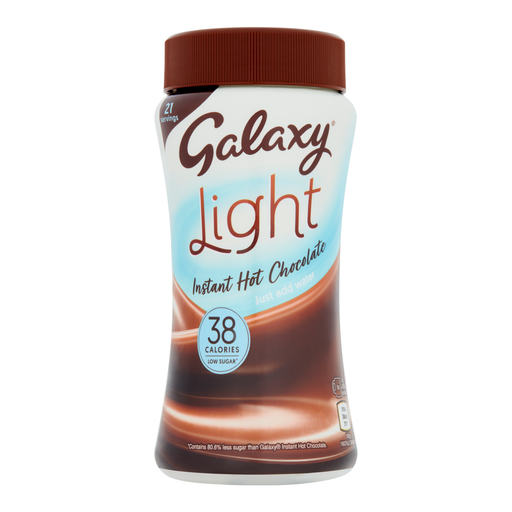
Compare the stated prepared serving, not just the pack size. Tesco lists 38 kcal and 3.1g sugars for a Galaxy Light serving made with 10g powder and hot water; check the directions on the pack you buy before using those figures.
Start with how many mugs you make, then compare preparation and the label for the drink you would actually serve.
| Priority | What to check | Your needs |
|---|---|---|
| Pack size | Compare labelled servings with your likely mugs per week. Waitrose & Partners lists 27–28 servings for Cadbury 500g; Twinings lists 20 for Options Belgian Choc 220g. Follow any opened-pack instructions: M&S specifies four weeks for its drinking chocolate. | Will two of us use a larger tub regularly, or would a smaller jar or portioned sachets better match occasional mugs? |
| Prepared drink | Check the powder quantity, whether to add milk or water, and the nutrition per stated serving. Tesco lists 38 kcal and 3.1g sugars for Galaxy Light made with 10g powder and water; Twinings lists 40 kcal and 5.7g sugars for Options Belgian Choc made with 11g powder and water. | I want to compare what goes into my mug, including milk where the directions call for it, rather than judge the drink by jar weight. |
| Ingredients | Read the current ingredient and allergen information. Tesco lists barley, milk and soya for Galaxy Light; Twinings identifies milk and a phenylalanine notice for Options Belgian Choc. M&S says its drinking chocolate is not suitable for people with a milk allergy. | If an ingredient or allergen affects our household, I need to check the exact pack before either of us drinks it. |
A serving count is useful only alongside your household’s drinking frequency. Waitrose & Partners lists 27–28 servings for Cadbury 500g, while M&S gives a four-week consume-after-opening instruction for its own drinking chocolate.
Estimate your usual mugs per week and follow the storage directions for the particular pack you choose.
A milk-prepared serving and a water-prepared serving do not use the same ingredients. Portion sizes also differ: Tesco describes a 10g water-prepared serving for Galaxy Light, while Twinings specifies 11g for Options Belgian Choc.
Read the preparation directions alongside the calories and sugars per serving on the current label.
Allergen and sweetener information differs between these products. Tesco lists barley, milk and soya for Galaxy Light; M&S says its drinking chocolate is not suitable for people with a milk allergy.
Check the exact product’s current label rather than assuming that another hot-chocolate jar has the same ingredients.
These examples illustrate different pack and preparation formats; a brand name alone does not establish the details of every product it sells.
The 500g Drinking Chocolate is a larger, milk-prepared option.
Galaxy Light 210g is an instant option prepared with hot water.
Options Belgian Choc 220g offers stated 11g portions prepared with water.
M&S Drinking Chocolate is a 300g milk-prepared option.
Tesco’s own-brand range includes a Lighter Hot Chocolate 270g listing.
These options cover a larger milk-prepared tub and a smaller instant jar for households comparing regular and occasional use.
 No image available
Consider this larger tub if two people make hot chocolate regularly. Prepare it with hot milk; the product carries a may-contain-milk warning. Check the current pack’s serving and nutrition panels when comparing it with other drinks.
 No image available
This smaller jar is prepared with hot water and may suit less frequent mugs. Its product description lists barley, milk and soya. Check the current pack’s powder quantity, servings and prepared-mug nutrition before comparing it with other jars.
Compare its labelled servings with the mugs you normally make each week. Waitrose & Partners lists 27–28 servings for Cadbury 500g; at four mugs a week between two people, that would last roughly seven weeks. Also check the chosen product’s instructions for use after opening.
No: read both figures for the stated prepared serving rather than assuming one predicts the other. Tesco lists 38 kcal and 3.1g sugars for Galaxy Light prepared with 10g powder and water, while Twinings lists 40 kcal and 5.7g sugars for Options Belgian Choc prepared with 11g powder and water. Check the directions on the pack you buy.
Do not assume they are. Tesco’s Cadbury 500g listing carries a may-contain-milk warning and lists milk for Galaxy Light; Twinings lists milk for Options Belgian Choc, and M&S says its drinking chocolate is not suitable for people with a milk allergy. Check the current label of the exact product before use.
Follow the directions on that pack. Tesco says to keep its listed Cadbury 500g product dry and protected from heat; M&S instructs shoppers to consume its drinking chocolate within four weeks of opening. Do not apply one product’s opened-pack period to another.