Quick-cup drinkers
If you would rather add hot water than heat milk, look at instant blends with water-mix directions. Joybuy lists Options Belgian Chocolate 220g as a hot-water drink; its label also declares milk and a source of phenylalanine.


Choose the preparation method before the brand: a water-mix instant drink avoids heating milk, while classic drinking chocolate suits a milk-prepared cup and chocolate flakes offer a different, cocoa-led format. For a late-night drink, check the liquid and portion specified on the pack before comparing nutrition, then read the current ingredients and allergen information; cocoa percentage alone cannot settle those questions.
The most useful distinction for a late-night cup is how you want to make it, followed by the ingredients and serving size that matter to you.
If you would rather add hot water than heat milk, look at instant blends with water-mix directions. Joybuy lists Options Belgian Chocolate 220g as a hot-water drink; its label also declares milk and a source of phenylalanine.
If you want to make your cup with hot milk, check the powder and milk quantities in the directions. Tesco lists Cadbury Drinking Chocolate 500g with a hot-milk method, while Sainsbury's gives a prepared-mug basis for its own-label drinking chocolate.
If cocoa style matters more to you than using an instant mix, flakes are another format to consider. Marks & Spencer lists 70% minimum cocoa solids for its Collection Belgian Dark Hot Chocolate Flakes, but also marks that product unsuitable for people with milk, nut or peanut allergy.
Choose it when: You want to make a small cup with hot water rather than heat milk; Joybuy gives hot-water directions for Options Belgian Chocolate 220g.
Keep in mind: That Options product contains milk and a source of phenylalanine, so quick preparation does not establish dietary suitability.
Choose it when: You are happy to heat milk for the method given on products such as Cadbury Drinking Chocolate 500g.
Keep in mind: A nutrition figure for a milk-prepared mug is not directly equivalent to one for a water-mix serving.
Choose them when: You want to consider a chocolate-flake format rather than an instant powder; Marks & Spencer lists 70% minimum cocoa solids for its dark flakes.
Keep in mind: Cocoa percentage does not establish sugar content or allergy suitability; check the full label.
Once you have a preparation method in mind, compare what goes into one cup rather than treating every powder or flake serving as equivalent.
| Priority | What to check | Your needs |
|---|---|---|
| Preparation | Read whether the directions specify hot water or heated milk. Check the powder amount and liquid volume for one cup. | For a quick drink, I would rather mix with water; on another night, I may be happy to heat milk. |
| Nutrition per cup | Compare the stated prepared serving, including its powder quantity and liquid. According to the NHS, naturally occurring milk sugar appears in the total-sugars figure on food labels. | I want to know what the nutrition figure represents in the drink I will actually make, especially when comparing a milk-prepared mug with a water-mix cup. |
| Ingredients and allergens | Read the current ingredients, allergen declaration and precautionary statements. Check any sweetener warning relevant to your dietary requirements. | If I need to avoid milk, soya, nuts, peanuts or phenylalanine, the exact product's current pack matters more than its blend name. |
| Chocolate style | Check whether the product is an instant mix, drinking chocolate or flakes. Read any stated cocoa-solids figure alongside the ingredients and nutrition panel. | I may want a cocoa-led flake format, but I would not use the cocoa percentage to guess its sugar content or allergen suitability. |
Joybuy lists 5.7g sugars for a serving of Options Belgian Chocolate 220g, whereas Tesco's 23g figure for Cadbury Drinking Chocolate 500g is for a prepared serving made with milk. The figures do not describe the same preparation.
Check each label's powder amount, liquid and serving size before using its nutrition panel to compare drinks.
Marks & Spencer lists 70% minimum cocoa solids for its Collection Belgian Dark Hot Chocolate Flakes, but that figure does not tell you the drink's sugar content. The product is also marked unsuitable for people with milk, nut or peanut allergy.
Use the cocoa declaration to understand the format, then read the nutrition and allergen panels separately.
Joybuy's listing for Options Belgian Chocolate 220g declares milk and a source of phenylalanine. Morrisons advises that ingredients and allergens may change.
Check the supplied pack before drinking it if an ingredient, allergen or sweetener warning affects your choice.
The Department of Health and Social Care describes the UK nutrient profiling model as a way to calculate a product's score. Its England guidance on certain high-fat, salt or sugar products concerns retail promotion and placement; the Department for Education's guidance addresses food and drink provided in state-funded schools in England separately.
For school provision, check the exact product, setting and applicable current standards rather than relying on the phrase “hot chocolate” or on retail-promotion rules.
These examples show why a familiar name is less useful than the directions and label for the exact product you are considering.
Tesco describes Cadbury Drinking Chocolate 500g as a hot-milk drink made by stirring three teaspoons into hot milk.
Joybuy describes Options Belgian Chocolate 220g as an instant drink prepared with hot water.
Sainsbury's Drinking Chocolate 300g has directions using warm semi-skimmed milk and a nutrition panel for a prepared mug.
Marks & Spencer lists Collection Belgian Dark Hot Chocolate Flakes as a chocolate-flake format with 70% minimum cocoa solids.
Tesco is a retailer reference for comparing formats: its listings include drinking chocolate, instant hot chocolate and cocoa powder.
These options include drinking chocolate for a milk-prepared cup and instant hot chocolate for a quicker mix. Check each pack's directions and serving basis before deciding which fits your late-night routine.
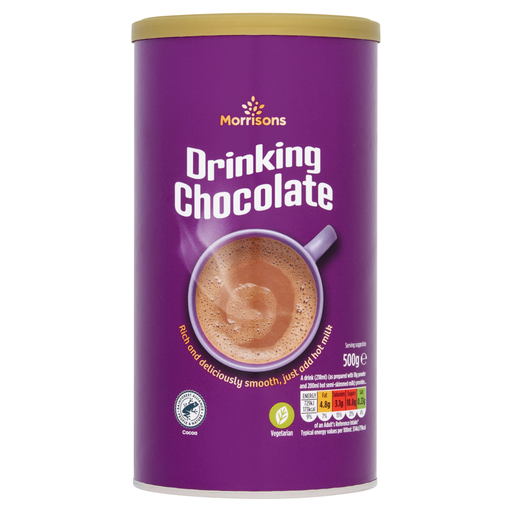 No image available
Consider this drinking chocolate if you are willing to make a cup with hot milk. Check the pack's serving directions before comparing its nutrition with a prepared water-mix drink, and read the current allergen declaration.
 No image available
This is a milk-prepared option: Tesco's directions for Cadbury Drinking Chocolate 500g specify three teaspoons stirred into hot milk. Tesco lists 23g total sugars per prepared serving and a “may contain milk” statement; check the current pack.
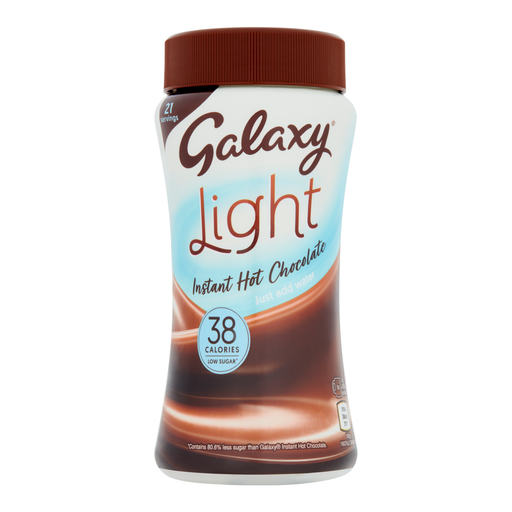 No image available
An instant option to consider when you want a water-mix cup. Follow the pack's powder and water directions, and check its prepared-serving nutrition and allergen declaration rather than drawing conclusions from “Light” in the name.
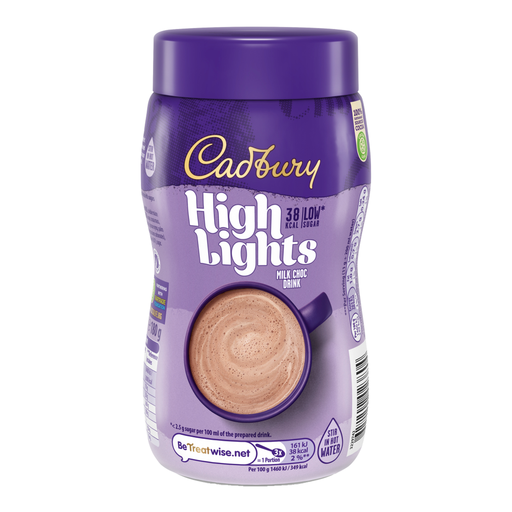 No image available
Consider this hot-water mix if you do not want to heat milk. Check the current pack's ingredients, allergen declaration and prepared-serving basis before comparing it with another instant drink.
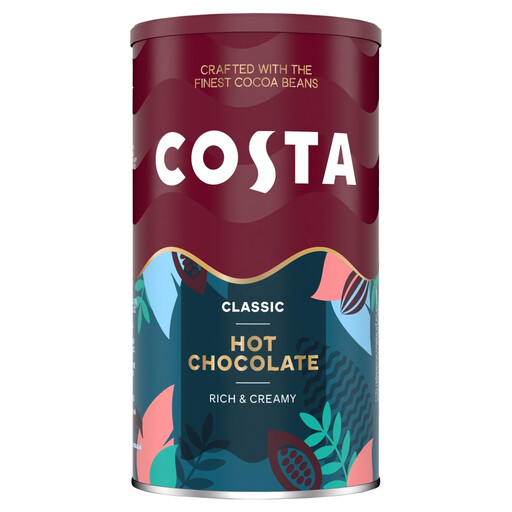 No image available
If you are considering this hot chocolate for a milk-prepared cup, read the pack's liquid and portion directions first. Use nutrition figures for the prepared drink when comparing it with a water-mix option.
No: the name “hot chocolate” does not establish an individual product's classification. The Department of Health and Social Care describes the UK nutrient profiling model as calculating a score from a product's nutrients; the applicable rules and exact product need to be considered rather than assuming every powder or flake has the same status.
No. The Department of Health and Social Care's guidance concerns promotion and placement of certain high-fat, salt or sugar products by businesses operating in and selling to England. It is not a personal restriction on when someone drinks hot chocolate.
No. Department for Education guidance addresses food and drink provided in state-funded schools in England, while the Department of Health and Social Care's cited HFSS guidance concerns retail promotion and placement in England. For school provision, assess the exact product and the standards applicable to that setting rather than using retail rules as a substitute.
Start with each label's prepared serving, including the powder amount and specified liquid. A total-sugars figure for a drink made with milk includes naturally occurring milk sugar, as the NHS explains, so do not treat it as directly equivalent to a figure for a differently prepared cup or as a free-sugars figure.
Check the current physical pack before consuming the drink. Morrisons advises that ingredients and allergens may change; the product examples here also have different milk, soya, nut or peanut declarations, so one blend's information cannot stand in for another's.