Hosts making a six-pint batch
Six UK pints is about 3.41 litres—slightly more than 17 portions of 200 ml. Look for both the prepared serving size and the number of servings a pack makes before deciding how many to buy.


For six UK pints, plan for about 3.41 litres of prepared hot chocolate and check the recipe before choosing a tub. At 11 g powder per 200 ml of water, a 220 g Options Belgian Choc jar makes 20 servings; the 14-serving Galaxy 370 g and Cadbury Instant 300 g packs each need two packs to cover that volume. Milk-prepared drinking chocolate is another option if you can heat milk, but check its pack directions before relying on one tub for the whole party.
Six UK pints is about 3.41 litres—slightly more than 17 portions of 200 ml. Look for both the prepared serving size and the number of servings a pack makes before deciding how many to buy.
Check the current pack for milk, soya, sweeteners and any other relevant ingredients before making one communal batch. A vegetarian description is not an allergen check.
An instant mix prepared with hot water suits a water-based service. If you plan to heat milk, drinking chocolate gives you a different preparation method, but you still need to establish how much drink the pack makes.
Start with the prepared volume, then choose a recipe that fits your equipment and your guests’ ingredient needs.
| Priority | What to check | Your needs |
|---|---|---|
| Batch yield | Check the liquid volume per serving and the portions per pack. Six UK pints is about 3.41 litres, so 17 pours of 200 ml fall just short; allow for at least 18 full pours at that size. | I want enough ready-to-serve hot chocolate for everyone, without assuming that a heavier tub makes more drink. |
| Preparation | Check whether the directions call for hot water or hot milk, and whether you can heat and serve the required volume. | If I will only be heating water, I need a water-prepared recipe. If I can heat milk, I can consider drinking chocolate too. |
| Ingredients | Read the current pack for allergens and sweeteners. The products discussed here include recipes with milk or soya; the exact ingredients differ by product. | Before I make one batch for the table, I need to know whether every guest can have that particular recipe. |
| Nutrition comparison | Compare figures for prepared servings on the same liquid-volume basis, and note the powder quantity each recipe uses. A figure per 100 g of dry powder answers a different question. | When comparing labels, I want to know what each stated serving contains rather than judging two jars by their pack sizes. |
| Shopping plan | Once you have calculated the pack count, check the current product listing and pack before finalising the drinks plan. | I would rather confirm I can get the quantity I need than build the party plan around a single jar. |
Six UK pints is about 3.41 litres. At 200 ml per serving, 17 full pours make only 3.4 litres, while a 14-serving pack makes 2.8 litres.
Calculate from the prepared drink volume. At their stated 200 ml serving sizes, the checked 14-serving Galaxy 370 g and Cadbury Instant 300 g packs each require two packs to cover the target.
A 500 g milk-prepared drinking chocolate and a 220 g water-prepared instant mix cannot be compared for batch yield by powder weight alone. The 220 g Options Belgian Choc jar makes 20 servings when prepared with 11 g powder per 200 ml of water.
For a precise batch, use the powder quantity and prepared volume in the directions; check both on a milk-prepared product before relying on one tub.
Galaxy Instant 370 g contains milk and soya, while Options Belgian Choc contains milk and sweeteners. A vegetarian description does not settle whether a drink suits a guest with an allergy.
Ask guests about relevant allergies and ingredient preferences, then check the current physical label before preparing a communal batch.
These examples show different preparation methods and pack-planning questions; a brand name alone does not establish the yield of every product in its range.
The Cadbury Instant 300 g jar is prepared with water, while the 500 g Drinking Chocolate is prepared with hot milk.
Galaxy Instant Hot Chocolate 370 g is a water-prepared product; it is distinct from the Galaxy Light 210 g product shown below.
Options Belgian Choc 220 g is an instant mix prepared with hot water.
Tesco has an own-brand Instant Hot Chocolate 400 g prepared with hot water.
Sainsbury’s lists an own-brand 400 g instant hot chocolate among its hot-chocolate products.
M&S has a milk-prepared Drinking Chocolate and a separate 250 g Instant Hot Chocolate.
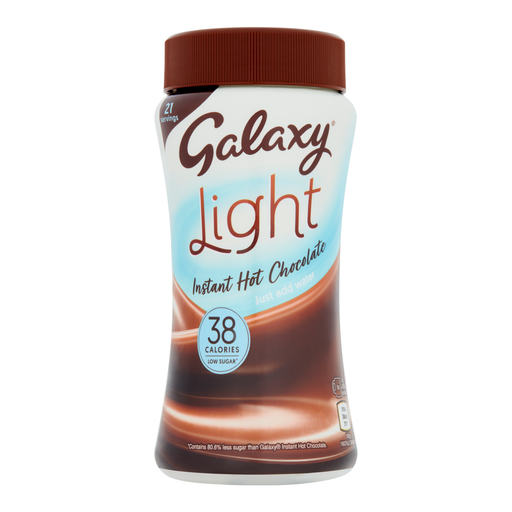
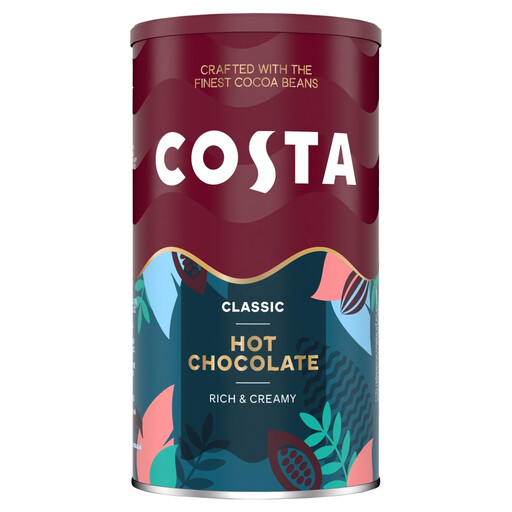
These two products offer different preparation choices for the dinner party: Galaxy Light is mixed with hot water, while Costa is described as mixable with milk or a plant-based alternative. Check each recipe’s prepared volume against the six-pint target.
 No image available
For a hot-water service, the listed recipe uses 20 g powder with 200 ml water. Two 210 g packs contain enough powder for 21 recipe-sized servings, or 4.2 litres at that serving volume. The ingredient details list barley, milk, soya and sucralose; check the current pack before serving.
 No image available
This hot chocolate is described as mixable with milk or a preferred plant-based alternative. If you are planning the full six-pint batch, check the pack directions for the prepared volume per serving before deciding how many 300 g tins to use.
Six UK pints is about 3.41 litres: just over 17 servings at 200 ml each, so plan for at least 18 full 200 ml pours. At 228 ml per serving, 15 full pours make 3.42 litres. Use the serving volume stated for the product you choose.
Choose a water-prepared instant mix if hot water is how you plan to serve the drinks. Milk-prepared drinking chocolate suits a service where you can heat milk; check that product’s recipe and pack yield before buying enough for six pints.
One Options Belgian Choc 220 g jar makes 20 servings of 200 ml when prepared with Tesco Groceries’ stated 11 g powder per serving—4 litres in total. The checked Galaxy Instant 370 g and Cadbury Instant 300 g products each make 14 servings of 200 ml per pack, so each needs two packs to cover six UK pints.
Check the exact product with your guests before making a shared batch. The checked Galaxy Instant 370 g lists milk and soya, Options Belgian Choc lists milk, and M&S says its Drinking Chocolate is unsuitable for people with a milk allergy. Read the current physical pack rather than relying on a brand name or format.