
24/7 Customer Support

Free returns

Same-day & Next-day Delivery

Quality Guaranteed

Unlock Your Welcome Offers: FREE Delivery | Up to 80% OFF | Free 30-day JoyPlus trial
Download the APP
A steaming hot pot is a centrepiece of communal dining, but the quality of your ingredients can make or break the experience. When it comes to hot pot beef balls, the freezer aisle presents a dizzying array of choices. However, not all are created equal. Many UK shoppers find themselves disappointed with products that are bland, rubbery or simply don't live up to their "authentic" promise.
As the Joybuy Product Recommendation Officer, my role is to help you navigate these choices. Here are the common pitfalls to watch for when you buy beef balls online or in-store and how to select a product that delivers genuine flavour and texture.
To ensure you get a quality product for your next meal, focus on these three key parameters. They are the most reliable indicators of what you will actually be eating.
Always check the ingredients list. The first ingredient should be beef, and a higher percentage is generally a good sign. Some of the most flavourful options contain over 50% beef. Also, pay attention to the type of meat.
The desirable "bouncy" or "Q" texture is a hallmark of well-made Chinese beef balls. Look for clues on the packaging that describe the manufacturing process. Phrases like "hand-pounded" or "traditionally prepared" can indicate a commitment to texture. The type of starch used also matters; tapioca starch is common in authentic recipes and contributes to a springy bite, whereas an over-reliance on wheat or potato starch can lead to a mushy or overly dense result.
Understanding the main styles helps you match the beef ball to your meal.
To make your choice easier, we have matched some popular options to different preferences. These selections stand out for their clear labelling and quality ingredients, helping you avoid the common pitfalls.
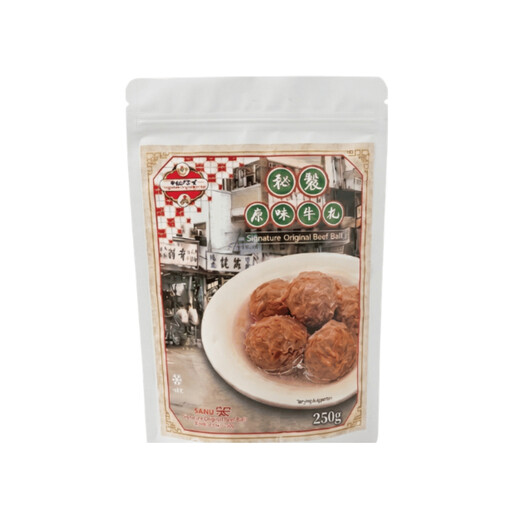
Why This Fits Their Persona: This is for the person seeking to replicate an authentic Hong Kong hot pot or noodle soup at home. The focus is entirely on achieving that classic, satisfyingly springy texture and pure beef flavour that is the hallmark of Hong Kong street food.
It directly counters the "bouncy texture myth" by highlighting that its texture comes from traditional pounding methods, not just fillers. The ingredient list prioritises beef, avoiding the low-meat-content pitfall.
Signature "bouncy" Q-texture. Authentic Hong Kong-style flavour profile perfect for broths.

Why This Fits Their Persona: For the home cook who prioritises a substantial, chewy bite over all else. This person appreciates the complex texture that comes from including beef tendon, perfect for adding to Vietnamese pho or a rich, slow-simmered hot pot broth.
This product is transparent about its composition, stating it contains 60% beef and 8% beef tendon. This avoids the vague meat content pitfall and clearly explains what creates its unique texture, sidestepping the "authentic style" trap by specifying its Teochew characteristics.
Contains real beef tendon for a distinctively chewy and satisfying bite. High meat content ensures a rich flavour.

Why This Fits Their Persona: Ideal for those who want to add an element of surprise to their meal. The juicy, soup-filled centre provides a burst of flavour that elevates a simple bowl of noodles or a hot pot gathering, making the meal more memorable and interactive.
This product clearly defines itself as a stuffed beef ball, managing expectations perfectly. Its value proposition is the "juicy burst" filling, not a claim to a specific traditional style, thus avoiding the authenticity trap.
Features a savoury, soup-filled centre for a unique eating experience. Fully cooked for quick and convenient preparation.
We have compiled a complete, real-time list of products that fully satisfy these strict selection criteria and UK safety regulations.
For most high-quality frozen beef balls UK products, the answer is no. They are designed to be cooked directly from frozen. Adding them to a simmering broth or boiling water while still frozen helps them retain their shape and signature bouncy texture. Thawing them first can sometimes lead to a softer, less desirable consistency. Always check the cooking instructions on the package for specific guidance.
While both are delicious Asian hot pot ingredients, they offer different experiences. Hong Kong style beef balls are generally known for their incredibly smooth surface and a pronounced, uniform springiness or "Q" texture. In contrast, Chaozhou (or Teochew) style beef balls are often made with added beef tendon, giving them a denser, chewier and more robust bite with a richer, meatier flavour.
The most reliable method is to read the label carefully. First, check the ingredients list for a high beef percentage—it should be one of the first ingredients listed. Second, look for descriptions that give clues about the texture, such as "pounded," "contains tendon" or "springy," rather than just generic marketing terms. A shorter ingredient list with fewer unrecognisable additives is often a good sign.