
24/7 Customer Support

Free returns

Same-day & Next-day Delivery

Quality Guaranteed

Unlock Your Welcome Offers: FREE Delivery | Up to 80% OFF | Free 30-day JoyPlus trial
Download the APP
A hot pot cooker can turn a weeknight meal into a shared dinner, but the wrong model may take too long to boil, occupy more cupboard space than expected or prove difficult to clean. UK shoppers also need to consider plug type, hob compatibility, capacity and the practical cost of running a high-wattage appliance.
This guide explains the key specifications to check, common buying traps and suitable options for students, families and group meals.
A stated capacity such as 5L or 7L does not mean the pot should be filled to the rim. Broth needs space for ingredients, bubbling and safe stirring. A compact 1.2L electric hot pot may suit one or two people, while a family hot pot cooker of 5L or more is more practical for several diners.
For a shared meal, also allow room for plates, dipping bowls and ingredients around the appliance. A very large pot may be inconvenient on a small kitchen table.
An electric hot pot is generally more portable than a conventional pan, but heating controls vary considerably. Some models offer only low and high settings, while others include multiple heat levels or timers. A cooker designed mainly for boiling may not be suitable for frying or slow simmering.
Check the voltage, plug type, wattage and control settings before buying. UK homes use a 220–240V supply, but some imported products may have a European two-pin plug and require a suitable adaptor.
A non-stick interior can make cooking and washing up easier, but it still needs careful handling. Metal utensils, abrasive scourers and overheating can shorten the useful life of a coating. Stainless steel avoids a non-stick coating altogether, although it may show water spots or heat discolouration.
Look for a detachable pot, dishwasher-safe components or a design that keeps the electrical base separate from the washable pan.
Use the following as a practical starting point:
The number of people served will depend on how much broth, meat, tofu, vegetables and hot pot noodles you add. A divided hot pot can also help diners choose different soup bases without needing two separate cookers.
Wattage indicates the electrical power available to the heating element, not a guaranteed cooking time. A 600W compact cooker can be suitable for small portions, while 1,200–2,000W models are more appropriate for quickly heating a larger volume.
For versatility, consider:
Running cost depends on the electricity tariff, wattage and cooking time. For example, a 1,200W cooker used for 30 minutes consumes approximately 0.6kWh. Your actual cost is that figure multiplied by your current unit rate.
A stainless steel hot pot is uncoated and suitable for boiling and simmering. The MAXCOOK tri-ply models use 304 stainless steel and a composite base compatible with induction, gas, electric and ceramic glass hobs. A stainless steel pan can develop white marks or rainbow-coloured heat stains; these can usually be addressed with vinegar or a cleaner intended for stainless steel.
An induction hot pot must have a magnetic-compatible base. Do not assume that every stainless steel pan works on induction. Check the product listing and your hob’s instructions.
For electric models, confirm whether the inner pot is detachable and whether the lid or steamer basket is dishwasher safe. Never immerse an electrical base, plug or power cord in water.
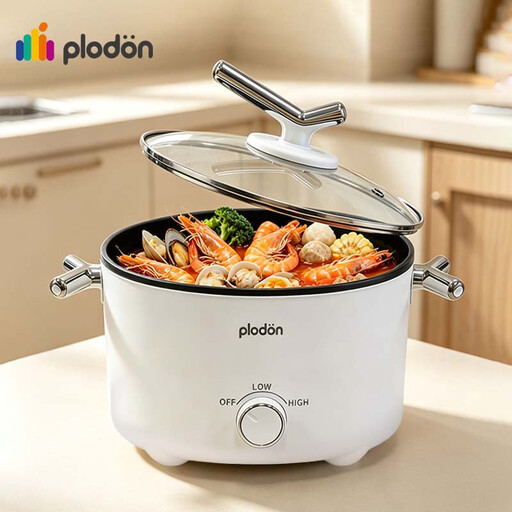
Why This Fits Their Persona: Its compact footprint and UK plug suit students, renters and small kitchens where a full-size appliance would be impractical.
The 2.0L capacity is more practical than an oversized pot for small portions, with low and high heat settings for simmering or boiling.
Non-stick interior, glass lid, detachable power cord and overheating protection.
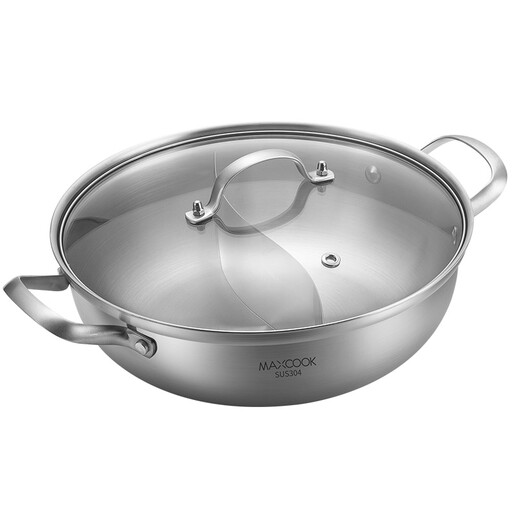
Why This Fits Their Persona: Suitable for shoppers who want a reusable hob pan for family meals and varied preferences at the table.
Its fixed divider separates two broths, while the composite base is listed for induction, gas, electric and ceramic glass hobs.
Uncoated 304 stainless steel, dual handles and dishwasher-safe construction.
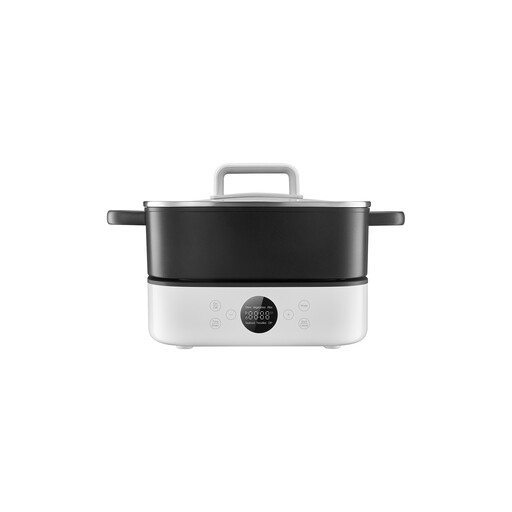
Why This Fits Their Persona: The 6L format is designed for shared meals for approximately four to six people, making it suitable for regular family gatherings.
It provides six heat levels and a timer rather than relying only on a basic two-setting control.
2,000W rated power, detachable pot and 220–240V specification.

Why This Fits Their Persona: Its large volume and UK plug make it suitable for parties, larger households and repeated hot pot cooking.
The 7L capacity and 1,600W output are clearly specified, helping buyers match the appliance to group portions and faster boiling.
Two heat modes, 30.5cm width, 8.5cm depth and wear-resistant non-stick coating.
The cooker is only part of the meal. Hot pot ingredients should be added according to cooking time: leafy vegetables and thin meat cook quickly, while noodles, tofu products and thicker vegetables need longer.
Always read the physical label for the latest allergen, storage and best-before information.
We have compiled a complete, real-time list of products that fully satisfy these strict selection criteria and UK safety regulations.
Not necessarily. Running cost depends on wattage, cooking time and your electricity tariff. A smaller appliance may use less electricity for a small portion, while a high-powered model can consume more during rapid boiling. Compare the appliance’s wattage with your normal cooking method.
Lifespan depends on frequency of use, construction and maintenance. Avoid running an electric pot empty, do not immerse the base in water and use non-abrasive utensils on coated interiors. Stainless steel models do not have a non-stick coating to wear away, but seals, handles and electrical components still require care.
Only if the base is magnetic and the product listing confirms induction compatibility. The MAXCOOK divided stainless steel models are listed for induction, gas, electric and ceramic glass hobs. Always check the diameter and weight limits recommended by your hob manufacturer.