
24/7 Customer Support

Free returns

Same-day & Next-day Delivery

Quality Guaranteed

Unlock Your Welcome Offers: FREE Delivery | Up to 80% OFF | Free 30-day JoyPlus trial
Download the APP
A steaming hot pot is a centrepiece of communal dining, but the experience can be let down by a single poor ingredient. When it comes to hot pot meatballs, the frozen aisle presents a dizzying array of choices, and not all are created equal. Many UK shoppers find themselves disappointed with products that fail to deliver on flavour or texture, turning what should be a highlight into a letdown.
As the Joybuy Product Recommendation Officer, my role is to help you navigate these choices. We've analysed the common issues shoppers face to help you select with confidence. Here are the key pitfalls to be aware of when you buy Asian meatballs online.
frozen meatballs for hot pot use an excessive amount of starch (like potato, wheat or tapioca) as a filler. This bulks up the product and reduces cost, but it results in a pasty, floury texture and a lower meat content, robbing you of the satisfying, meaty bite you expect.Chinese beef balls.To avoid disappointment, a quick check of the product details can reveal everything you need to know. Focus on these core parameters to ensure you're getting a quality product for your next hot pot or noodle soup.
The most straightforward indicator of quality is the meat percentage. A higher meat content generally leads to a richer flavour and a more satisfying texture. Look for this information in the ingredients list, where it is often declared as a percentage (e.g., "Pork (85%)"). Products with a high meat content are less reliant on fillers and artificial flavourings. Whether you're looking for classic pork balls for soup or rich beef varieties, the meat content is your first clue to quality.
The celebrated "bouncy" texture of authentic Asian meatballs comes from the preparation of the meat itself. Traditional methods, such as pounding the meat paste, develop the proteins in a way that creates a uniquely springy and dense structure. Ingredients like tendon can also contribute to this. For example, true beef tendon balls will list beef tendon high on the ingredient list, which provides a distinct and sought-after chewiness. Be wary of long lists of emulsifiers and stabilisers, as they can be used to create an artificially rubbery texture that mimics the real thing.
While starch is a necessary binder in many meatball recipes, its position on the ingredients list matters. If it appears before the meat or very high up the list, it's a sign that the product is more filler than meat. Similarly, check the seasoning. Quality meatballs are seasoned with recognisable ingredients like salt, sugar, pepper and soy sauce. An over-reliance on flavour enhancers like E621 (MSG) or "artificial flavouring" can sometimes be a way to compensate for lower-quality meat.
To help you choose, we've matched some excellent options to different preferences and needs, all available for delivery across the UK.
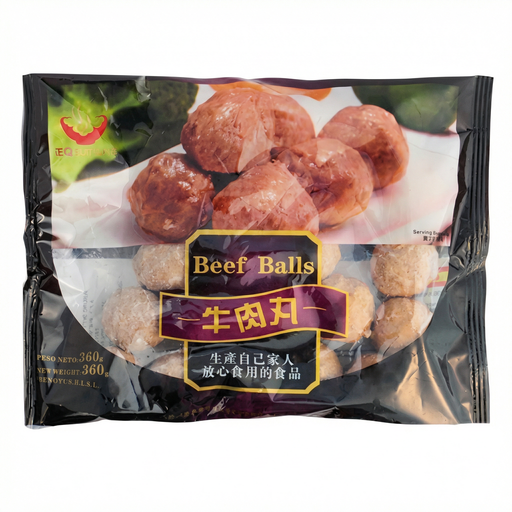
Why This Fits Their Persona: This is for the home cook who wants the classic, no-frills Chaozhou-style beef ball. It's a versatile staple that provides the authentic, firm and juicy texture expected in a traditional family hot pot.
It avoids the texture myth by using traditional hand-hammering techniques with selected beef and ox tendons, creating a genuinely firm and chewy texture rather than a rubbery one from additives.
Rich, authentic beef aroma and a tender, juicy interior. Highly versatile for hot pot, soups, or grilling.

Why This Fits Their Persona: Perfect for those who love a surprise. These `stuffed pork meatballs` offer a classic springy exterior with a savoury, juicy pork filling that provides a delightful burst of flavour in every bite.
The flavour comes from a genuine, well-seasoned pork filling, not just a heavy reliance on artificial flavour enhancers. The ingredient list is transparent about the filling's components.
Adds an exciting textural and flavour contrast to your hot pot. Fully cooked for convenience, ready in minutes.

Why This Fits Their Persona: This is for the diner who prioritises mouthfeel. These `beef tendon balls` are specifically crafted for an exceptionally chewy and dense texture, characteristic of Teochew and Vietnamese styles.
It sidesteps the texture myth by achieving its signature chewiness from a high content of real beef (60%) and beef tendon (8%), rather than relying on starches or artificial agents for its bite.
Delivers a genuinely springy, dense and satisfyingly chewy texture that holds its structure well in simmering broths.
We have compiled a complete, real-time list of products that fully satisfy these strict selection criteria and UK safety regulations.
The most reliable method is to carefully read the ingredients list on the product page. Look for a high meat percentage listed first. A shorter, more recognisable ingredient list with minimal chemical-sounding additives, stabilisers or flavour enhancers is often a sign of a higher quality product.
For most frozen meatballs for hot pot, thawing is not necessary or recommended. They are designed to be cooked directly from frozen. Simply add them to your simmering broth and cook for the time specified on the packaging, which is typically 5-8 minutes or until they float and are heated through. Always check the package for specific instructions.
While both are made from beef, the key difference is texture. Standard Chinese beef balls are prized for a smooth, bouncy texture. Beef tendon balls, on the other hand, include minced or chopped beef tendon in the meat paste. This adds a distinctly chewier, more gelatinous and springy quality to the bite, which is highly valued by many hot pot enthusiasts.