
24/7 Customer Support

Free returns

Same-day & Next-day Delivery

Quality Guaranteed

Unlock Your Welcome Offers: FREE Delivery | Up to 80% OFF | Free 30-day JoyPlus trial
Download the APP
A bubbling pot of fragrant broth, surrounded by friends and family, is one of the great joys of communal dining. Bringing the hot pot experience home has never been easier, but the sheer variety of hot pot soup base options can be overwhelming. Many UK shoppers find themselves disappointed with flavours that are either bland, overly greasy or simply not what they expected.
As the Joybuy Product Recommendation Officer, my role is to help you navigate the market. We'll look past the flashy packaging and marketing claims to identify what truly makes a great base. Let's break down the common pitfalls to avoid and the key factors to check before you buy, ensuring your next hot pot at home is a resounding success.
To avoid these traps, focus on a few key characteristics. These details will tell you more about the final taste and texture than any marketing slogan.
The type of oil is the foundation of your broth's flavour and texture. This is a crucial detail often found in the ingredients list.
Look for specific ingredients that indicate an authentic flavour profile. For a classic Sichuan experience, the ingredient list should prominently feature both chilli peppers and Sichuan peppercorns. Some products even use premium varieties like green Sichuan pepper, known for its vibrant, citrusy aroma, often found in high-quality Sichuan pepper oil. The presence of other whole or ground spices like star anise, fennel and cardamom also signals a more complex and aromatic broth.
Finally, ensure you're buying the right product for the job.
Instead of a generic list, we've matched our recommendations to specific tastes and needs, helping you find the right fit for your next meal.

Why This Fits Their Persona: This base is for those who crave the genuine, tongue-tingling málà sensation. It delivers the classic numbing-spicy profile associated with authentic Sichuan hot pot, making it a go-to for recreating a restaurant-quality experience.
It sidesteps the "one-note spicy" trap by balancing chilli heat with fragrant Sichuan peppercorn. The clear soybean oil base avoids the heavy, greasy texture of some tallow-based alternatives.
Highly versatile; the flavour profile is also ideal for making a spicy stir fry sauce or a base for Mala Xiang Guo (dry pot).
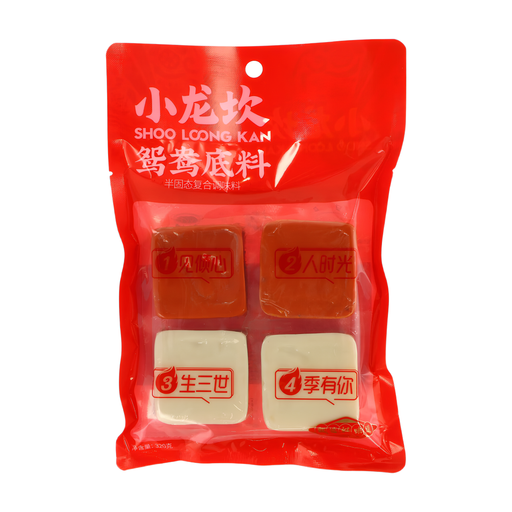
Why This Fits Their Persona: Perfect for those hosting a group with different spice tolerances or anyone just starting their hot pot journey. This pack allows you to create a "Yuan Yang" (half-and-half) pot with one spicy side and one mild side.
It directly solves the "one-size-fits-all" problem by providing two distinct, well-crafted broths. The mild broth is savoury and flavourful, not just plain water, offering a genuine alternative to the spicy side.
The dual-sachet design offers maximum flexibility and convenience, ensuring everyone at the table is happy. The vegetarian broth is rich with mushroom and pickled vegetable notes.
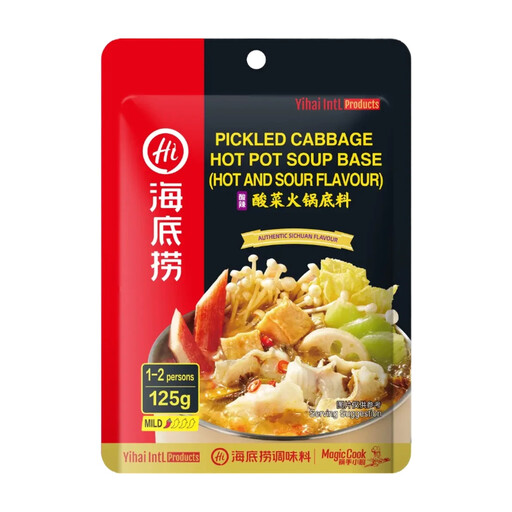
Why This Fits Their Persona: For the home cook who has mastered málà and is ready for something new. This base offers a completely different profile: a tangy, savoury and gently spicy broth inspired by Suan Cai Yu (pickled cabbage fish stew).
This is a highly specialised flavour, not a generic "hot and sour." It contains real pickled cabbage and radish, providing authentic texture and a complex, fermented tang that can't be faked with vinegar alone.
Its bright, acidic profile is an excellent pairing for fish, seafood and pork, cutting through richness and providing a refreshing alternative to heavier, oil-based broths.
We have compiled a complete, real-time list of products that fully satisfy these strict selection criteria and UK safety regulations.
Yes, absolutely. Many soup bases are incredibly versatile. A clear oil mala hot pot seasoning can be used as a flavourful base for a spicy stir fry sauce (Mala Xiang Guo). Simply use less of the base and stir-fry it with your ingredients instead of diluting it in water. Lighter, non-spicy broths can be used for noodle soups or as a poaching liquid for vegetables and meats. Always check the consistency and adjust the quantity to taste.
This is a common point of confusion. A hot pot soup base is the concentrated seasoning you use to create the large pot of simmering broth for cooking. A hot pot dipping sauce is a separate condiment served in individual bowls for dipping the cooked food into just before eating. It adds a final layer of flavour and helps cool the food down. Popular dipping sauces often feature sesame paste, garlic, spring onions and a drizzle of aromatic oil like Sichuan pepper oil.
This varies by brand and concentration, so it's crucial to check the packaging. As a general rule, a standard 220g packet of a popular brand like a Haidilao hot pot base is typically designed to be mixed with 1 to 1.5 litres of water or stock. This is usually enough to serve 2-4 people, depending on how many other ingredients you have. For solid, tallow-based blocks, you can often break off a piece if you're cooking for one or two.