
24/7 Customer Support

Free returns

Same-day & Next-day Delivery

Quality Guaranteed

Unlock Your Welcome Offers: FREE Delivery | Up to 80% OFF | Free 30-day JoyPlus trial
Download the APP
A bubbling pot of fragrant broth, surrounded by friends and an array of fresh ingredients—there's nothing quite like enjoying a hot pot at home in the UK. But recreating that authentic restaurant experience hinges on one crucial element: the hot pot soup base. With shelves filled with countless options, from fiery Sichuan varieties to mild, savoury broths, choosing the right one can feel overwhelming. Many packages feature confusing labels and make bold claims, leading to disappointing and flavourless meals.
As the Joybuy Product Recommendation Officer, my role is to help you navigate this complex market. We will look past the marketing hype and focus on what truly matters, ensuring your next hot pot night is a resounding success.
Before you add a packet to your basket, be aware of these common traps that can lead to a wasted evening and a bland dinner:
To avoid these issues, focus on a few key parameters. Understanding these will empower you to choose a Chinese hot pot seasoning that perfectly matches your taste.
The foundation of your hot pot is the style of the broth itself. This is the most significant factor influencing its richness and texture.
Look at the ingredient list to decode the true flavour profile.
A hot pot meal is incomplete without a good hot pot dipping sauce. This is where you can personalise every bite. Instead of a generic sauce, consider building your own. The two main styles are:
Based on these practical criteria, here are a few recommendations matched to different preferences for enjoying hot pot at home UK style.

Why This Fits Their Persona: This user wants the genuine, tongue-tingling numbness and fiery heat of a proper Sichuan hot pot. This Haidilao hot pot base is specifically designed to deliver that classic "mala" profile without compromise.
It sidesteps the "vaguely spicy" trap by being explicitly a mala base, with Sichuan peppercorn listed prominently. The flavour is precise and authentic, not just generically hot.
Made with soybean oil, it provides a "clear oil" broth that is intensely flavourful but less heavy than traditional tallow bases. It's also versatile for making other Sichuan dishes like Mala Xiang Guo (dry pot).
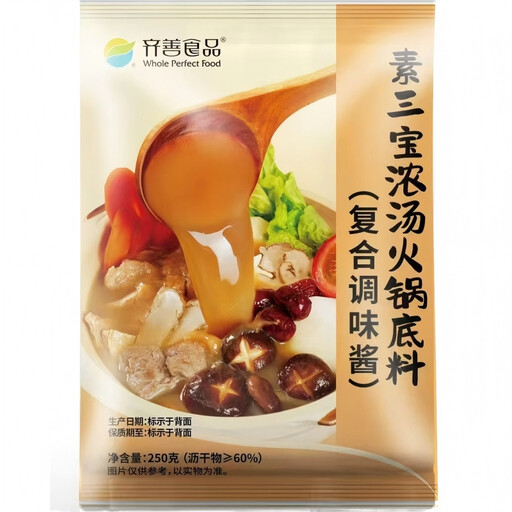
Why This Fits Their Persona: Perfect for someone hosting a group with mixed dietary needs or for those who prefer a rich, savoury broth without any meat products or intense spice. It's a crowd-pleasing and inclusive option.
This product directly counters the "hidden ingredients" trap. It is clearly labelled as a vegetarian hot pot base, with a 100% plant-based recipe, giving you complete peace of mind.
Its flavour comes from a rich concentrate of three types of mushrooms, providing a deep, natural umami that avoids the "one-dimensional saltiness" pitfall. It's also highly versatile for noodle soups and stews.
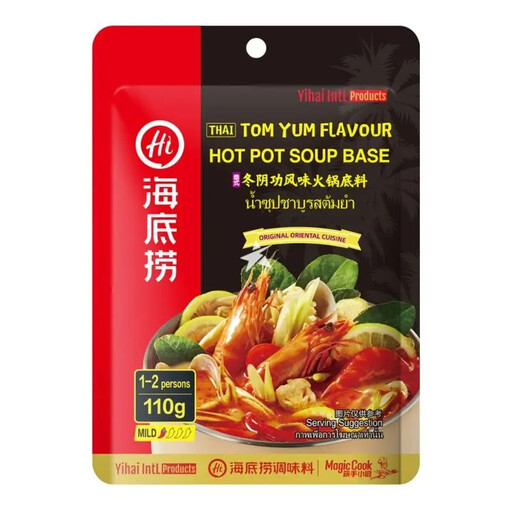
Why This Fits Their Persona: For the home cook who loves hot pot but is ready to branch out from traditional Chinese flavours. This base offers a vibrant, tangy and aromatic Thai-inspired experience.
The name "Thai Tom Yum" is highly specific, completely avoiding the "unclear flavour" trap. You know you are getting a tangy, creamy and fragrant broth, not a generic spicy or savoury one.
It delivers an authentic flavour profile using key ingredients like coconut milk, lemongrass and galangal. It's a convenient way to enjoy a completely different style of hot pot that pairs exceptionally well with seafood and chicken.
We have compiled a complete, real-time list of products that fully satisfy these strict selection criteria and UK safety regulations.
Here are answers to a few common questions people have when preparing hot pot at home.
This depends on the concentration of the base and the size of your pot. As a general rule, a standard 200-250g packet of soup base is designed to be diluted in approximately 1.5 to 2 litres of water or stock. This is typically enough for a meal for 2-4 people. Always check the instructions on the packaging for the recommended ratio, as some bases are more concentrated than others.
For food safety and quality reasons, it is not recommended to reuse hot pot broth. After cooking various raw ingredients, especially meats and seafood, the broth can become a breeding ground for bacteria if stored improperly. Furthermore, as the broth simmers and reduces, it becomes increasingly salty and the complex flavours become muddled. It's always better to start fresh for each hot pot meal.
While some products can be used for both, there is a key difference. A hot pot soup base is formulated to be diluted with a large amount of water to create a flavourful broth for simmering. A stir-fry seasoning, such as those for Mala Xiang Guo (spicy dry pot), is a much more concentrated paste designed to be stir-fried directly with ingredients with little to no added liquid. Using a stir-fry seasoning as a soup base would likely result in an overly intense and salty broth.