
24/7 Customer Support

Free returns

Same-day & Next-day Delivery

Quality Guaranteed

Unlock Your Welcome Offers: FREE Delivery | Up to 80% OFF | Free 30-day JoyPlus trial
Download the APP
A bubbling pot of broth, shared with friends and family, is the heart of a good hot pot meal. But the soul? That lies in the hot pot soup base. Choosing the right one can transport you from your UK kitchen to the bustling streets of Chengdu or a cosy family dinner in Taipei. However, with so many options available, it's easy to make a misstep. Vague labels and confusing descriptions can lead to a broth that's either bland or so fiery it's inedible.
As the Joybuy Product Recommendation Officer, my role is to help you navigate the choices and find the perfect foundation for your next gathering. Let's break down the common pitfalls and what to look for to ensure you can make an easy hot pot at home that tastes just right.
To avoid these traps, focus on a few key details on the packaging. Understanding these will empower you to buy hot pot base UK with confidence.
Hot pot bases primarily come in two forms, each offering a different experience:
Look for descriptions that specify the flavour origin. This gives you a much clearer idea of the taste profile.
Check the net weight and the recommended water ratio. A 200g block might be intended for a 1.5-litre pot serving 4-6 people, while a 50g sachet is designed for an individual meal. Also, scan the ingredients list. The presence of items like fermented broad bean paste, ginger, star anise and various peppers high on the list is a good sign of a well-crafted Chinese hotpot base.
To make things easier, we've matched some excellent options to different tastes and needs.

Why This Fits Their Persona: For those chasing the genuine numbing-spicy kick of a Sichuan hot pot, this Haidilao soup base delivers. It's designed to replicate the restaurant's famous flavour, focusing on the aromatic and tingling sensation of high-quality Sichuan peppercorns.
It avoids the "spicy" gamble by explicitly labelling itself "Mala Flavour," setting a clear expectation for both heat and numbness. The clear oil base is lighter than tallow but doesn't compromise on intensity.
Authentic restaurant flavour profile. Versatile enough for hot pot, stir-fries (Mala Xiang Guo) or noodle soups.

Why This Fits Their Persona: Perfect for a dinner party with mixed palates. This Cantonese-style broth is rich, creamy and savoury with a gentle, warming heat from white pepper. It's sophisticated and welcoming to guests who may be wary of intense chilli spice.
Its specific name avoids the spicy lottery. The two-part system (broth concentrate and a separate pack of dried goji berries/dates) signals a focus on layered, authentic flavour rather than just salt and enhancers.
Creates a rich, creamy broth that coats ingredients beautifully. The included dried ingredients add a touch of sweetness and visual appeal.
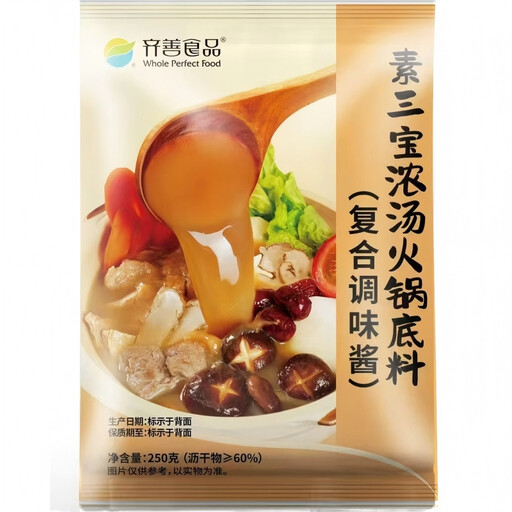
Why This Fits Their Persona: Finding a truly rich and satisfying vegetarian hot pot broth can be a challenge. This one is 100% plant-based and uses a blend of three mushrooms to build a deep, savoury umami flavour that stands up to tofu, leafy greens and root vegetables.
It sidesteps the flavour enhancer trap by deriving its primary taste from natural ingredients like mushrooms (11%) and longan. The "Three Treasures" name clearly signals a complex, non-spicy, savoury profile.
A rich mushroom concentrate that provides a satisfying depth often missing in vegetarian broths. It's also versatile for use in noodle soups or stews.
We have compiled a complete, real-time list of products that fully satisfy these strict selection criteria and UK safety regulations.
This depends on the concentration of the base. For a solid, concentrated paste, a good rule of thumb is 50-75 grams per person. For a liquid or ready-to-use broth, check the packaging, but you will typically need around 300-500ml of liquid broth per person. Products like the Hao Ren Jia 50g*4 packs are specifically designed for easy single-serving portions.
For food safety reasons, it is generally not advisable to reuse hot pot broth, especially after raw meats, poultry or seafood have been cooked in it for an extended period. The broth becomes a rich medium for bacterial growth once it cools. It's always safest to start with a fresh base for each hot pot meal.
The main difference is in the fat used, which affects texture and richness.